Vegan Pad Thai with Tofu and Tamarind
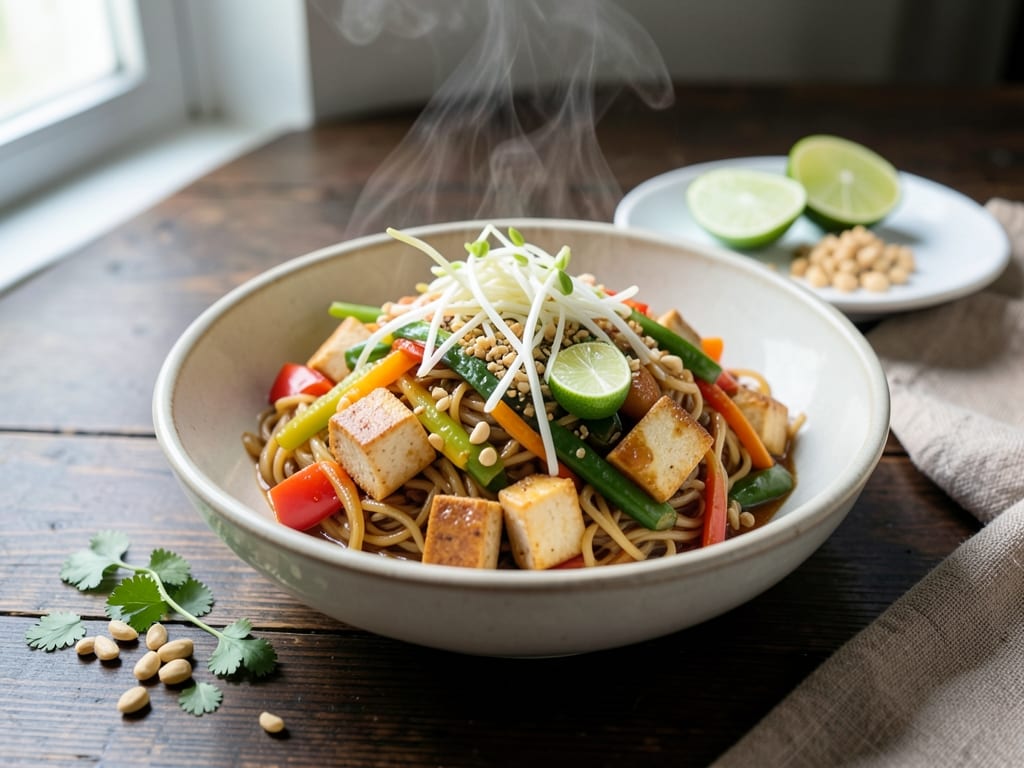
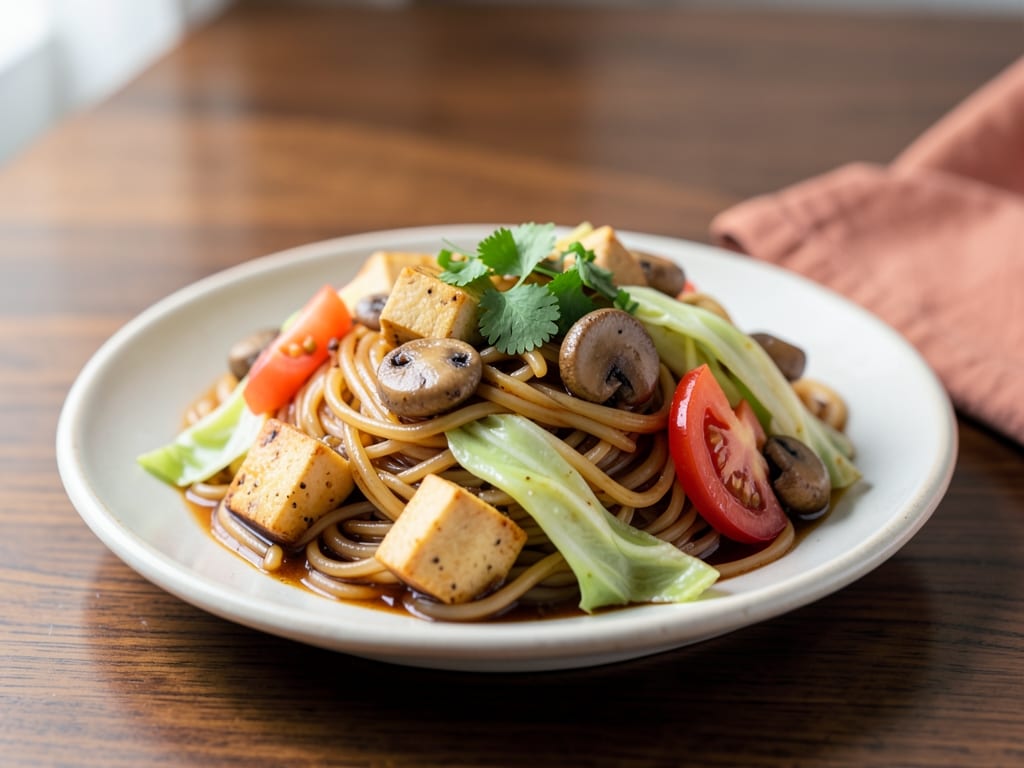
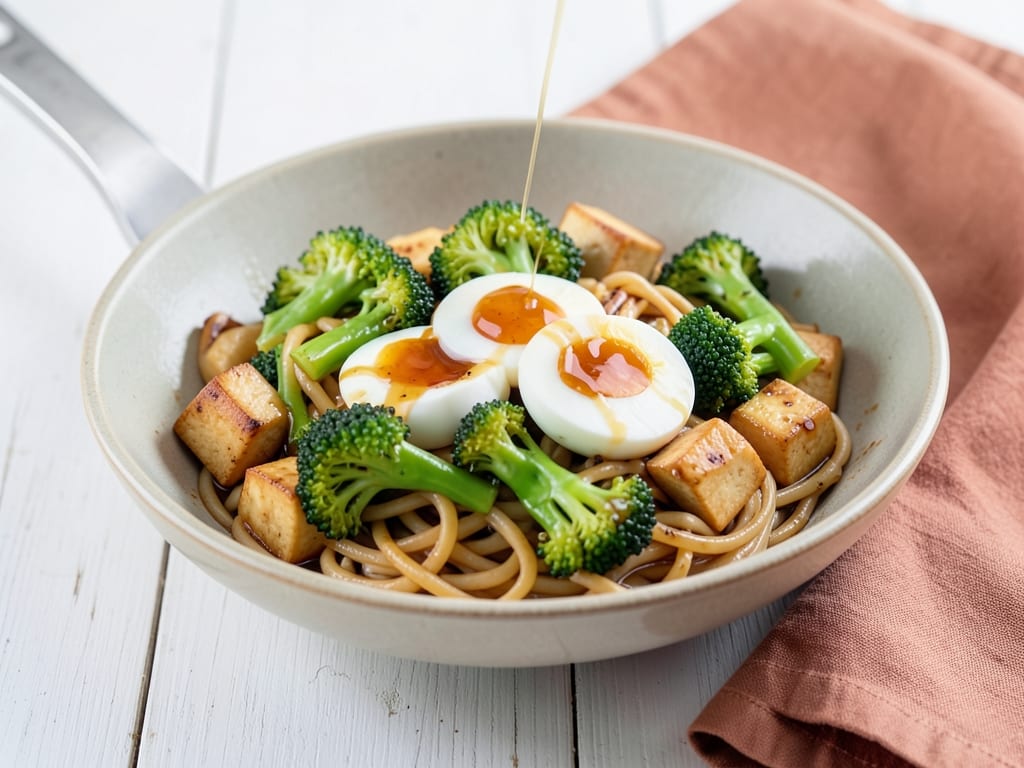
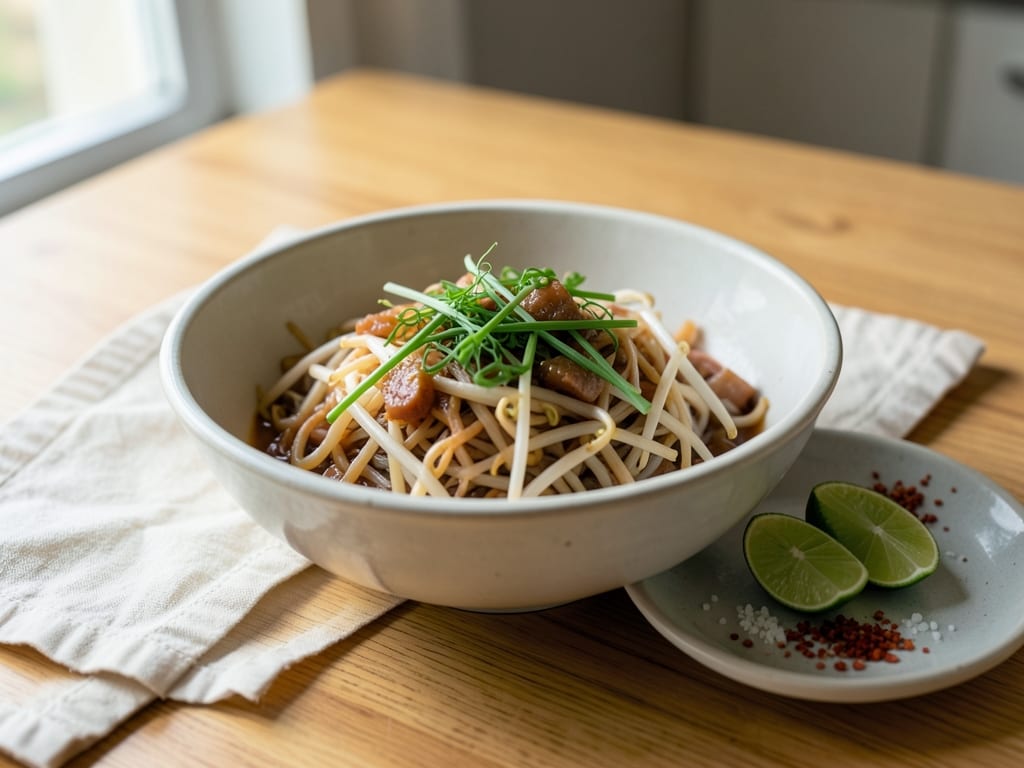
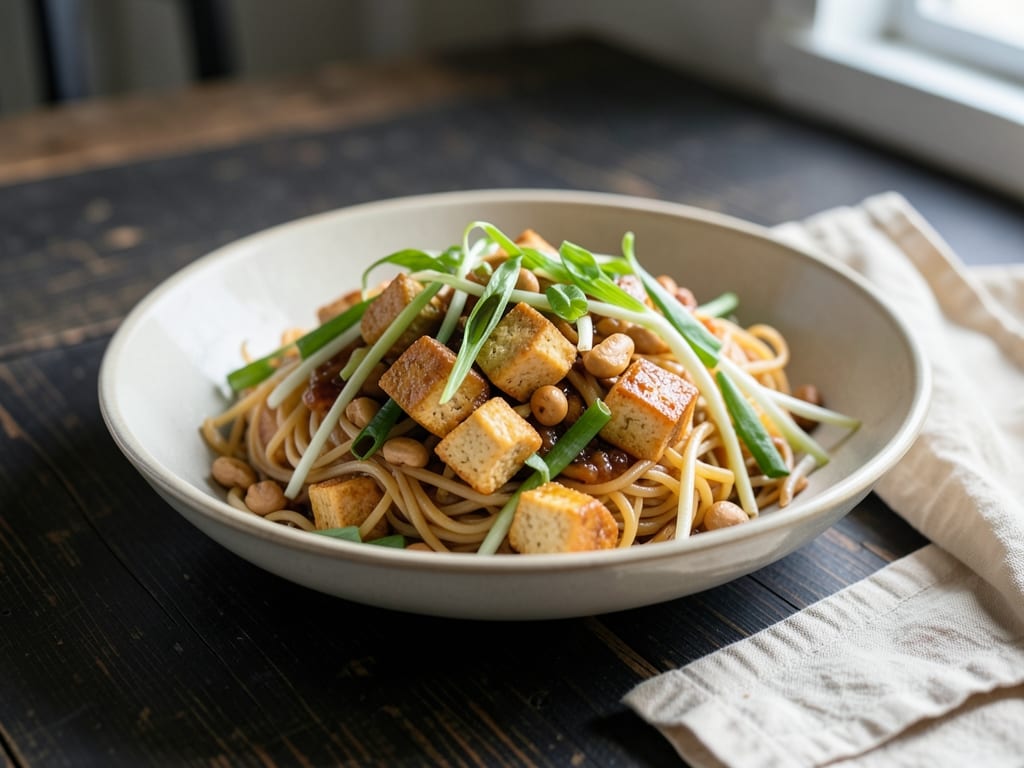
Chewy rice noodles and crisp golden tofu are tossed in a tangy-sweet tamarind sauce, then finished with crunchy bean sprouts, scallions, and roasted peanuts. It's a fully plant-based pad thai that comes together in one pan in about 20 minutes of cooking.
- Prep
- 17 min
- Cook
- 18 min
- Wait
- 20 min
- Total
- 55 min
- Makes
- 4 generous servings (about 6 cups total)
Steps
Before you start
- Start pressing the tofu first; it needs 20 minutes, and the noodles soak during the last 10 of those.
- Check your tamarind: this recipe uses soft, seedless tamarind paste (pulp). If yours is a very dark, thick 'concentrate' that is sold in a small jar, use only 1½ tablespoons (see Substitutions).
- Chop everything and mix the sauce before you turn on the heat. Stir-frying moves fast and there's no time to chop mid-cook.
- Use a 14-inch (35 cm) wok or a 12-inch (30 cm) nonstick or carbon steel skillet. A crowded pan steams the noodles instead of frying them.
Press the tofu
- Drain the tofu and set the block on a double layer of clean kitchen towels.
- Cover with more towel, set a heavy skillet or cutting board on top, and add a couple of cans for weight.
- Press for 20 minutes, then cut into ¾-inch (2 cm) cubes.
+ Show details− Hide details
Ready when: The towels are damp and the tofu feels noticeably firmer and drier on the surface
Tip: Use this wait time to do steps 2 to 4.
Soak the noodles
- About 10 minutes into the tofu pressing, put the rice noodles in a large heatproof bowl and cover with very hot tap water (about 140°F / 60°C, hot but not boiling).
- Soak 8 to 10 minutes, stirring once, then drain in a colander and rinse briefly with cool water.
- Toss with a few drops of water and set aside.
+ Show details− Hide details
Ready when: Noodles bend without snapping but are still firm and slightly stiff in the center; they finish cooking in the wok
Tip: Don't soak until fully soft. Over-soaked noodles turn mushy and clump in the pan.
Mix the sauce
- In a small bowl, whisk together the tamarind paste, soy sauce, sugar, water, rice vinegar, and red pepper flakes (if using).
- Whisk for about 1 minute, pressing the tamarind against the side of the bowl, until the paste and sugar fully dissolve.
- Taste: it should be boldly sour-sweet and salty.
+ Show details− Hide details
Ready when: The sauce is smooth with no tamarind clumps or sugar granules
Tip: The noodles absorb a lot of flavor, so the sauce should taste slightly too strong on its own.
Prep the aromatics
- Slice the shallots, mince the garlic, cut the scallions (keeping whites and greens in separate piles), rinse and drain the bean sprouts, chop the peanuts, and cut the lime into wedges.
- Line everything up next to the stove.
+ Show details− Hide details
Tip: Pat the bean sprouts dry so they stir-fry rather than steam.
Fry the tofu
- Pat the tofu cubes dry and toss gently with the cornstarch in a bowl until evenly coated.
- Heat 2 tablespoons (30 ml) oil in the wok or skillet over medium-high heat until it shimmers.
- Add the tofu in a single layer and cook undisturbed for 2 minutes, then turn every 2 minutes for 8 to 10 minutes total.
- Transfer to a plate.
+ Show details− Hide details
Ready when: All sides are golden brown and crisp, and the cubes release easily from the pan
Tip: If the tofu sticks, wait another 30 seconds. It releases on its own once a crust forms.
Sizzle the aromatics
- Return the same pan to medium-high heat and add 2 tablespoons (30 ml) oil.
- Add the shallots and scallion whites and stir-fry for 2 minutes.
- Add the garlic and cook for 30 seconds, stirring constantly.
+ Show details− Hide details
Ready when: Shallots are softened and lightly golden at the edges, and the garlic smells fragrant but is not browned
Tip: Garlic burns fast and turns bitter. Move straight to the next step when you smell it.
Toss noodles with sauce
- Add the drained noodles to the pan, then pour the sauce over them.
- Using tongs or a spatula, lift and toss constantly for 3 to 4 minutes.
- If the pan looks dry and the noodles are still firm, add 2 tablespoons water and keep tossing.
+ Show details− Hide details
Ready when: The sauce is absorbed and glossy, and the noodles are tender, chewy, and no longer stiff in the center
Tip: Do this in the pan you used for the tofu; if your pan is smaller than 12 inches, cook the noodles in two batches.
Add tofu and sprouts
- Return the tofu to the pan along with half the bean sprouts (1 cup / 75 g) and the scallion greens.
- Toss for 1 minute just to heat through and wilt the greens.
- Turn off the heat.
+ Show details− Hide details
Ready when: Scallion greens are bright and just wilted, with the sprouts still crisp
Tip: Keep the sprouts brief so they retain their crunch.
Serve
- Divide the pad thai among 4 plates.
- Top with the remaining fresh bean sprouts, chopped peanuts, cilantro (if using), and a lime wedge on each plate.
- Squeeze the lime over the noodles just before eating.
+ Show details− Hide details
Tip: Serve right away. The noodles stiffen and clump as they cool.
Good to know
Tips
- Keep the heat at medium-high, not full blast. Tamarind and sugar scorch quickly once the sauce reduces.
- Don't rinse the noodles with ice-cold water; a quick cool rinse stops the cooking without making them slippery and stiff.
- Adjust the finished dish at the table: more lime for sourness, a pinch of sugar for sweetness, or a splash of soy sauce for salt.
- For a bigger batch, cook in two separate rounds rather than doubling the pan load.
Make ahead
You can press and cube the tofu, mix the sauce, and chop all the vegetables up to 1 day ahead; store them separately in the fridge. Soak the noodles just before cooking.
Storage & reheating
Room temperature: up to 2 hours. Refrigerator: airtight container for up to 3 days. Freezer: not recommended, since rice noodles turn brittle and the tofu gets spongy. Reheat in a skillet over medium heat with 1 to 2 tablespoons water for 3 to 4 minutes, tossing until hot, or microwave covered for 1½ to 2 minutes, stirring halfway.
Substitutions
- seedless tamarind paste (soft pulp) → 1½ tbsp (25 g) tamarind concentrate, or 2 tbsp lime juice plus 1 tbsp extra sugar. Tamarind concentrate is much stronger than pulp paste. Lime gives a close sour note but less depth.
- roasted unsalted peanuts → roasted cashews or toasted sesame seeds. Use for a peanut allergy; the flavor will be a little milder.
- soy sauce → tamari or coconut aminos (use 4 tbsp / 60 ml). Tamari makes it gluten-free. Coconut aminos is less salty, so use the larger amount.
- extra-firm tofu → extra-firm baked tofu or tempeh, cubed. Baked tofu needs no pressing; just brown it for 4 to 5 minutes.