Spicy Peanut Noodle Stir-Fry with Vegetables
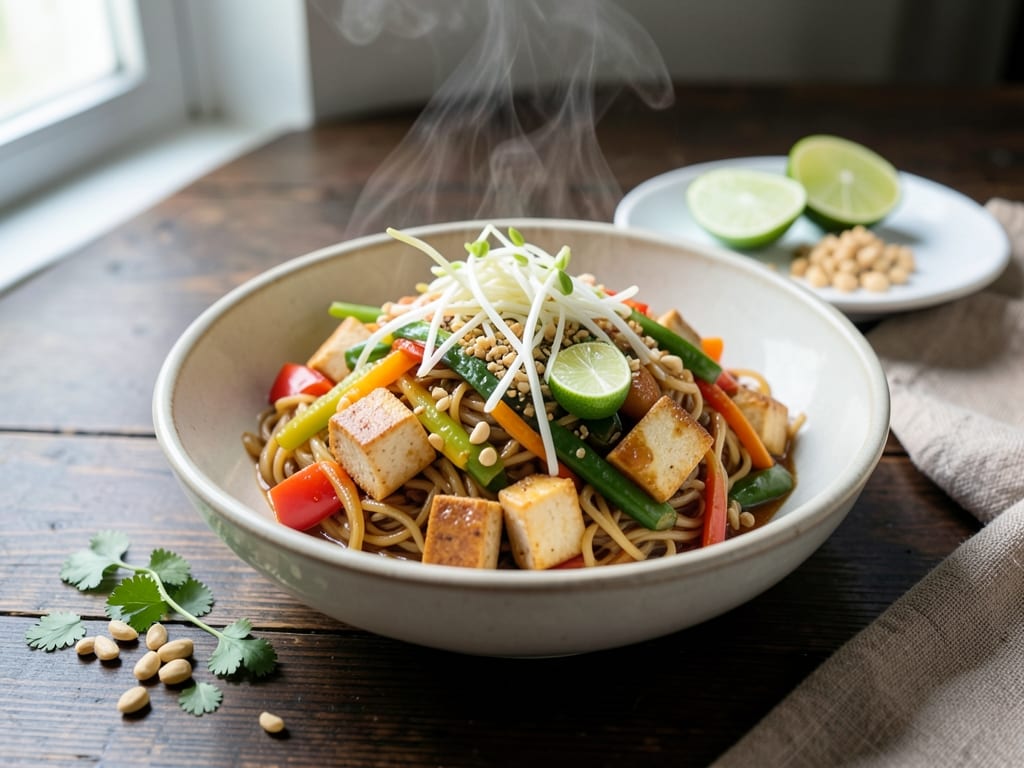
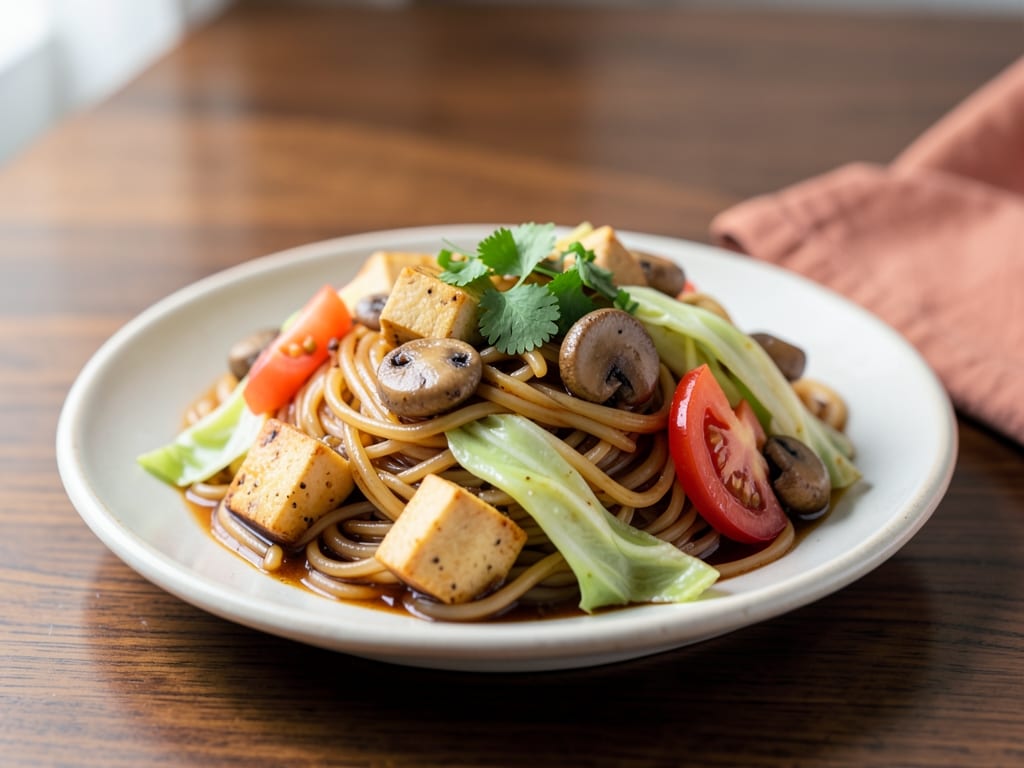
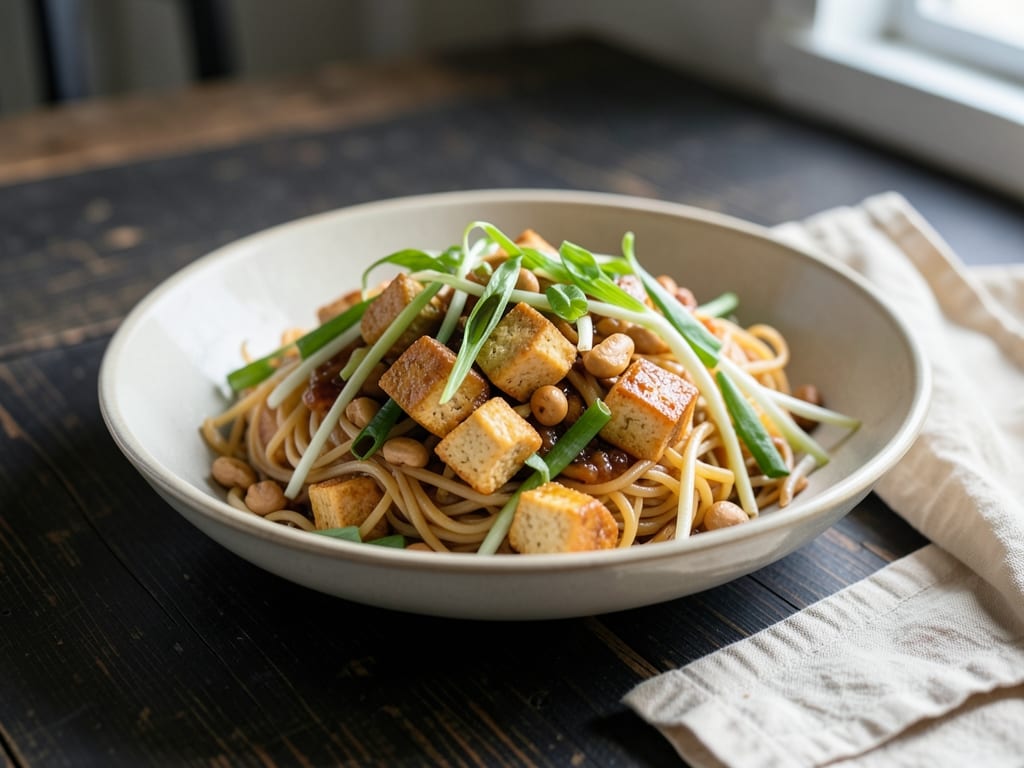
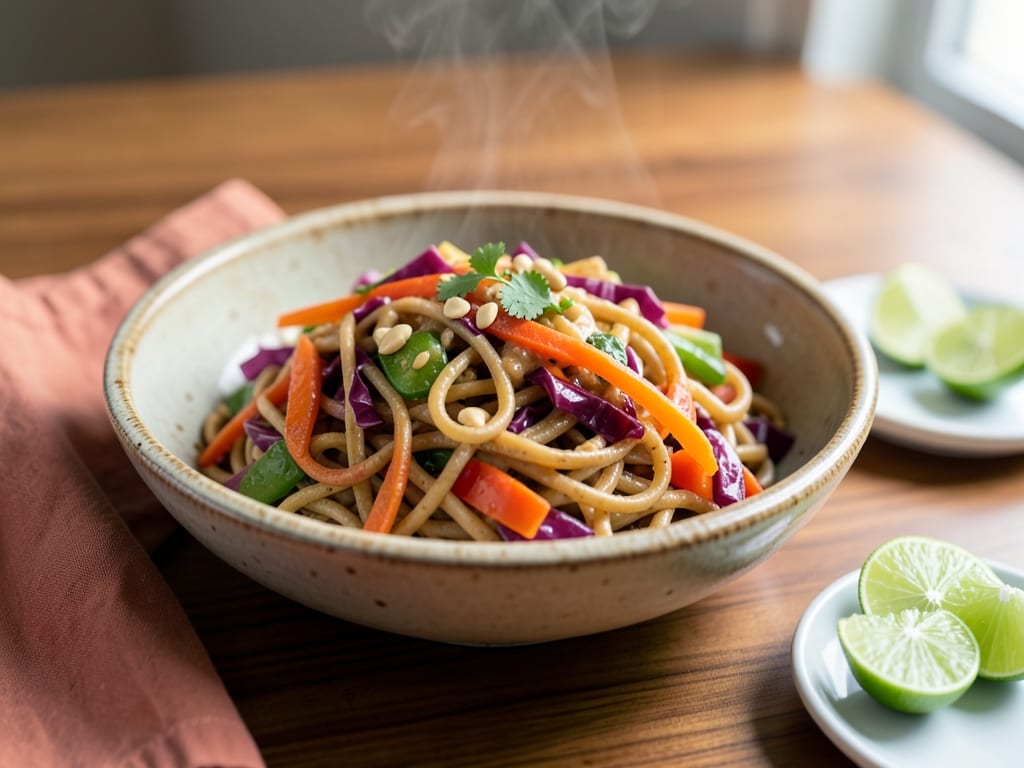
Nutty buckwheat soba noodles and crisp red cabbage, carrots and bell pepper are tossed in a creamy, spicy peanut-lime sauce. It's a fast vegan dinner with a good balance of heat, tang and savory depth.
- Prep
- 20 min
- Cook
- 15 min
- Total
- 35 min
- Makes
- 4 generous servings (about 2 cups / 400 g each)
Steps
Before you start
- Chop and measure everything before you turn on the heat. Stir-frying moves quickly and the vegetables will overcook if you stop to chop.
- Use a smooth, drippy peanut butter (the kind that needs stirring, with no added sugar). Very stiff or sweetened peanut butter makes a thicker, sweeter sauce that is harder to loosen.
- Check the soba package. Many soba noodles contain wheat flour, so choose 100% buckwheat noodles if you need this gluten-free. Make sure the brand has no egg if you want it fully vegan.
- Start the noodle water first. A large pot of water takes about 8 minutes to boil while you prepare the sauce and vegetables.
Boil the water
- Fill a large pot (4–5 quarts / 4–5 L) about three-quarters full with water and set it over high heat with the lid on.
- Leave it unsalted, since the soy sauce in the dish is salty enough.
+ Show details− Hide details
Ready when: Water is at a full rolling boil with large bubbles.
Tip: Keep the lid on so the water boils faster, and do the next two steps while you wait.
Whisk the sauce
- In a medium bowl, combine the peanut butter, soy sauce, lime juice, rice vinegar, maple syrup, sriracha, sesame oil, grated garlic and grated ginger.
- Whisk until it looks like a thick paste.
- Pour in the hot water and whisk again until the sauce is smooth, glossy and pourable, like heavy cream.
- Taste it.
- It should be salty, tangy, slightly sweet and clearly spicy.
- Add more sriracha if you want more heat.
+ Show details− Hide details
Ready when: The sauce is completely smooth with no streaks of peanut butter and runs off the whisk in a ribbon.
Tip: If the sauce looks grainy or clumpy, whisk in more hot water 1 tablespoon at a time. The hot water helps the peanut butter blend smoothly.
Prep the vegetables
- Slice the cabbage into thin ribbons, cut the carrots into thin matchsticks, and slice the bell pepper.
- Slice the scallions and keep the white parts separate from the green parts.
- Chop the peanuts and cilantro, and cut the lime into 4 wedges.
- Set everything near the stove.
+ Show details− Hide details
Ready when: All vegetables are cut to a similar thin size so they cook at the same speed.
Tip: Cut the carrots thinner than you think you need to. Thick carrot pieces stay raw while the cabbage wilts.
Cook and rinse noodles
- Add the soba to the boiling water and stir right away so the strands don't stick.
- Cook for 4 to 5 minutes, or 1 minute less than the package says, because the noodles will cook a little more in the wok.
- Drain in a colander and rinse under cold running water for about 30 seconds, rubbing the noodles gently with your hands to wash off the surface starch.
- Drain well and shake off as much water as you can.
+ Show details− Hide details
Ready when: Noodles are tender but still have a slight bite in the center, and they feel slippery rather than gummy after rinsing.
Tip: Don't skip the rinse. Soba releases a lot of starch and will clump into a sticky mass in the wok if you leave it on.
Stir-fry hard vegetables
- Set the wok or large skillet over high heat for about 1 minute until a drop of water sizzles on contact.
- Add the neutral oil and swirl to coat.
- Add the cabbage and carrots and stir-fry, tossing constantly with tongs or a spatula, for 3 minutes.
+ Show details− Hide details
Ready when: Cabbage has wilted by about half and has a few browned edges. Carrots are bright and just starting to soften but still crunchy.
Tip: If your pan is smaller than 12 inches, cook the vegetables in two batches. A crowded pan steams them instead of searing them.
Add pepper and scallion whites
- Add the bell pepper and the scallion whites.
- Keep stir-frying for 1 to 2 minutes.
+ Show details− Hide details
Ready when: Bell pepper slices are glossy and slightly softened at the edges, and the scallions smell sweet and fragrant.
Toss with noodles and sauce
- Reduce the heat to medium-high.
- Add the drained noodles to the wok.
- Whisk the sauce once more because it will have thickened as it sat, then pour it over the noodles.
- Toss with tongs, lifting the noodles from the bottom, for 2 minutes.
- Keep going until the sauce coats every strand and the noodles are hot all the way through.
+ Show details− Hide details
Ready when: The sauce has thickened slightly into a glossy coating, nothing is pooling at the bottom of the pan, and the noodles are steaming.
Tip: If the noodles look dry or sticky, splash in 1 to 2 tablespoons of hot water and toss again.
Finish and serve
- Turn off the heat.
- Squeeze 1 lime wedge over the noodles and toss once.
- Taste and add more soy sauce, lime or sriracha if needed.
- Divide among 4 bowls and top with the scallion greens, chopped peanuts and cilantro.
- Serve right away with the remaining lime wedges.
+ Show details− Hide details
Ready when: The noodles taste bright and balanced, with salt, lime and heat all noticeable.
Tip: Add the peanuts and scallion greens at the end so they stay crunchy and fresh.
Good to know
Tips
- Taste the sauce before it goes in the pan. It will taste stronger on its own than on the noodles, but you can still adjust the heat and acidity at that stage.
- Make sure your wok or pan is very hot before the vegetables go in. You should hear a loud sizzle. This keeps the cabbage crisp instead of soggy.
- Add protein if you like: stir-fry 8 oz (225 g) of cubed extra-firm tofu or a cup of shelled edamame with the cabbage and carrots.
- Serve straight from the pan. The sauce keeps absorbing into the noodles as they sit, so the dish is best eaten within about 10 minutes of cooking.
Make ahead
"Whisk the sauce up to 3 days ahead and refrigerate it in a covered jar. It will thicken, so stir in a splash of hot water before using. You can also slice the cabbage, carrots and bell pepper up to 1 day ahead and store them in airtight containers in the fridge. Cook the noodles and stir-fry just before serving."
Storage & reheating
"Room temperature: up to 2 hours. Fridge: store in an airtight container for up to 3 days. The noodles will absorb the sauce, so reheat with a splash of water in a skillet over medium heat for 3 to 4 minutes, stirring, or microwave covered for 1 to 2 minutes. It is also good cold as a noodle salad. Freezer: not recommended, because the soba turns mushy and the vegetables lose their crunch."
Substitutions
- dried soba noodles → Spaghetti, udon or rice noodles. Cook according to the package. Spaghetti or udon will not be gluten-free, but they hold up well and are easy to find. Rice noodles are gluten-free.
- smooth natural peanut butter → Almond butter or sunflower seed butter. Use the same amount. Sunflower seed butter works for nut allergies, but skip the peanut topping and use toasted sesame seeds instead.
- maple syrup → Agave syrup. Use the same amount. Avoid honey if you want the dish to stay vegan.
- red cabbage → Napa cabbage or green cabbage. Use the same weight. Napa cooks faster, so stir-fry it for only 1 to 2 minutes.