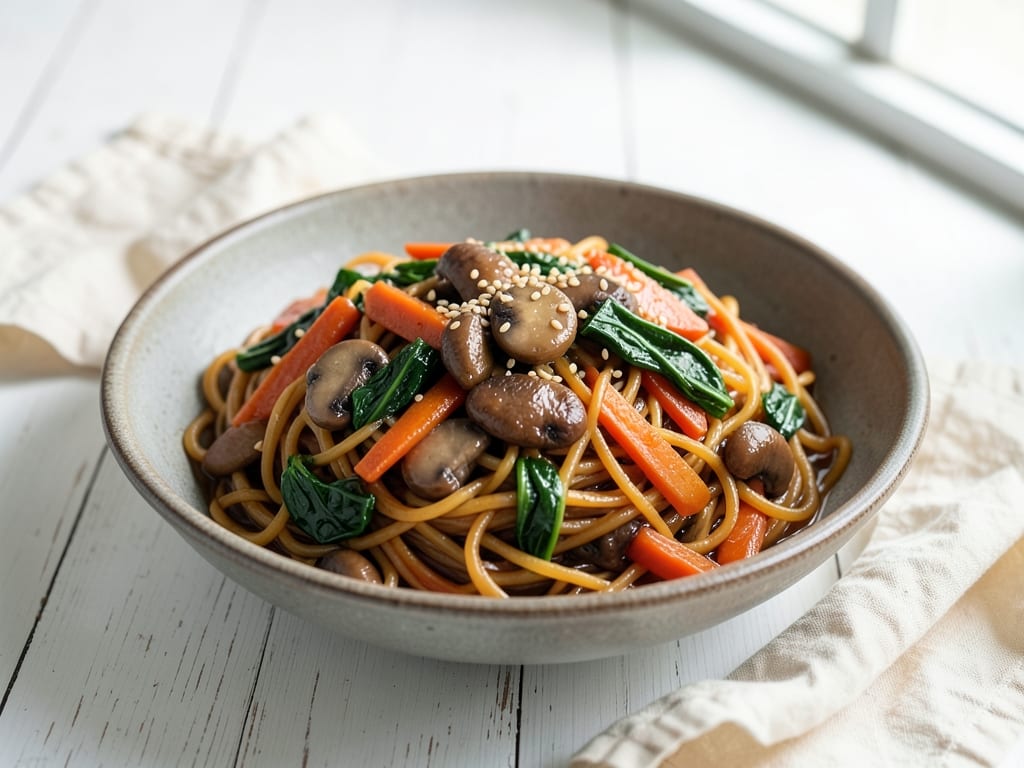
Korean Japchae with Mushrooms and Spinach
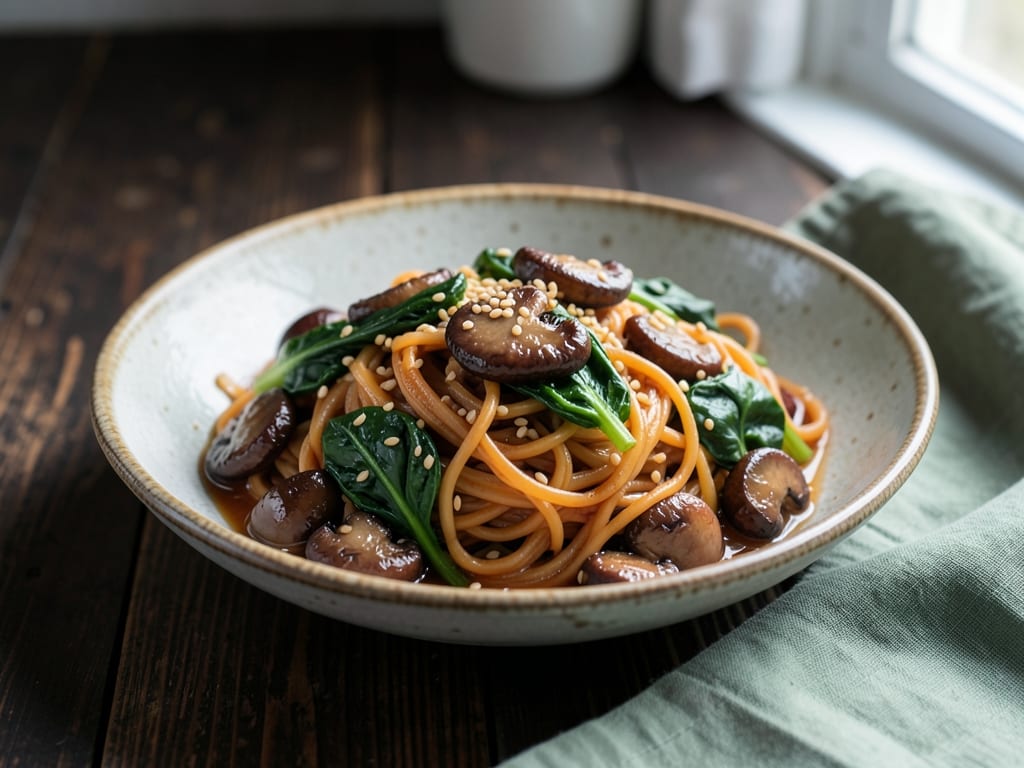
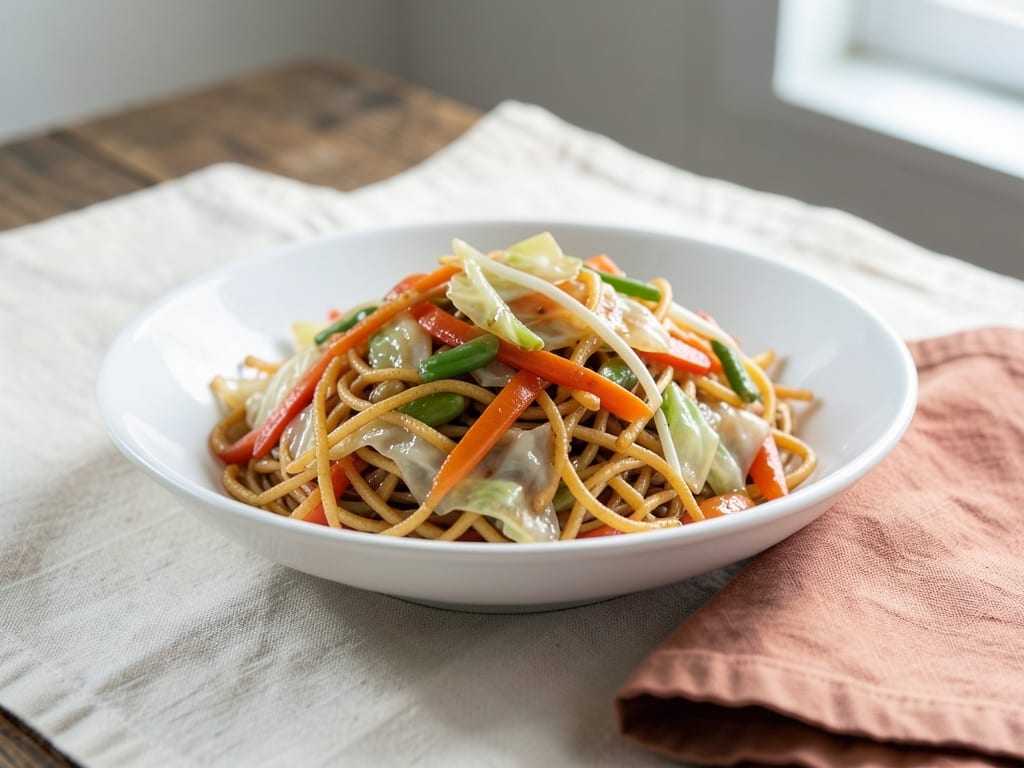
Chewy, glossy sweet potato noodles tossed with garlicky spinach, meaty shiitakes, and crisp-tender carrots in a savory-sweet soy and toasted sesame dressing. It's fully vegan and just as good warm or at room temperature.
- Prep
- 25 min
- Cook
- 25 min
- Wait
- 5 min
- Total
- 55 min
- Makes
- About 7 cups (4 main-course servings or 6 side servings)
Steps
Before you start
- Read the noodle package: brands vary from 5 to 9 minutes of boiling. Start tasting 1 minute before the low end of the range.
- Cut all vegetables before you turn on the stove. The stir-frying goes quickly.
- Check that your soy sauce is vegan-friendly and your sugar is fine for your diet (some cane sugar is bone-char filtered).
- Set up a large bowl for the finished vegetables and a bowl of ice water for the spinach.
Prep the vegetables
- Slice the shiitake caps, carrot, onion, and bell pepper, and cut the scallions as described in the ingredient list.
- Keep each vegetable in its own pile, because each is cooked separately so it keeps its own color and texture.
- Fill a large bowl with ice water and set a colander in the sink.
- Bring 4 quarts (3.8 L) of water to a boil in the large pot over high heat.
+ Show details− Hide details
Ready when: Water is at a rolling boil with large bubbles breaking the surface
Tip: Cut the carrot and pepper to the same thickness so they cook at the same rate.
Mix the sauce
- In a small bowl, whisk 3 tablespoons (45 ml) of the soy sauce, the sugar, 2 tablespoons (30 ml) of the sesame oil, 2 of the grated garlic cloves, and the black pepper.
- Stir for about 30 seconds until the sugar has mostly dissolved.
- Set aside; this will season the noodles.
+ Show details− Hide details
Ready when: Sugar looks mostly dissolved and the sauce is uniformly dark brown
Blanch the spinach
- Drop the spinach into the boiling water and push it under with tongs.
- Cook for 30 to 45 seconds, just until it wilts and turns bright green.
- Lift it out with a spider or tongs (keep the water boiling for the noodles) and plunge it into the ice water for 30 seconds.
- Squeeze out as much water as you can with your hands, then chop the spinach roughly into 3-inch (7 cm) lengths.
- In your large mixing bowl, toss it with the remaining garlic clove, 1 teaspoon of the sesame oil, and ¼ teaspoon of the salt.
- Leave the spinach in that bowl.
+ Show details− Hide details
Ready when: Spinach is vivid green, limp, and no longer drips when squeezed
Tip: Squeeze firmly. Wet spinach will thin out the sauce and make the finished dish watery.
Boil the noodles
- Add the dry noodles to the same boiling water and stir to separate them.
- Cook according to the package, usually 6 to 8 minutes, stirring occasionally.
- Start tasting at 6 minutes.
- Drain in the colander and rinse briefly under cool running water for about 20 seconds.
- Shake off well, then cut the noodles 3 or 4 times with kitchen scissors into roughly 8-inch (20 cm) lengths.
- Toss them with 2 tablespoons of the sauce and set them aside.
+ Show details− Hide details
Ready when: Noodles are translucent, slippery, and chewy with no hard white core when bitten
Tip: Don't skip the cutting. Uncut noodles are very long and tangle into one large mass.
Cook carrot, onion, and pepper
- Heat a 12-inch (30 cm) nonstick skillet or wok over medium-high heat for 1 minute.
- Add 1 tablespoon of the neutral oil.
- Add the carrot and cook, stirring often, for 2 minutes.
- Add the onion and bell pepper with ¼ teaspoon of the salt and stir-fry for 2 to 3 minutes more.
- Tip everything into the large bowl with the spinach.
+ Show details− Hide details
Ready when: Carrots are bright and crisp-tender, and the onion is translucent with slightly browned edges
Tip: Do not overcook. The vegetables will keep softening from residual heat in the bowl.
Sear the mushrooms
- Return the skillet to medium-high heat, wipe it out if any bits have burned, and add 1 tablespoon of the neutral oil.
- Add the shiitake in an even layer and leave them undisturbed for 2 minutes to brown.
- Stir, add the remaining 1 tablespoon (15 ml) of soy sauce, and cook 1 to 2 minutes longer.
- Add the scallions and stir for 30 seconds.
- Transfer all of it to the large bowl.
+ Show details− Hide details
Ready when: Mushrooms are golden brown at the edges, shrunken, and have absorbed the soy sauce
Tip: Letting the mushrooms sit untouched at first gives them color instead of steaming them.
Sauté the noodles
- Reduce the heat to medium.
- Add the last 1 tablespoon of neutral oil to the skillet, then add the sauced noodles and the remaining sauce from the small bowl.
- Stir-fry continuously for 2 to 3 minutes, using tongs to keep the noodles moving.
+ Show details− Hide details
Ready when: Noodles look glossy and dark golden-brown, the liquid in the pan has been absorbed, and the noodles are hot all the way through
Tip: If the noodles stick, add 1 tablespoon of water rather than more oil.
Toss and finish
- Add the hot noodles to the large bowl with the vegetables.
- Drizzle with the remaining 2 teaspoons (10 ml) of sesame oil and sprinkle with the sesame seeds.
- Toss gently but thoroughly with tongs or clean hands for about 1 minute so the spinach and vegetables are evenly spread through the noodles.
- Taste and add a pinch of salt or a splash of soy sauce if needed.
- Let it rest for 5 minutes so the flavors meld, then serve warm or at room temperature.
+ Show details− Hide details
Ready when: No pockets of plain noodles or clumps of spinach remain, and the noodles are glossy
Tip: Hands (clean, or in food-safe gloves) mix this dish better than spoons, which tend to break the vegetables.
Good to know
Tips
- Authentic dangmyeon is made only from sweet potato starch and stays chewy. Don't swap in rice or mung bean noodles without adjusting the cooking time.
- Cooking each vegetable separately keeps the colors distinct and stops the pan from steaming the vegetables.
- Squeeze the blanched spinach really dry. Excess water is the most common reason japchae tastes bland and looks watery.
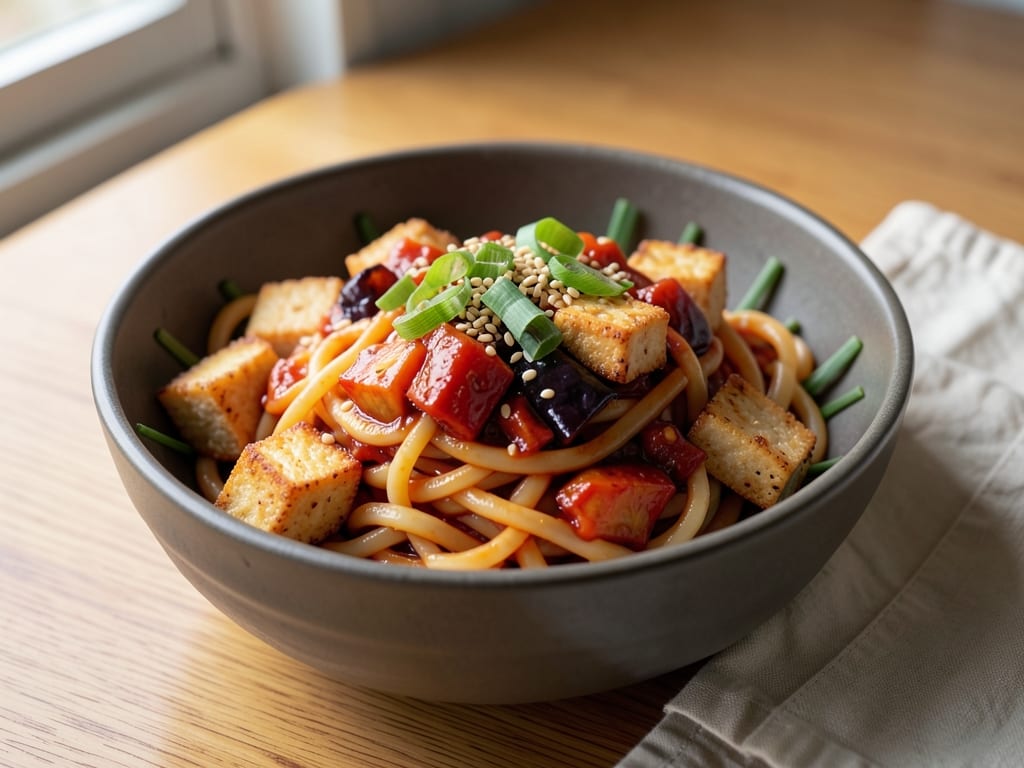
- For a heartier main dish, add pan-fried tofu strips or a few strips of seasoned fried tofu to the vegetable bowl.
Make ahead
"You can blanch and season the spinach, slice all the vegetables, and mix the sauce up to 1 day ahead and refrigerate them separately in covered containers. The whole dish can be cooked up to 1 day ahead. Bring it to room temperature or reheat it before serving."
Storage & reheating
"Room temperature: up to 2 hours. Refrigerator: airtight container up to 4 days; the noodles firm up when cold. Freezer: not recommended because the noodles turn gummy. To reheat, stir-fry in a nonstick skillet over medium heat with 1 to 2 tablespoons of water for 2 to 3 minutes until hot and loosened, or microwave covered with a splash of water for 1 to 2 minutes, stirring halfway."
Substitutions
- fresh shiitake mushrooms → cremini or king oyster mushrooms. Slice to the same thickness. King oyster mushrooms give a firmer, meatier bite.
- granulated sugar → maple syrup (2 tbsp / 30 ml). Adds a slightly different flavor and keeps the sauce vegan without any sugar-refining worries.
- soy sauce → tamari. Makes the dish gluten-free. Check that the noodle package is gluten-free too (pure sweet potato starch is).
- fresh flat-leaf or baby spinach → baby bok choy or chard. Blanch for 45 to 60 seconds, then squeeze dry and chop.