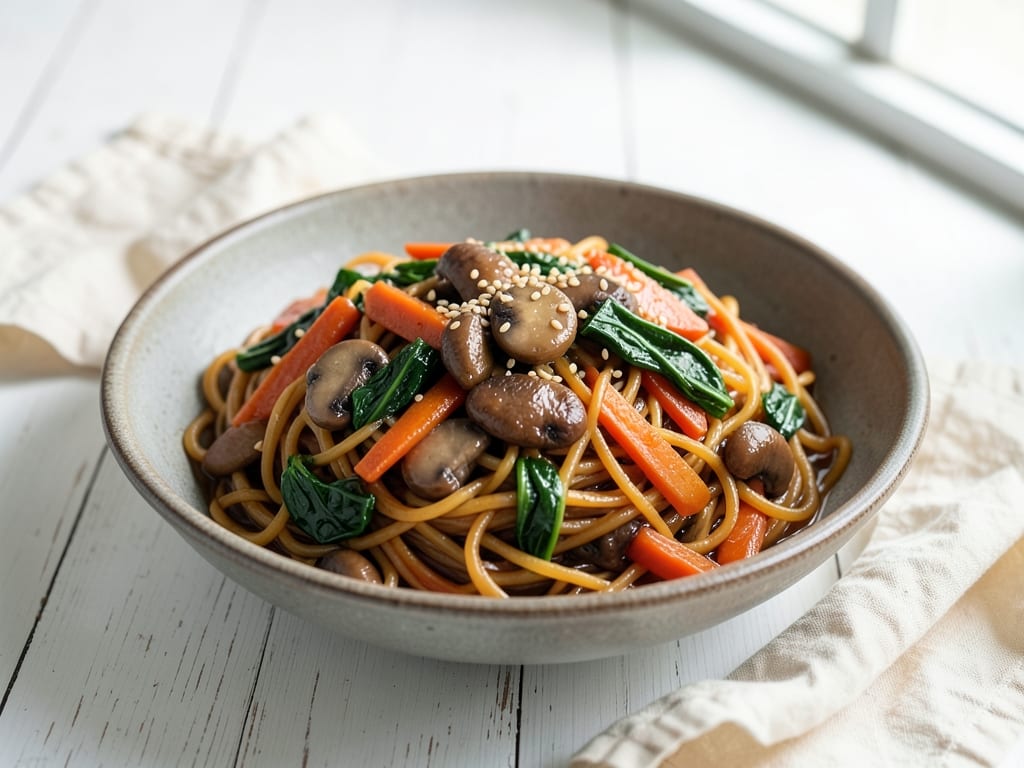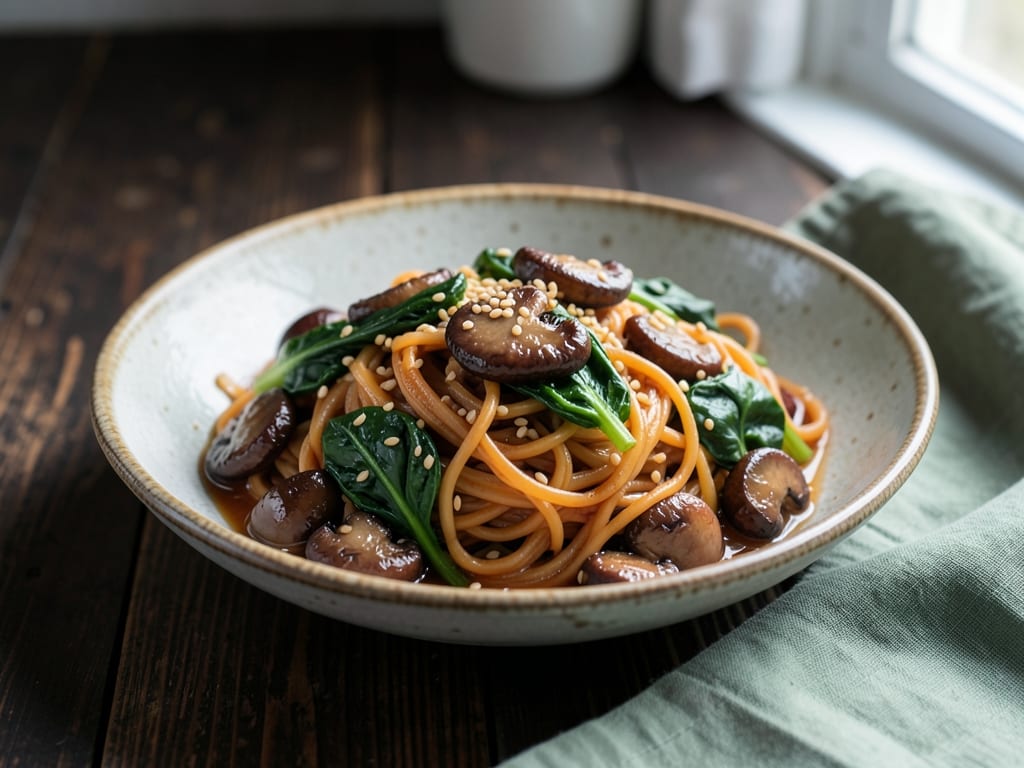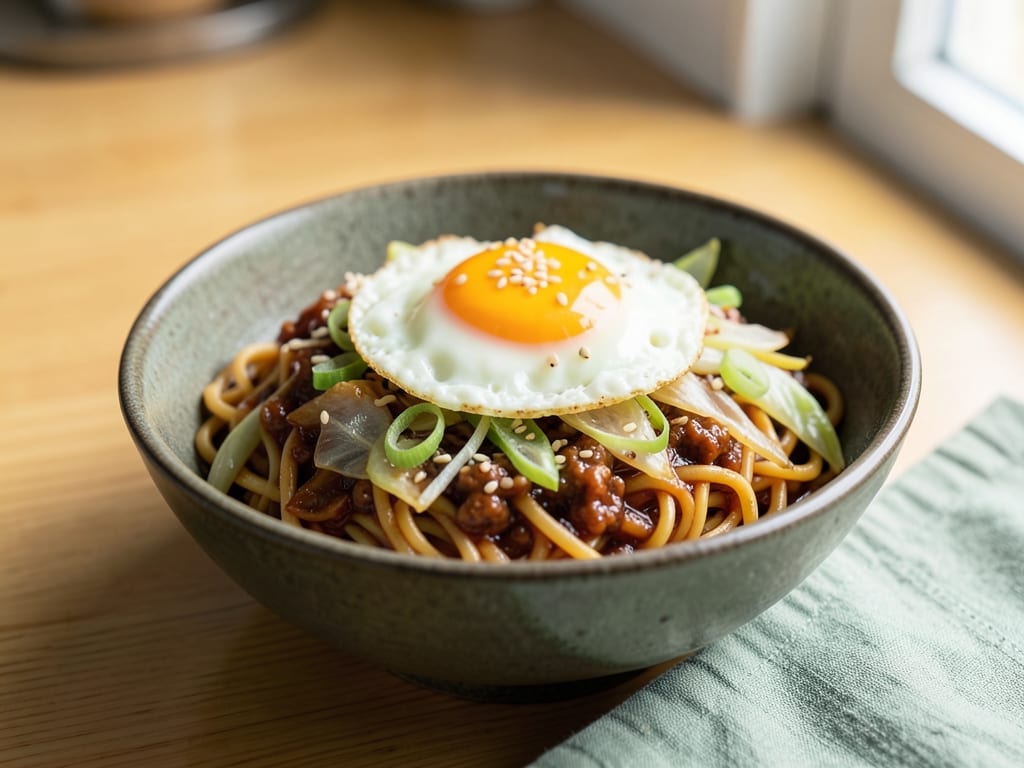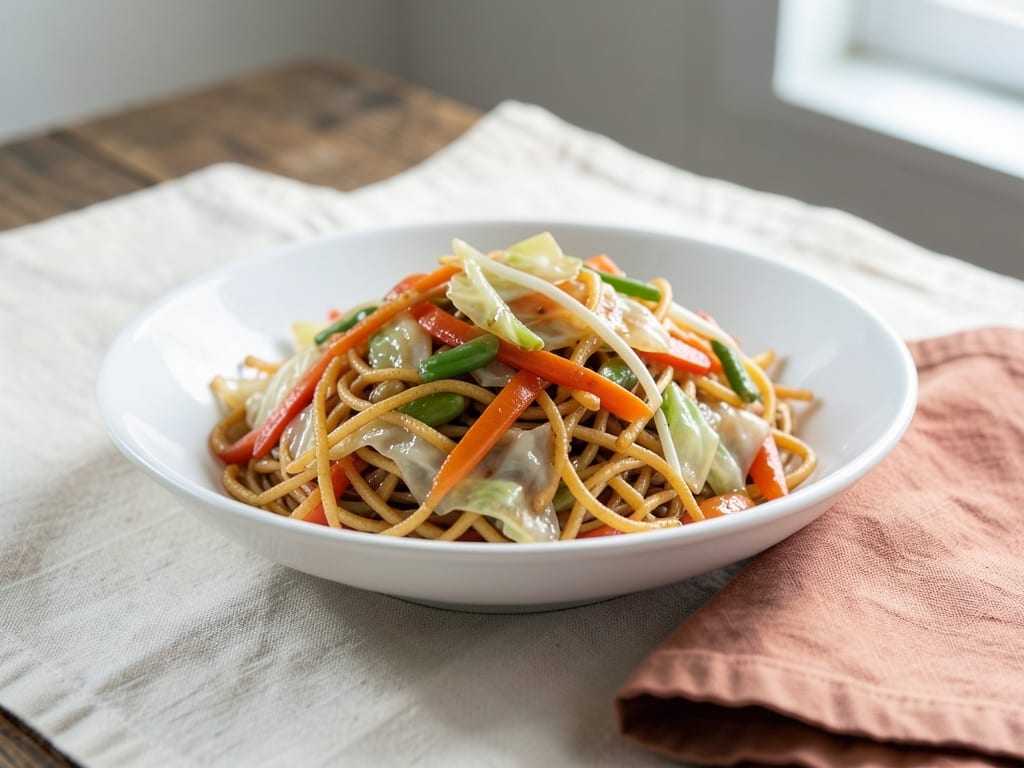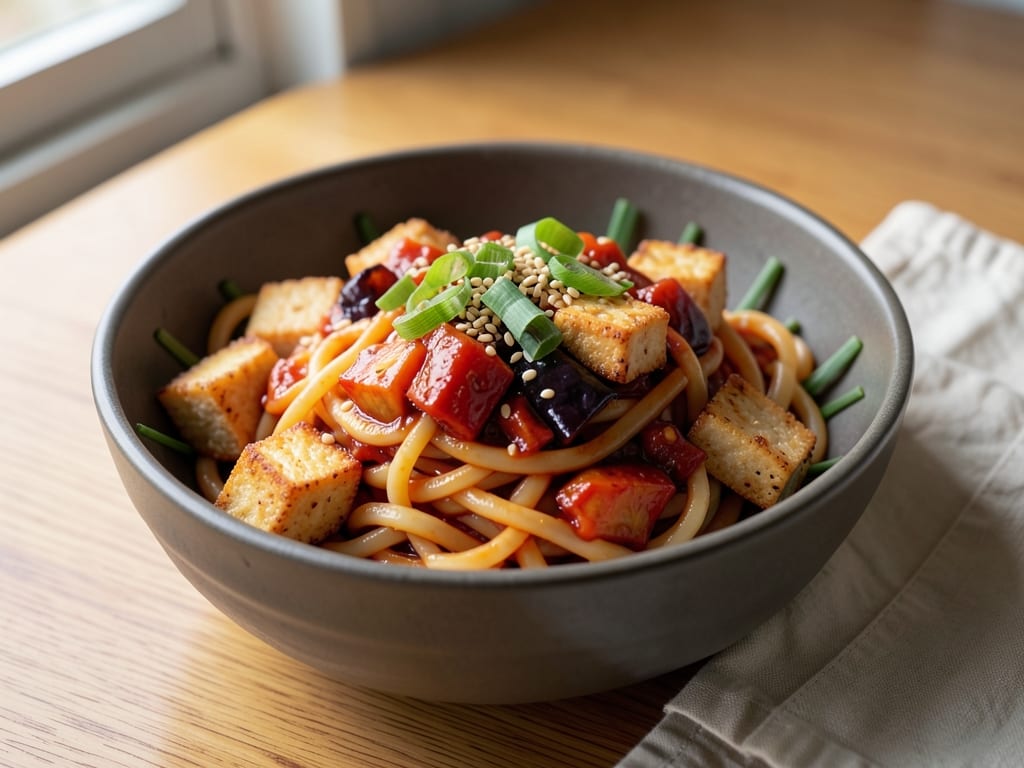
Kimchi Stir-Fried Udon with Crispy Tofu
Chewy udon noodles are tossed in a glossy, spicy-tangy sauce with caramelized kimchi, gochugaru and golden cornstarch-crusted tofu. It's a fast, vegetarian weeknight noodle skillet with deep savory heat.
- Prep
- 15 min
- Cook
- 18 min
- Wait
- 15 min
- Total
- 48 min
- Makes
- 4 generous servings (about 8 cups total)
Steps
Before you start
- Check your kimchi label: traditional kimchi usually contains fish sauce or salted shrimp. For a truly vegetarian dish, buy vegan kimchi.
- Use well-fermented, sour kimchi if you can. Fresh kimchi works but gives a milder, less tangy flavor.
- Press the tofu first. It needs 15 minutes, so start it while you prep everything else.
- Stir-frying moves fast. Chop, measure and mix the sauce before you turn on the heat.
Press the tofu
- Line a rimmed plate with a clean kitchen towel.
- Set the drained tofu block on it, fold the towel over the top, and place a heavy skillet or a few cans on top.
- Press for 15 minutes to squeeze out water.
- Meanwhile, continue with the prep steps below.
+ Show details− Hide details
Ready when: The towel is visibly damp and the tofu feels firmer and drier to the touch.
Tip: Don't skip pressing. Wet tofu spatters in the oil and never gets a crisp crust.
Mix the sauce
- In a small bowl, stir together the soy sauce, gochujang, brown sugar, kimchi juice, water and toasted sesame oil until the gochujang and sugar fully dissolve and no streaks remain.
- Set it next to the stove.
+ Show details− Hide details
Ready when: The sauce is smooth, deep red-brown and the sugar has dissolved.
Prep the aromatics
- Chop the kimchi into bite-size pieces about 1 inch (2.5 cm), saving any juice for the sauce.
- Mince the garlic.
- Slice the scallions thinly, keeping the white and pale green parts in one pile and the dark green tops in another.
- Measure the gochugaru and have everything within arm's reach.
Loosen the udon
- Place the udon in a heatproof bowl and cover with boiling water.
- Let sit for 1 to 2 minutes, gently separating the strands with chopsticks or a fork as they soften.
- Drain well in a colander.
- This replaces boiling and keeps the noodles from turning mushy later in the pan.
+ Show details− Hide details
Ready when: The noodles are fully separated, hot and pliable, with no frozen or stuck-together clumps.
Tip: Don't over-soak. The noodles finish cooking in the skillet.
Crisp the tofu
- Toss the pressed tofu cubes gently with the cornstarch and kosher salt until evenly coated.
- Heat 2 tbsp (30 ml) of the oil in a 12-inch (30 cm) skillet over medium-high heat until it shimmers.
- Add the tofu in a single layer.
- Cook undisturbed for 3 minutes, then turn the pieces every 2 minutes for about 7 to 8 minutes total.
- Transfer to a plate.
+ Show details− Hide details
Ready when: All sides are deep golden brown and the tofu releases easily from the pan with a crisp shell.
Tip: If the tofu sticks, wait another 30 seconds. It releases once the crust forms.
Caramelize the kimchi
- Return the skillet to medium-high heat and add the remaining 1 tbsp (15 ml) oil.
- Add the chopped kimchi and the scallion whites.
- Cook, stirring often, for about 3 minutes.
- Add the garlic and gochugaru and stir for 30 seconds more.
+ Show details− Hide details
Ready when: The kimchi edges look slightly browned and glossy, the garlic smells fragrant, and the oil is tinted red.
Tip: Add the garlic late. It burns quickly and turns bitter.
Sauce and toss noodles
- Add the drained udon to the skillet and pour the sauce over the top.
- Toss with tongs or two spatulas for 2 to 3 minutes, lifting from the bottom so the noodles are evenly coated and heated through.
+ Show details− Hide details
Ready when: The sauce clings to the noodles as a thick glaze with no liquid pooling in the pan, and the noodles are steaming hot and chewy.
Tip: If it looks dry or sticks, splash in 1 to 2 tbsp (15 to 30 ml) water.
Fold in tofu and serve
- Return the crisp tofu to the skillet along with half of the scallion greens.
- Toss gently for 30 seconds to warm through, taking care not to break the cubes.
- Divide among four bowls and top with the remaining scallion greens and the sesame seeds, if using.
- Serve right away.
+ Show details− Hide details
Ready when: The tofu is hot, still crisp at the edges, and the scallions are bright green.
Tip: Taste before serving. Add a splash of soy sauce if it needs salt, or more kimchi juice if you'd like more tang.
Good to know
Tips
- Sour, aged kimchi gives the best flavor. If yours is very fresh, add 1 tsp rice vinegar to the sauce.
- Cook the tofu in a single layer, working in two batches if your pan is smaller than 12 inches, so it fries instead of steaming.
- Keep the heat at medium-high and keep the noodles moving to caramelize the sauce without scorching the sugars.
- For less heat, cut the gochugaru to 1 tsp and use mild kimchi; for more, add an extra tablespoon of gochujang.
Make ahead
Press and cube the tofu, mix the sauce, and chop the kimchi and scallions up to 24 hours ahead. Store each in the refrigerator in separate covered containers. Cook the noodles and tofu just before serving for the best texture.
Storage & reheating
Room temperature: up to 2 hours. Refrigerator: airtight container for up to 3 days; the tofu will soften. Freezer: not recommended, as the noodles and tofu turn spongy. Reheat in a skillet over medium heat for 3 to 4 minutes with a splash of water, stirring until hot throughout, or microwave covered for 1 to 2 minutes.
Substitutions
- frozen or vacuum-packed udon noodles → fresh udon, or dried udon cooked according to package directions and drained. Use the same weight after cooking; rinse dried noodles briefly in cold water to stop sticky clumping.
- gochujang → 1 tbsp miso mixed with 1 tsp extra gochugaru. Gives a similar savory depth with a little less sweetness.
- extra-firm tofu → 8 oz (225 g) sliced shiitake mushrooms or 4 fried eggs. Brown mushrooms in oil for 6 to 8 minutes. Eggs make the dish no longer vegan.
- light brown sugar → maple syrup. Use 2 tsp (10 ml) in the same way.