
Vietnamese Dưa Chua Ginger Papaya Pickle
A bright, ginger-spiked Vietnamese papaya pickle made with crisp green papaya, fresh ginger, and a sweet-tart vinegar brine. Serve alongside grilled meats, spring rolls, or banh mi sandwiches. The papaya stays crunchy and the flavors deepen over a few days, making it perfect for meal prep or as a gift.
- Prep
- 25 min
- Cook
- 10 min
- Wait
- 1 days
- Total
- 1 days
- Makes
- About 4 cups (1 quart)
Steps
Before you start
- Peel and prepare the papaya fully before making the brine so you can work quickly once the brine is hot.
- Have a clean 1-quart (1-liter) glass jar ready, washed and air-dried or warmed in the oven.
- Measure all brine ingredients before you start cooking so you can work at pace.
Prepare the papaya
- Wash the green papaya under cool running water.
- Using a sharp vegetable peeler or chef's knife, remove the thin waxy skin.
- Cut the papaya in half lengthwise and scoop out the soft seeds with a spoon, discarding them.
- Cut each half lengthwise into thin strips about ¼ inch thick and 2 inches long, as if you were making very thin matchsticks.
- Place the papaya strips in a large mixing bowl.
+ Show details− Hide details
Ready when: Papaya is cut into uniform thin strips with no seeds remaining
Tip: Keep papaya strips in the bowl as you cut; if they sit more than 10 minutes uncovered they can oxidize slightly. The thinner you cut them, the faster they pickle.
Prepare the ginger
- Peel the fresh ginger by scraping the skin away with the edge of a spoon or a thin knife blade.
- Cut the peeled ginger into thin julienne (matchstick) strips about 1½ inches long and roughly the thickness of a toothpick.
- Add the ginger to the bowl with the papaya.
+ Show details− Hide details
Ready when: Ginger is cut into thin, even matchstick strips
Tip: Young ginger (thinner skin, milder flavor) can be peeled with a spoon; older ginger requires a knife. Don't remove too much flesh with the skin or you'll lose the delicate texture.
Make the pickling brine
- In a medium saucepan, combine the rice vinegar, water, sugar, and sea salt.
- Bring to a boil over medium-high heat, stirring occasionally until the sugar and salt dissolve completely, about 5–7 minutes.
- Do not simmer longer than needed; you want a clear, bright brine.
- If using the optional chili and garlic, add them to the hot brine off the heat.
+ Show details− Hide details
Ready when: Brine is at a rolling boil, sugar and salt are fully dissolved, and the liquid is clear
Tip: Do not let the brine caramelize or darken; keep the heat at medium-high and stir gently. Overheating can dull the bright, fresh flavor.
Pack the jar and brine
- Working quickly while the brine is still hot, transfer the papaya and ginger mixture to the clean 1-quart glass jar, packing it gently but firmly so pieces are submerged.
- Pour the hot brine slowly over the papaya and ginger until the jar is filled to about ½ inch below the rim.
- Make sure all the papaya is covered by brine.
+ Show details− Hide details
Ready when: All papaya is submerged in hot brine, jar is filled nearly to the rim
Tip: If any papaya floats above the brine, it may spoil or discolor. Use the back of a spoon to gently press it down. The hot brine will create a slight vacuum as it cools.
Cool and seal
- Place the nonmetallic lid or plastic-lined cap on the jar loosely (do not seal tightly yet) and let the pickle cool to room temperature on the countertop, about 1 hour.
- Once completely cool, seal the jar tightly.
- Store in a cool, dark cupboard or the refrigerator.
+ Show details− Hide details
Ready when: Jar is cool to the touch and the brine has no visible steam
Tip: Loose cooling prevents condensation from dripping back into the pickle. Once sealed, the pickle will keep for weeks in the refrigerator and improves in flavor after 1–2 days.
Let it cure (optional but recommended)
- For the best flavor, let the pickle rest at room temperature or in the refrigerator for at least 24 hours before opening.
- The papaya will soften slightly while remaining crunchy, and the ginger warmth will develop throughout.
- The longer it sits (up to 2 weeks), the more mellow and harmonious the flavor becomes.
+ Show details− Hide details
Ready when: Papaya has taken on a translucent appearance and tastes balanced between sweet, sour, and ginger warmth
Tip: You can taste a small piece after 12 hours to check if you prefer it crisper or softer. If you like more ginger bite, eat it earlier; for a softer, more integrated flavor, wait longer.
Good to know
Tips
- For extra crunch, salt the papaya strips lightly in a colander for 30 minutes before packing the jar. Rinse them well and pat dry; this draws out excess water and firms the texture.
- If you prefer less aggressive ginger flavor, cut the ginger amount in half and add a few thin coins of fresh galangal instead for a more floral note.
- Serve the pickle as a palate cleanser alongside rich grilled meats, in banh mi sandwiches, or with spring rolls. The bright acidity and heat cut through fat beautifully.
- Recycle the brine after eating the papaya: use it to pickle other vegetables like cucumbers, daikon, or carrots within 2 weeks for a quick second batch.
Make ahead
Store the sealed jar in the refrigerator for up to 3 weeks, or in a cool, dark cupboard for up to 1 week. It will improve in flavor after 1–2 days and can be gifted as a condiment or served immediately after cooling.
Storage & reheating
Room temperature (cool, dark cupboard): up to 1 week. Refrigerator: up to 3 weeks. Freezer: not recommended (papaya texture suffers). Once opened, keep the jar sealed and refrigerated, and eat within 2 weeks. No reheating needed; serve cold or at room temperature straight from the jar.
Substitutions
- unseasoned rice vinegar → White distilled vinegar (5% acidity) or apple cider vinegar. Use the same volume. White distilled vinegar will be sharper; apple cider vinegar adds a slight fruitiness. Both will pickle just as well, but the flavor profile will shift slightly.
- granulated white sugar → Honey or palm sugar (jaggery). Use the same volume but reduce to ½ cup (100 g) if using honey, as it is sweeter. Palm sugar adds a caramel note and is traditional in Vietnamese pickles.
- green (unripe) papaya, firm and pale yellow-green → Green mango, unripe pineapple, or daikon radish, cut into similar thin strips. Green mango and radish are common substitutes; they will pickle faster and have a sharper crunch. Adjust wait time if using radish (it may be ready in 12 hours).
- fresh ginger, young or mature → Galangal (laos), or a combination of ginger and a few thin slices of turmeric. Galangal adds a piney, floral note. Turmeric brings earthiness. Use the same amount, adjusting to taste preference.
More pickles & chutneys
See all →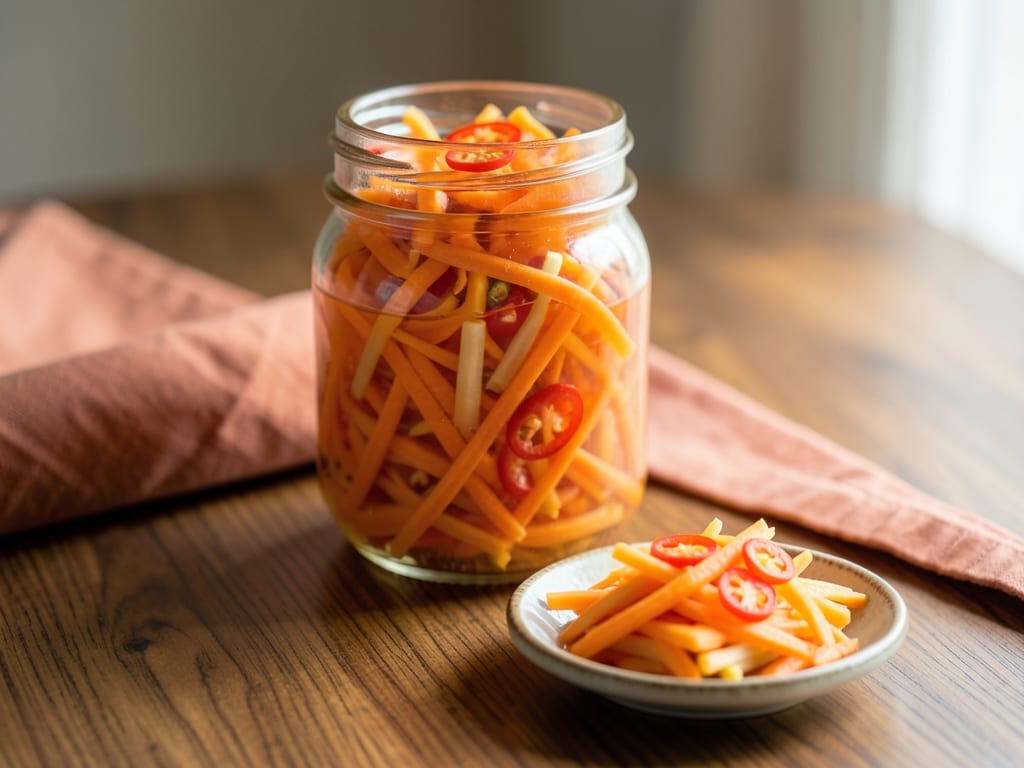


Find more like this
- Meal
- Lunch
- Cuisine
- Vietnamese
- Method
- Stovetop