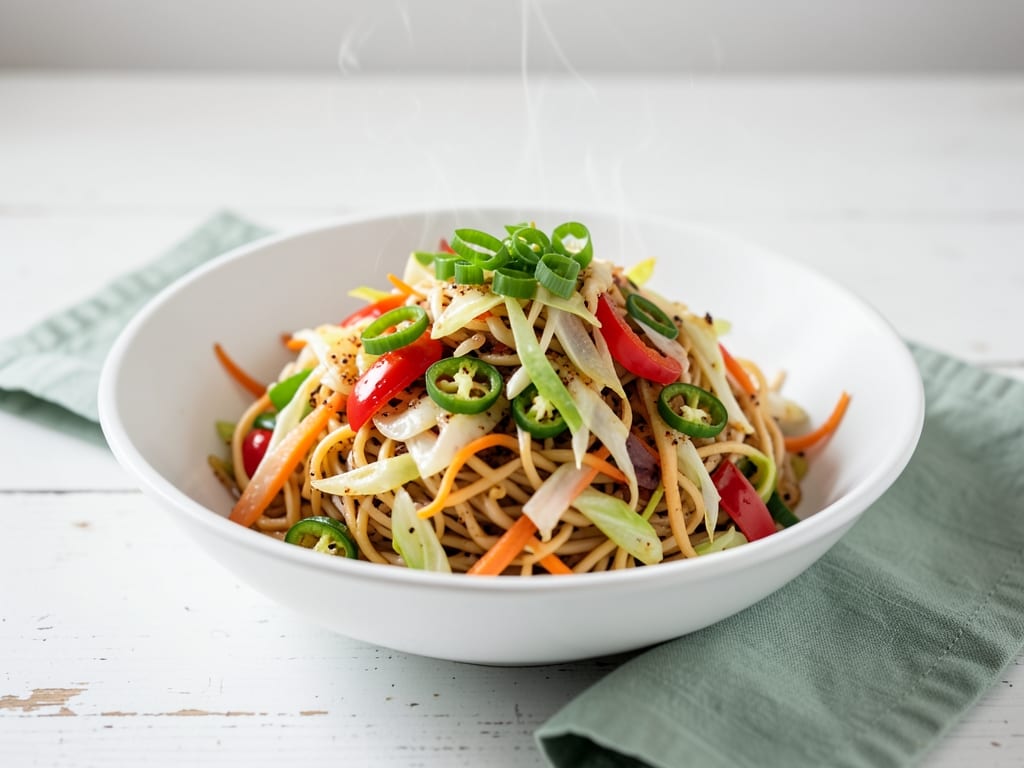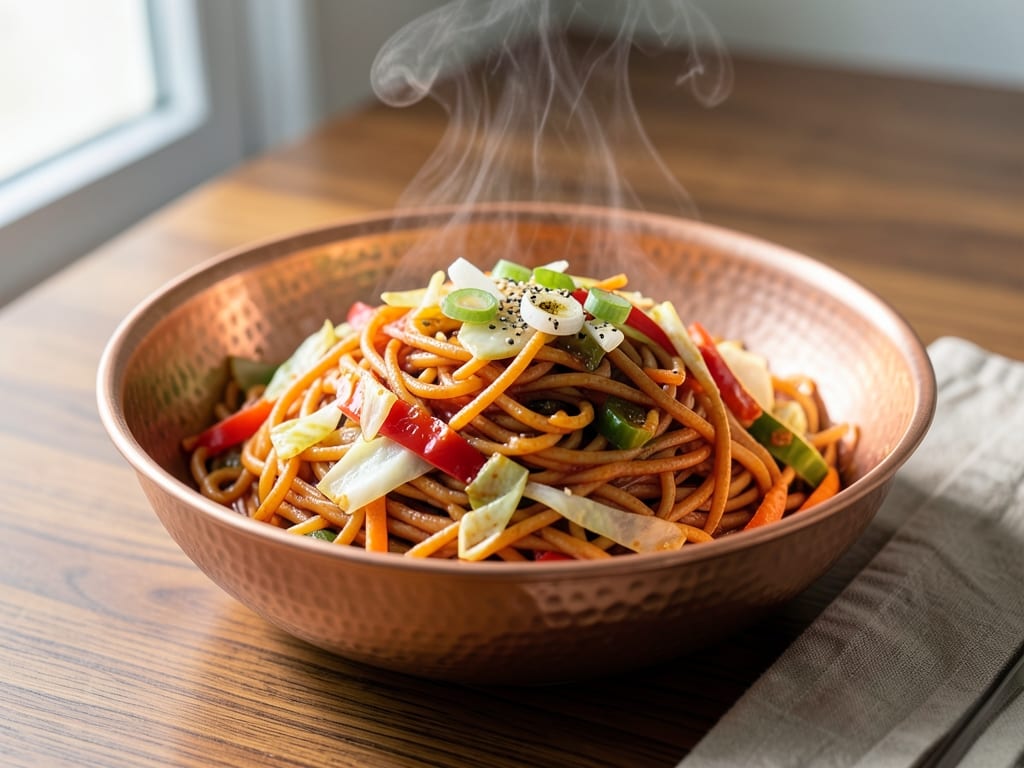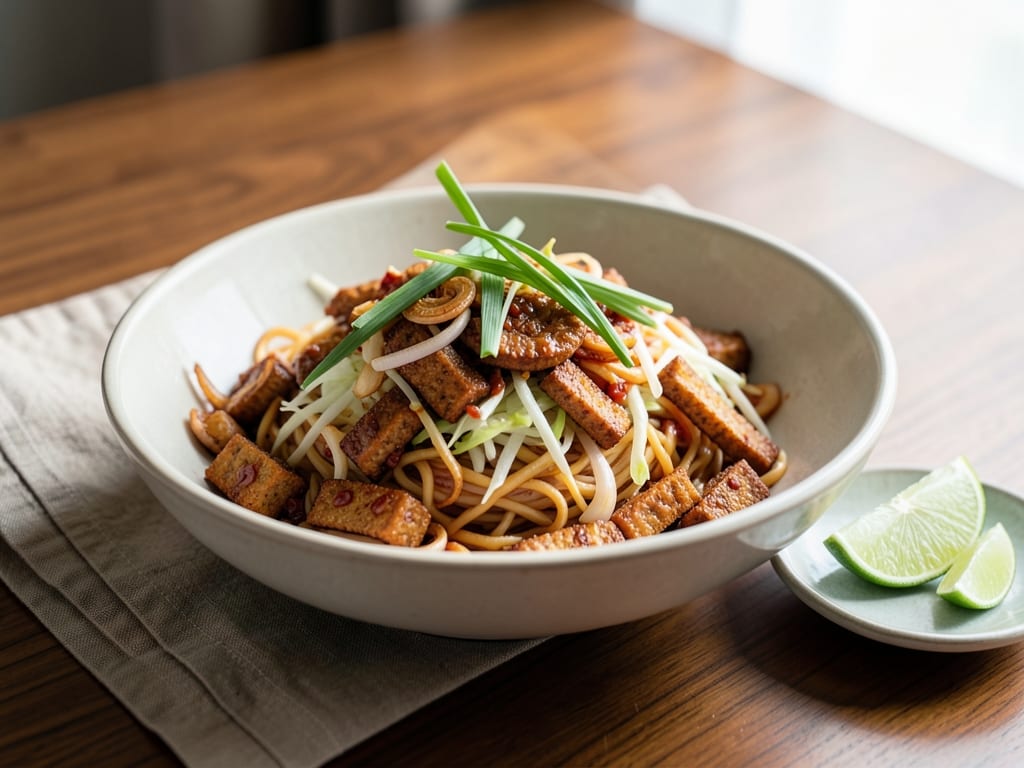
Vegan Mie Goreng with Tempeh
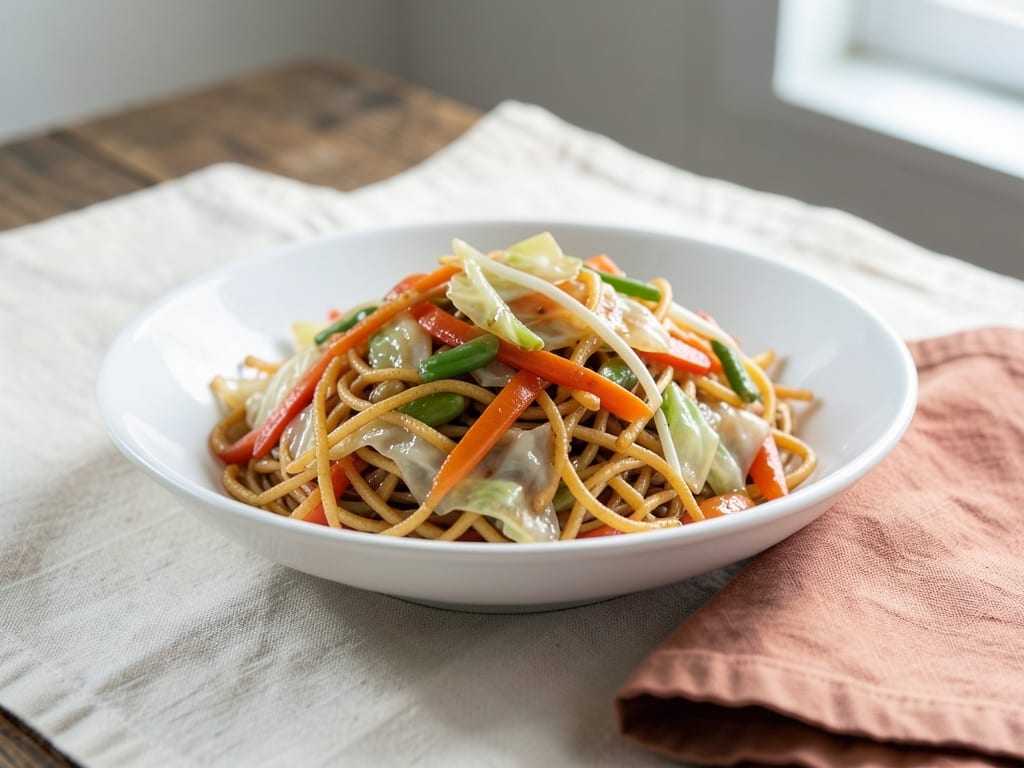
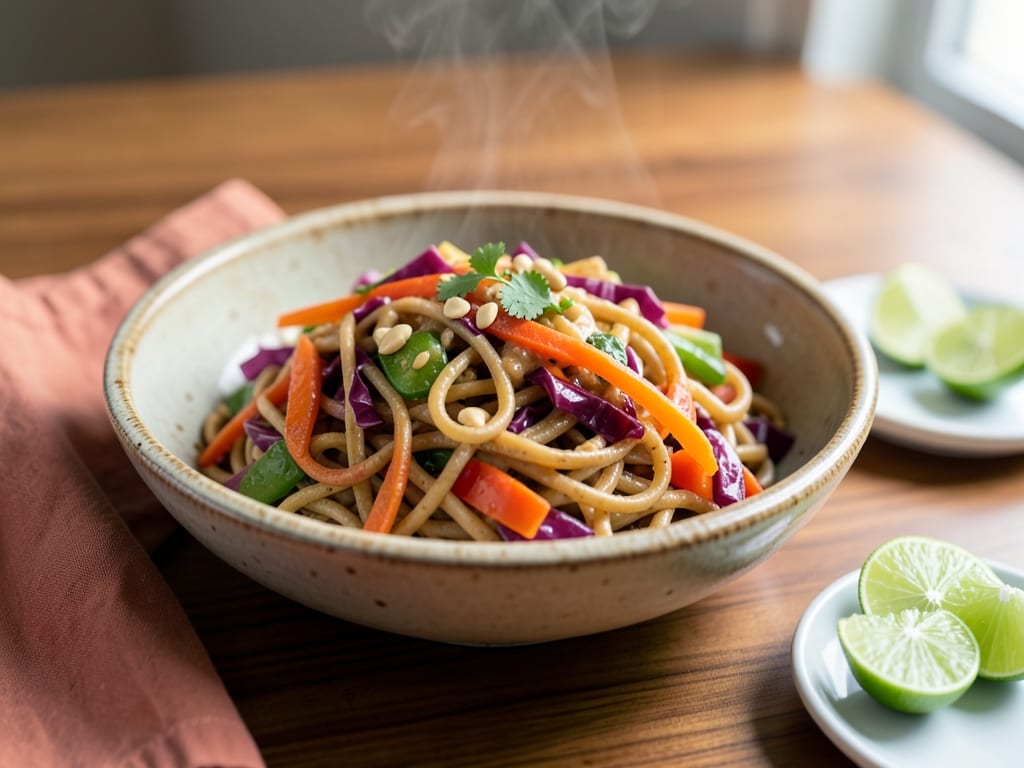
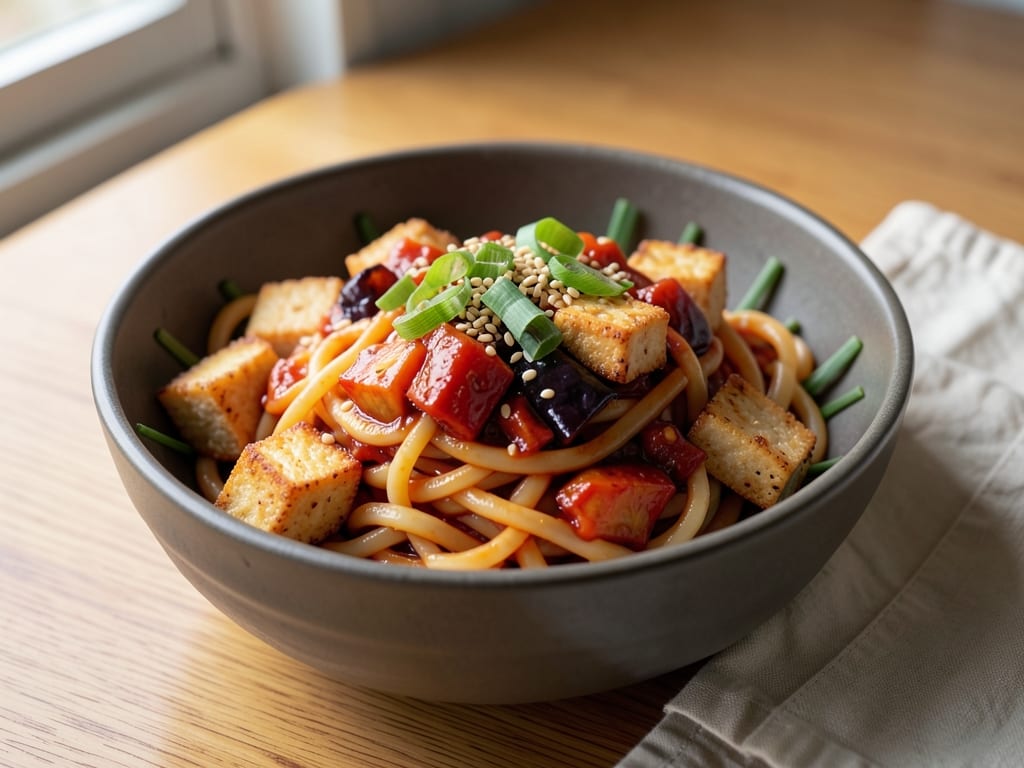
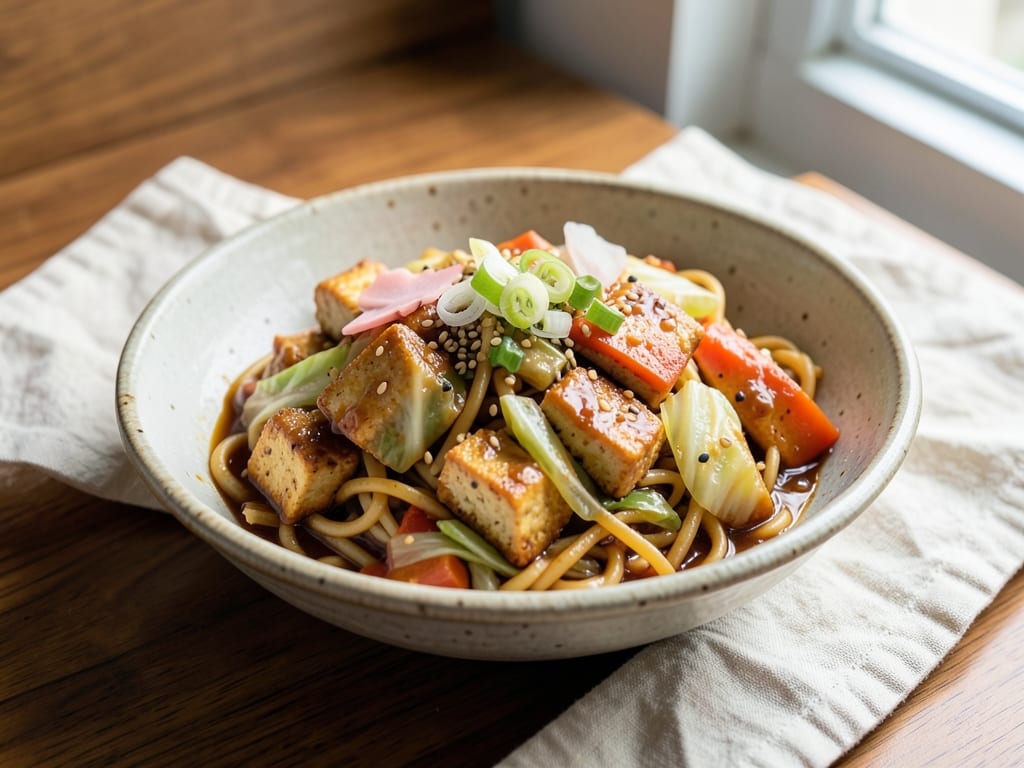
Indonesian-style fried noodles with crisp-edged tempeh, shallots, garlic, cabbage and a sticky-sweet kecap manis sauce with a little chili heat. It's fully vegan, made in one wok, and ready in about 50 minutes.
- Prep
- 20 min
- Cook
- 25 min
- Wait
- 5 min
- Total
- 50 min
- Makes
- 4 generous main-course servings (about 6 cups / 1.4 L total)
Steps
Before you start
- Check the noodle package: many wheat noodles contain egg. Buy ones labeled egg-free or vegan, and check that your kecap manis, ketchup and sambal are vegan too.
- Prep everything before you turn on the heat. Stir-frying moves fast, so the sauce, vegetables and noodles should all be within reach.
- Cook the noodles about 1 minute less than the package says, then rinse them. They finish cooking in the wok, and this keeps them from turning mushy.
- Use a 14-inch (35 cm) wok or a large, deep 12-inch (30 cm) skillet. If yours is smaller, stir-fry the noodles in two batches.
Prep the ingredients
- Cut the tempeh into ½-inch (1.25 cm) cubes.
- Slice the shallots, mince the garlic, shred the cabbage, and cut the carrot into thin matchsticks.
- Slice the bok choy crosswise into ½-inch (1.25 cm) strips and keep the white stems separate from the green leaves.
- Slice the scallions.
- Line everything up next to the stove.
+ Show details− Hide details
Ready when: Everything is cut and within reach of the stove.
Tip: Cut the vegetables thin and about the same size so they cook in the same short time.
Cook the noodles
- Bring a large pot of water to a boil.
- Add the noodles and cook for 1 minute less than the package directions, usually 3–4 minutes.
- Drain in a colander, rinse under cold running water to stop the cooking and wash off surface starch, then shake very well.
- Leave to drain.
+ Show details− Hide details
Ready when: Noodles are flexible and still slightly firm in the center when bitten, with no hard white core.
Tip: Wet noodles will steam rather than fry in the wok, so drain them thoroughly.
Mix the sauce
- In a small bowl, stir together 3 tbsp (45 ml) kecap manis, the soy sauce, ketchup, sambal oelek, white pepper and water until smooth and evenly brown.
+ Show details− Hide details
Ready when: No streaks of ketchup or sambal are visible.
Tip: Taste on a spoon. It should taste sweet, salty and slightly spicy, since the noodles will dilute it.
Crisp the tempeh
- Heat 3 tbsp (45 ml) oil in the wok over medium-high heat until it shimmers.
- Add the tempeh in a single layer and fry, turning only every 1–2 minutes, for 6–7 minutes total.
- Add 1 tbsp (15 ml) kecap manis and toss for 30 seconds to glaze.
- Transfer the tempeh to a plate.
- Leave the oil in the wok.
+ Show details− Hide details
Ready when: Tempeh is deep golden brown on most sides, with crisp edges, and the glaze is sticky and dark.
Tip: Don't stir constantly. Tempeh needs contact with the pan to brown. Add the kecap manis only at the end because the sugar burns quickly.
Fry the aromatics
- Add the 2 tbsp (30 ml) of oil for the stir-fry to the wok, which should still hold the leftover tempeh oil.
- Heat over medium-high heat.
- Add the shallots and cook, stirring, for 2 minutes.
- Add the garlic and cook for 30 seconds.
+ Show details− Hide details
Ready when: Shallots are soft and lightly golden at the edges, and the garlic smells fragrant but is not brown.
Tip: If the garlic starts to darken, lower the heat right away. Burnt garlic turns bitter.
Stir-fry the vegetables
- Turn the heat to high.
- Add the cabbage, carrot and bok choy stems and stir-fry for 2–3 minutes.
- Add the bok choy leaves and cook for 30 seconds more.
+ Show details− Hide details
Ready when: Cabbage is wilted with a few browned edges, the carrot is crisp-tender, and the bok choy leaves are bright green.
Tip: Keep the vegetables moving so they sear rather than steam.
Add noodles and sauce
- Add the drained noodles to the wok and pour the sauce over them.
- Using tongs or chopsticks, lift and toss constantly for 2–3 minutes, scraping up any sticky bits from the bottom, until every strand is coated and the noodles are hot and steaming.
+ Show details− Hide details
Ready when: Noodles are evenly dark brown and glossy, with no pools of liquid in the bottom of the wok.
Tip: If the noodles stick or look dry, splash in 1–2 tbsp (15–30 ml) of water and keep tossing.
Finish and season
- Return the tempeh to the wok along with most of the scallions, saving a small handful for garnish.
- Toss for 30 seconds to warm through.
- Taste and add a little more sambal or soy sauce if you want it spicier or saltier.
+ Show details− Hide details
Ready when: The scallions are bright green and just wilted, and the tempeh is hot.
Serve
- Divide the noodles among 4 warm plates or bowls.
- Top with the remaining scallions and the crispy fried shallots, if using.
- Serve right away with a lime wedge on each plate to squeeze over.
+ Show details− Hide details
Tip: Squeeze the lime just before eating. The acidity brightens the sweet sauce.
Good to know
Tips
- Use a hot pan and don't overcrowd it. If your wok is small, make the dish in two batches so the noodles fry instead of steam.
- Egg-free doesn't always mean vegan, so check the labels on your noodles and sauces. Some ketchups and sambals contain shrimp or fish products.
- For extra protein and the classic street-food touch, serve with sliced cucumber and tomato on the side.
- Kecap manis burns easily because of its sugar. Add it late in the cooking and keep the noodles moving.
Make ahead
"Prep all the vegetables, mix the sauce, and cube the tempeh up to 1 day ahead. Keep each in a separate covered container in the fridge. Cook the noodles and fry the dish just before serving for the best texture."
Storage & reheating
"Room temperature: up to 2 hours. Fridge: up to 4 days in an airtight container. Freezer: not recommended, since the noodles turn soft. Reheat in a hot skillet or wok with 1–2 tbsp (15–30 ml) of water for 3–4 minutes, tossing, until steaming hot. Alternatively, microwave covered for 1–2 minutes, stirring halfway."
Substitutions
- kecap manis (sweet soy sauce) → 1 tbsp dark brown sugar or palm sugar dissolved in 2 tbsp soy sauce for every 3 tbsp kecap manis. Kecap manis is thick and molasses-like. The substitute gives a similar sweet-salty flavor but less depth, so add a pinch of extra white pepper.
- tempeh → extra-firm tofu, pressed and cubed. Fry the tofu for 8–10 minutes until golden. It's milder than tempeh and won't have the nutty flavor.
- dried egg-free thin wheat noodles → egg-free spaghetti or dried udon. Cook according to the package, minus 1 minute. Spaghetti makes a firmer, chewier dish.
- sambal oelek (chili paste) → 1 finely chopped red chili, or ½ tsp chili flakes. Add the chili with the garlic to take the heat down a notch or leave it out for a mild version.