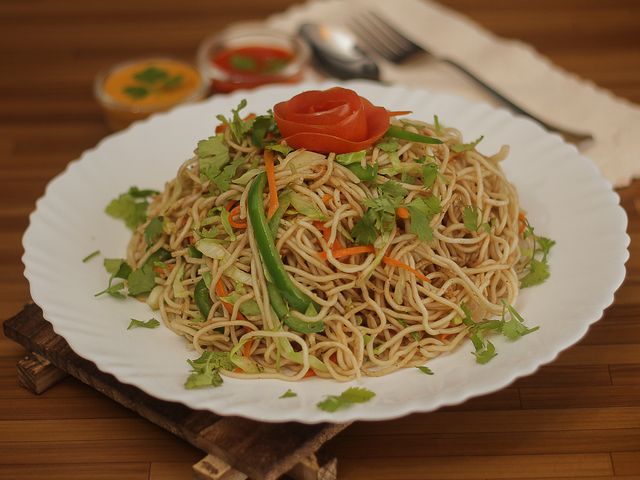
Schezwan Vegetable Hakka Noodles
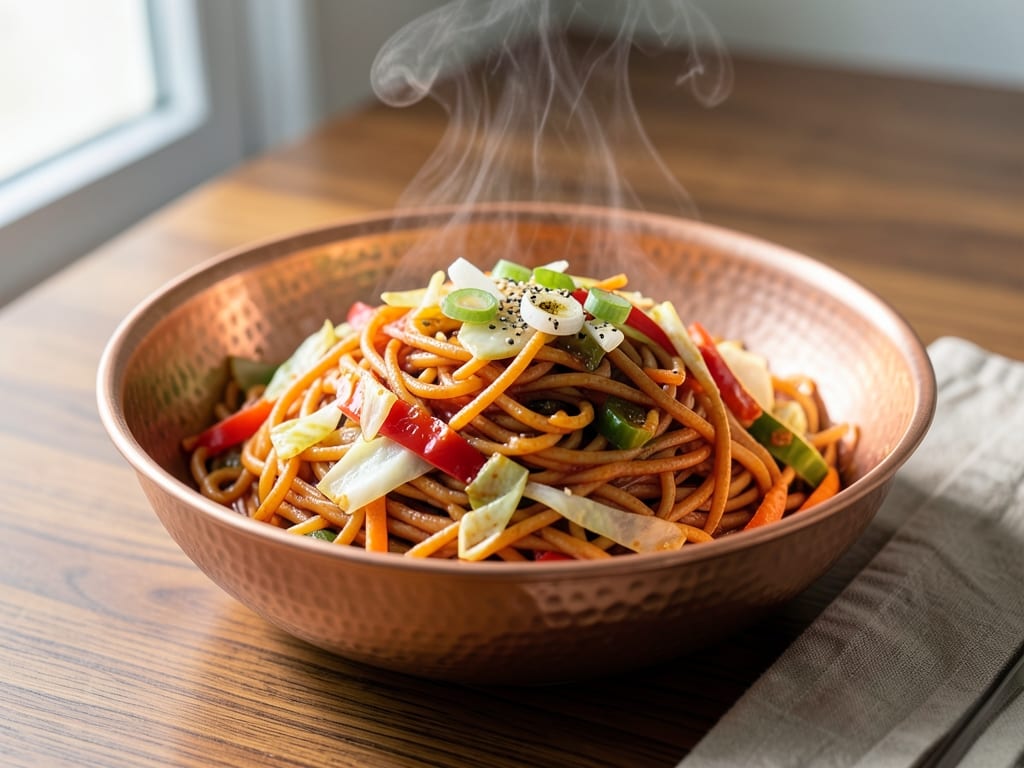
Springy noodles tossed over blazing heat with crisp cabbage, carrot and bell pepper in a garlicky, spicy schezwan sauce. This Indian-Chinese street-food favorite comes together in about 30 minutes and tastes like your favorite takeout stall.
- Prep
- 20 min
- Cook
- 15 min
- Wait
- 10 min
- Total
- 45 min
- Makes
- About 4 generous servings (8 cups / 1.6 kg noodles)
Steps
Before you start
- Cut all vegetables before you turn on the stove; stir-frying moves too fast to chop as you go.
- Mix the sauce ingredients in a small bowl first so you can pour it in all at once.
- Cook the noodles until just al dente and dry them well; soggy or wet noodles clump and steam instead of frying.
- Use your largest wok or a 14-inch (35 cm) skillet. If yours is smaller, fry the vegetables and noodles in two batches.
Prep the vegetables
- Peel and cut the carrot into matchsticks, slice the onion and bell pepper into thin strips, shred the cabbage, and chop the garlic, ginger and green chili.
- Slice the scallions, keeping the whites and dark green tops in separate piles.
- Arrange everything near the stove.
+ Show details− Hide details
Ready when: Vegetables are cut to similar thin strips so they cook at the same speed.
Tip: Cut vegetables thin and uniform; thick pieces stay raw while the noodles overcook.
Mix the sauce
- In a small bowl, stir together the schezwan sauce, soy sauce, vinegar, red chili sauce, sugar and black pepper until the sugar dissolves and the mixture is evenly red-brown.
+ Show details− Hide details
Ready when: No sugar granules remain at the bottom of the bowl.
Tip: Taste a drop; schezwan brands vary in saltiness and heat, so you may adjust later.
Boil the noodles
- Bring 3 quarts (3 L) water to a rolling boil in the large pot and add the salt.
- Add the noodles and cook, stirring occasionally, for 3 to 4 minutes, or 1 minute less than the package directs.
- They should be firm in the center when bitten (al dente).
+ Show details− Hide details
Ready when: Noodles are flexible but still have a firm, slightly chalky center when bitten.
Tip: Undercook slightly; they finish cooking in the wok.
Drain and cool noodles
- Drain the noodles in a colander and rinse under cold running water for 30 seconds to stop the cooking.
- Shake very well, then spread on a sheet pan, drizzle with the 1 teaspoon oil and toss with your fingers to coat.
- Let them air-dry for 10 minutes.
+ Show details− Hide details
Ready when: Noodles feel cool, dry on the surface and separate easily without sticking.
Tip: Wet noodles turn gummy in the wok. Dry them well.
Heat the wok
- Set the wok over high heat for 2 minutes until it is very hot and a drop of water evaporates instantly.
- Add the 3 tablespoons oil and swirl to coat the sides.
+ Show details− Hide details
Ready when: Oil shimmers and flows thinly, with a faint wisp of smoke.
Tip: A properly hot wok is the secret to smoky flavor and crisp vegetables.
Fry the aromatics
- Add the garlic, ginger, green chili and scallion whites.
- Stir constantly for 20 to 30 seconds.
+ Show details− Hide details
Ready when: Garlic smells fragrant and is just turning pale golden, not brown.
Tip: Burnt garlic turns bitter. If it browns too fast, lift the wok off the heat for a few seconds.
Stir-fry the vegetables
- Add the onion and carrot and toss for 1 minute.
- Add the bell pepper and cabbage and keep tossing for 2 minutes more, so the vegetables are lightly charred at the edges but still crunchy.
+ Show details− Hide details
Ready when: Cabbage is just wilted at the edges with bright colors; carrots are crisp-tender.
Tip: Don't overcrowd the wok. Work in two batches if vegetables start to steam and release water.
Add noodles and sauce
- Add the noodles to the wok, then pour the sauce evenly over them.
- Toss continuously with tongs or a spatula, lifting from the bottom, for 2 to 3 minutes until every strand is coated and heated through.
+ Show details− Hide details
Ready when: Noodles are evenly glossy red-brown, steaming hot, and no sauce pools in the wok.
Tip: Toss rather than stir, to avoid breaking the noodles.
Finish and serve
- Remove the wok from the heat.
- Drizzle with the sesame oil, add the scallion greens and toss for 10 seconds.
- Taste and add a splash of soy sauce or pinch of pepper if needed.
- Serve immediately in warm bowls.
+ Show details− Hide details
Ready when: Noodles smell nutty and spicy, with bright green scallion flecks throughout.
Tip: Add sesame oil off the heat; it turns bitter when it burns.
Good to know
Tips
- Keep the heat high and the wok uncrowded; smoky flavor (wok hei) comes from fast, hot cooking.
- Cold, dry noodles stay separate; warm or wet noodles clump.
- Add a handful of fried tofu, paneer cubes or a scrambled egg for more protein.
- Adjust heat by using less schezwan sauce and skipping the green chili, then add more at the table.
Make ahead
"Cook, rinse, oil and dry the noodles up to 1 day ahead and refrigerate in a covered container. Cut the vegetables and mix the sauce up to 1 day ahead and refrigerate separately. Stir-fry just before serving."
Storage & reheating
"Room temperature: up to 2 hours. Refrigerator: airtight container up to 3 days. Freezer: not recommended, as the vegetables turn soft and the noodles mushy. Reheat in a hot, lightly oiled skillet or wok for 2 to 3 minutes with a splash of water, tossing until steaming hot."
Substitutions
- dried Hakka or thin wheat noodles (or fresh egg noodles) → Spaghetti, linguine or rice noodles. Spaghetti works well and should be cooked al dente; rice noodles should be soaked or cooked per package and handled gently.
- schezwan sauce (store-bought or homemade) → 2 tbsp chili garlic sauce plus 1 tbsp ketchup. Gives similar heat and tang, though less depth than real schezwan sauce.
- green cabbage → Napa cabbage, bean sprouts or sliced mushrooms. Napa cooks faster, so add it in the last minute.
- soy sauce → Tamari. Makes the dish gluten-free if you also use gluten-free noodles and check the sauce labels.