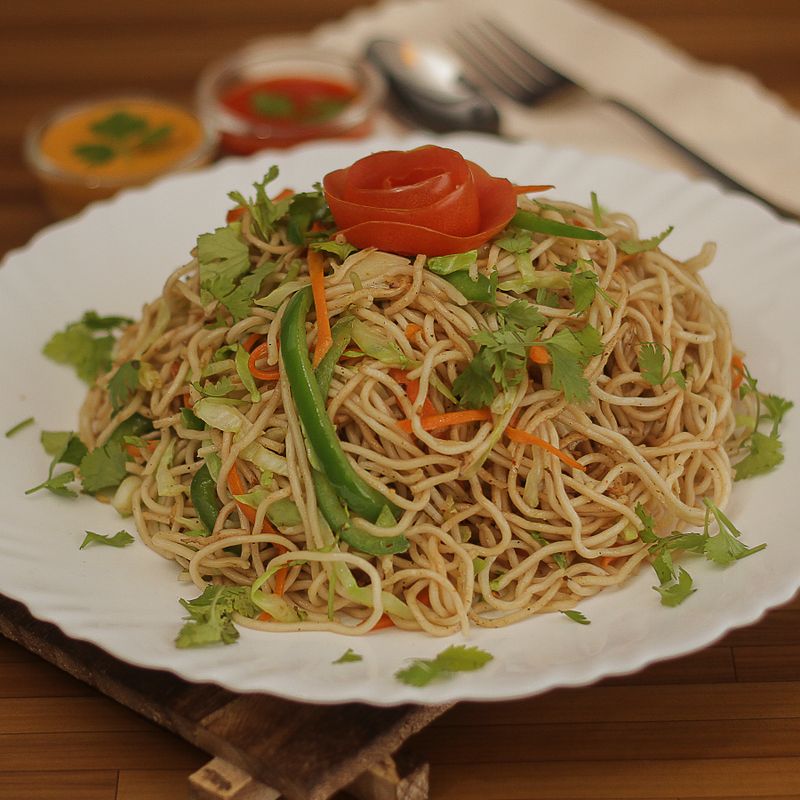
Vegetable Chow Mein
Takeout-style chow mein with springy noodles, crisp-tender cabbage, celery, carrots and onion, tossed in a savory soy-oyster-style sauce. Ready in about 35 minutes in one large skillet or wok.
- Prep
- 20 min
- Cook
- 15 min
- Total
- 35 min
- Makes
- About 8 cups (4 generous servings)
Steps
Before you start
- Chop and measure everything before heating the pan; stir-frying moves fast.
- Check your noodle package: fresh chow mein noodles need only a short boil, while dried ones need the full package time.
- Use a 14-inch (35 cm) wok or your largest skillet so the noodles can toss freely instead of steaming.
- Make sure the noodles are well drained and fairly dry for the best browning.
Mix the sauce
- In a small bowl, stir together the low-sodium soy sauce, dark soy sauce, oyster or stir-fry sauce, sugar, sesame oil, water and white pepper until the sugar dissolves.
- Set it next to the stove.
+ Show details− Hide details
Ready when: Sugar is dissolved and the sauce looks uniformly dark.
Prep the vegetables
- Slice the cabbage, celery, onion and carrots as described.
- Mince the garlic and grate the ginger together on a small plate.
- Keep the scallion whites with the garlic and the greens separate.
- Uniform thin cuts cook at the same speed.
+ Show details− Hide details
Ready when: All vegetables are cut into thin, similar-sized pieces.
Tip: Cut carrots thinnest of all since they cook slowest.
Boil the noodles
- Bring a large pot of water to a boil.
- Cook the noodles, stirring to separate, for 2 to 3 minutes for fresh noodles (follow the package for dried, usually 4 to 5 minutes) until just tender but still with a firm bite.
- Drain well in a colander, rinse briefly with cold water, and shake off as much water as possible.
- Toss with 1 teaspoon of the oil to prevent sticking.
+ Show details− Hide details
Ready when: Noodles are flexible and separate but still slightly firm in the center.
Tip: Undercook slightly; they finish cooking in the wok and will turn mushy if fully cooked now.
Brown the noodles
- Heat a wok or large skillet over high heat for 1 minute.
- Add 1 tablespoon oil and swirl.
- Add the noodles in an even layer and let them sit undisturbed for 1 minute, then toss and repeat once more, 2 to 3 minutes total.
- Transfer to a plate.
+ Show details− Hide details
Ready when: Edges of the noodles are golden with a few crisp, browned spots.
Tip: Do not overcrowd; if your pan is small, brown the noodles in two batches.
Stir-fry the hard vegetables
- Return the pan to high heat and add the remaining oil (about 1 tablespoon plus 2 teaspoons).
- Add the onion, carrots and celery and stir-fry constantly for 2 minutes.
+ Show details− Hide details
Ready when: Onion is slightly translucent at the edges and carrots are bright orange and just starting to soften.
Add aromatics and cabbage
- Push the vegetables aside, add the garlic, ginger and scallion whites to the cleared spot, and stir for 15 seconds until fragrant.
- Add the cabbage (and bean sprouts, if using) and stir-fry for 2 minutes.
+ Show details− Hide details
Ready when: Cabbage is wilted at the edges but still crisp-tender with some bite.
Tip: If garlic starts to brown, add the cabbage right away to cool the pan.
Toss with noodles and sauce
- Return the noodles to the pan on top of the vegetables.
- Stir the sauce again and pour it around the edges of the pan.
- Using tongs, toss and lift everything for 2 minutes so the noodles absorb the sauce evenly.
+ Show details− Hide details
Ready when: Noodles are evenly glossy and brown, with no pooled liquid at the bottom of the pan.
Tip: Lift from the bottom with tongs rather than stirring to avoid breaking the noodles.
Finish and serve
- Turn off the heat, add the scallion greens, and toss for 10 seconds.
- Taste and add a splash of soy sauce if needed.
- Serve immediately while hot.
+ Show details− Hide details
Ready when: Scallions are bright green and slightly wilted; the noodles are steaming hot.
Good to know
Tips
- Dry noodles well after draining; excess water prevents browning and dilutes the sauce.
- Keep the heat high and avoid crowding the pan so the vegetables stir-fry rather than steam.
- Add protein like pressed tofu, shrimp or sliced chicken by cooking it first, setting it aside, and returning it with the noodles.
- Add a spoonful of chili crisp at the table for heat.
Make ahead
Slice all vegetables and mix the sauce up to 1 day ahead; store the vegetables in airtight containers and the sauce covered in the fridge. Boil and oil the noodles up to 4 hours ahead and refrigerate.
Storage & reheating
Room temperature: up to 2 hours. Fridge: airtight container up to 4 days. Freezer: not recommended, as the vegetables turn soft. Reheat in a hot skillet with 1 tablespoon of water for 2 to 3 minutes, stirring, until steaming hot.
Substitutions
- fresh chow mein noodles (or 8 oz/225 g dried) → dried egg noodles, thin spaghetti, or lo mein noodles. Cook to just shy of the package time; spaghetti works in a pinch but is less springy.
- vegetarian stir-fry sauce or oyster sauce → hoisin sauce or mushroom stir-fry sauce. Hoisin is sweeter, so reduce the sugar to ½ teaspoon.
- dark soy sauce → an extra 1 teaspoon regular soy sauce plus ¼ teaspoon molasses. Keeps the deep brown color.
- low-sodium soy sauce → tamari. Makes the dish gluten-free if you also use gluten-free noodles and sauce.
More stir-fried noodles
See all →
Find more like this
- Meal
- Dinner
- Cuisine
- Chinese
- Diet
- Dairy-FreeHalal
- Method
- Stovetop