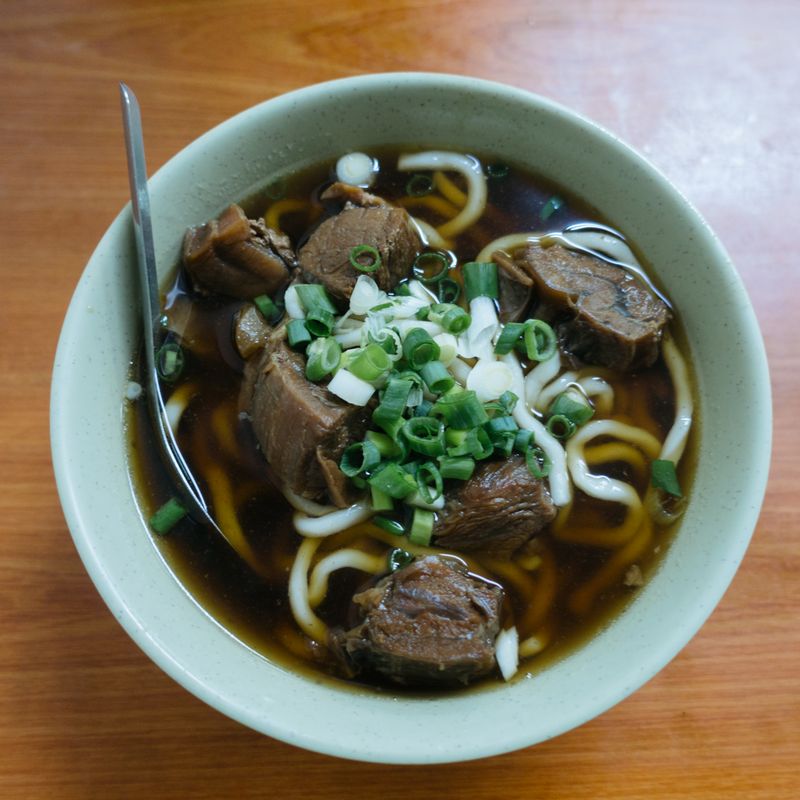
Taiwanese Pork Ball Noodle Soup
A warming Taiwanese noodle soup featuring tender ground pork meatballs simmered in a ginger-infused chicken broth with fresh egg noodles and crisp bok choy. The broth is layered with soy sauce and sesame oil for authentic depth of flavor.
- Prep
- 20 min
- Cook
- 25 min
- Total
- 45 min
- Makes
- 4 servings (about 2 cups soup and noodles per bowl)
Steps
Before you start
- Have all ingredients measured and prepped before you begin—the broth comes together quickly
- Bring chicken stock to room temperature so it won't shock the cold pork mixture when added
- Fill a large bowl with ice water for shocking the bok choy after cooking
Mix the pork balls
- In a medium bowl, combine the ground pork, beaten egg, minced ginger, 1.5 tbsp soy sauce, white pepper, and 1 tbsp sesame oil.
- Stir gently with a spoon until just combined—do not overmix, or the meatballs will become dense.
- Set aside.
+ Show details− Hide details
Ready when: Mixture is evenly combined with no visible streaks of white
Tip: Overmixing develops gluten in the pork, making meatballs tough. Use a light hand.
Bring broth to a boil
- Pour the chicken stock into a large 5-quart pot and bring to a boil over high heat.
- Once boiling, add the sliced ginger coins and the Shaoxing wine.
- Stir in the 3 tbsp soy sauce.
+ Show details− Hide details
Ready when: Stock reaches a rolling boil with visible steam
Tip: Use a pot large enough to hold the noodles and vegetables without crowding, or they'll cook unevenly.
Add pork balls to broth
- Carefully drop spoonfuls of the pork mixture into the boiling broth, about the size of a large marble (roughly ¾ inch/2 cm diameter).
- You should have about 24–28 balls.
- Work in batches to avoid crowding the pot.
- Stir gently after adding each batch to prevent sticking.
+ Show details− Hide details
Ready when: All meatballs have been added and the broth returns to a boil
Tip: Keep the broth at a consistent boil so the balls cook evenly and don't sink and stick to the pot bottom.
Simmer meatballs until cooked through
- Reduce the heat to medium and simmer the meatballs gently for 6–8 minutes.
- They will sink at first, then bob to the surface as they cook.
- The balls are done when they feel firm to the touch, no pink remains inside when you cut one open, and they reach an internal temperature of 160°F (71°C).
+ Show details− Hide details
Ready when: Meatballs float at the surface, are firm, show no pink inside, and register 160°F (71°C) internally
Tip: Don't boil vigorously after adding the meatballs, or they may break apart. Gentle simmering keeps them intact.
Cook egg noodles
- While the meatballs simmer, bring a separate large pot of salted water to a boil.
- Add the egg noodles and cook according to package directions until just tender, about 3–4 minutes for fresh noodles or 6–8 minutes for dried.
- Drain and set aside.
+ Show details− Hide details
Ready when: Noodles are tender but still have a slight bite; no raw starch taste
Tip: Cook the noodles separately so you control their texture and they don't absorb too much broth before serving.
Add bok choy to broth
- Once the meatballs are fully cooked, add the halved baby bok choy to the simmering broth.
- Stir gently and cook for 2–3 minutes until the bok choy is tender-crisp—the leaves should be bright green and the stems slightly soft.
+ Show details− Hide details
Ready when: Bok choy is bright green, leaves are tender, and stems are soft but not mushy
Tip: Don't overcook the bok choy or it will wilt and turn drab green. A couple of minutes is all it needs.
Taste and adjust seasoning
- Taste the broth and adjust with kosher salt as needed.
- The broth should be savory and balanced, with a warm ginger note and no flat or overly salty flavor.
+ Show details− Hide details
Ready when: Broth tastes balanced and savory
Tip: Add salt gradually in small pinches; you can always add more, but you can't remove it.
Assemble and serve
- Divide the cooked egg noodles evenly among four bowls.
- Ladle the hot broth with meatballs and bok choy over the noodles, distributing the meatballs and greens evenly.
- Drizzle each bowl with ½ tsp sesame oil.
- Top with sliced scallion greens and crispy fried shallots if using.
+ Show details− Hide details
Tip: Add the sesame oil just before serving so its fragrance is most pronounced. The crispy shallots add a sweet, aromatic crunch that finishes the dish beautifully.
Good to know
Tips
- To test if a meatball is cooked through without cutting, press it gently with a spoon—a cooked ball will feel firm and spring back slightly, not mushy or soft.
- For a richer broth, simmer the ginger slices for 2 minutes before adding the meatballs to infuse the stock more deeply.
- Crispy fried shallots are sold in jars in most Asian markets or online. They add a sweet, aromatic garnish that's authentic to Taiwanese noodle soups.
- If you prefer a slightly thicker, more velvety broth, mix 1 tbsp cornstarch with 2 tbsp cold water and stir it into the broth in the last minute of cooking.
Make ahead
Prepare the pork ball mixture up to 4 hours ahead and refrigerate. Cook the noodles separately and chill them; warm gently in hot broth just before serving.
Storage & reheating
Refrigerate leftovers in an airtight container for up to 3 days. The noodles and broth may be stored separately. Reheat gently on the stovetop over medium heat, stirring occasionally. Do not freeze meatballs as their texture may become grainy. The broth freezes well for up to 2 months.
Substitutions
- ground pork, 80/20 → ground chicken or ground turkey. Use dark meat chicken for more flavor and moisture. Reduce simmering time to 5–6 minutes.
- bok choy, baby → gai lan (Chinese broccoli) or choy sum. Both have a slightly bitter flavor that balances the pork richly. Cook the same way for 2–3 minutes.
- Shaoxing wine or dry sherry → dry white wine or sake. Either adds acidity and depth without the molasses notes of Shaoxing wine. Use the same amount.
- fresh or dried egg noodles → fresh ramen noodles or wheat noodles. Cook according to package directions. Ramen will be slightly chewier and add more depth to the bowl.
More noodle soups
See all →

Find more like this
- Meal
- Lunch
- Cuisine
- Chinese
- Main ingredient
- Ground Pork
- Method
- Stovetop