Chinese Sichuan Beef Tendon Noodle Soup
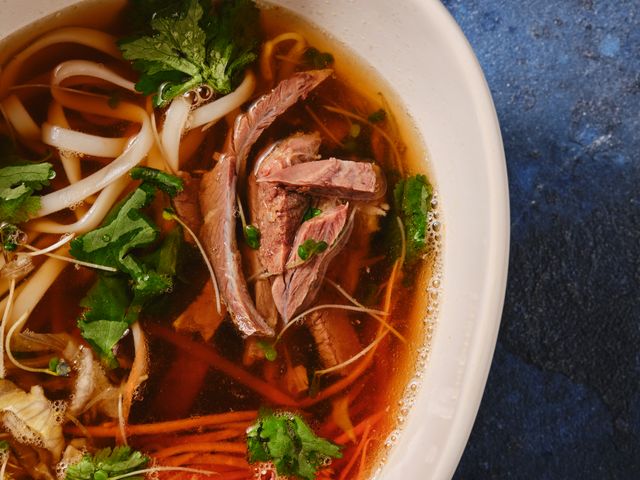
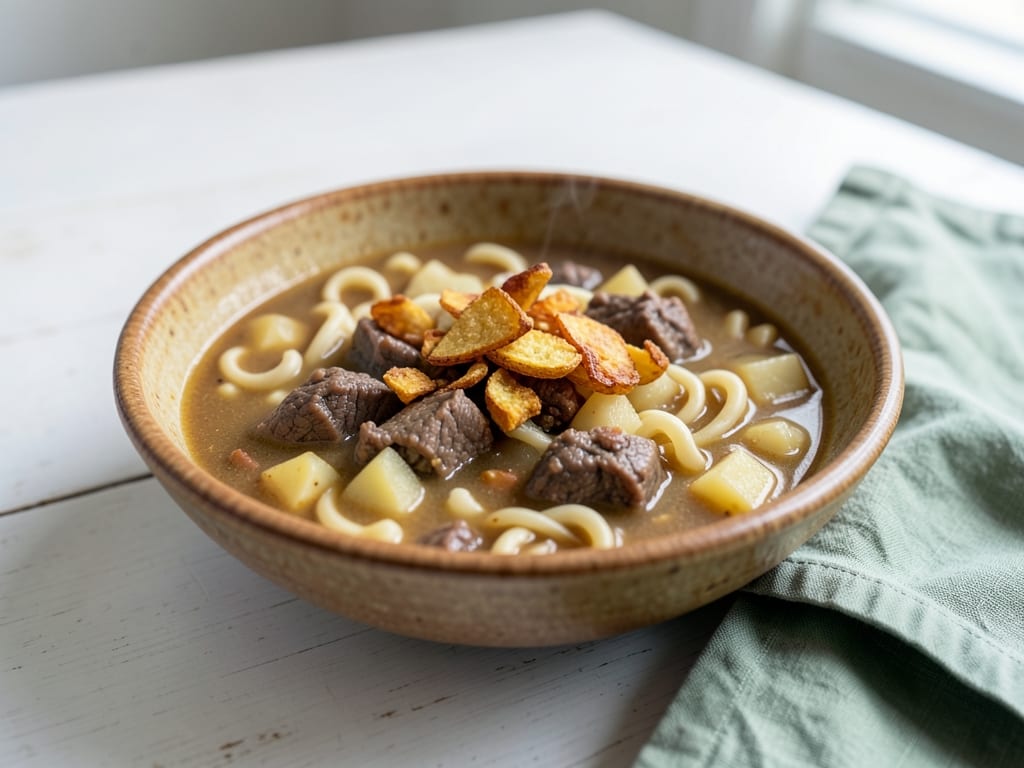
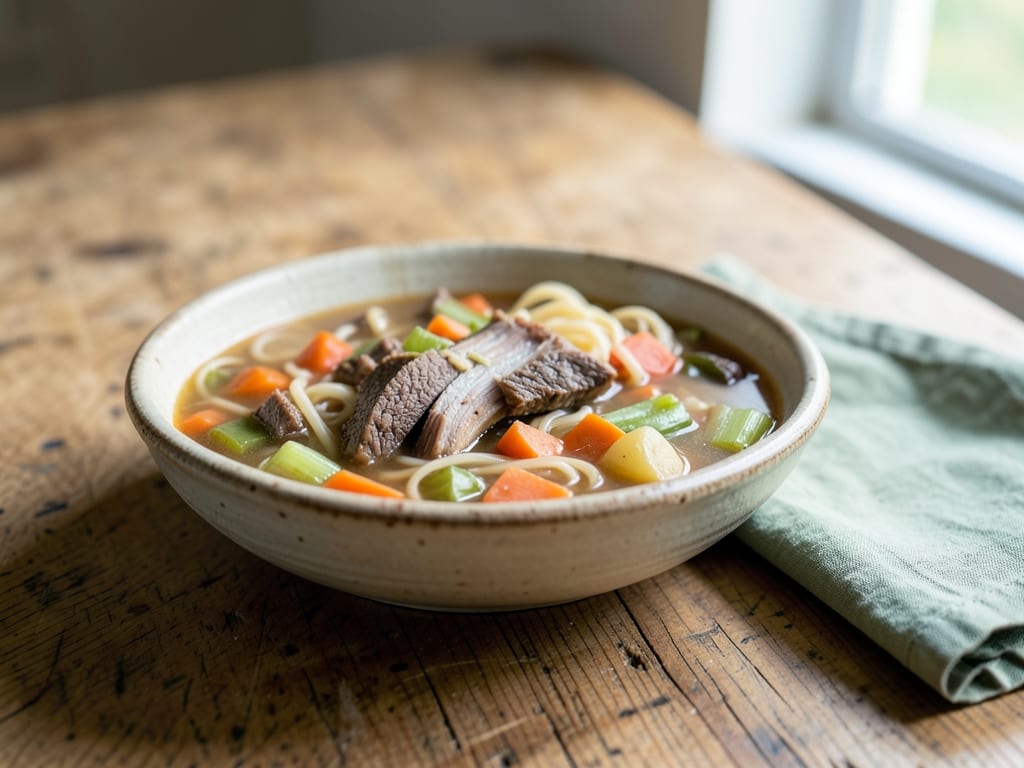
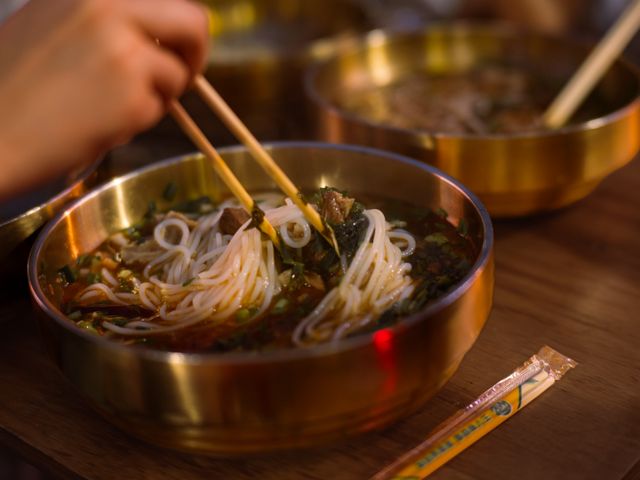
A rustic, aromatic noodle soup built on a slow-simmered broth infused with Sichuan peppercorns, star anise, ginger, and dried chilies. Tender beef tendon becomes silky after hours of gentle cooking, then is served in fragrant stock over chewy wheat noodles. The signature ma la (numbing-spicy) finish comes from chili oil drizzled at the table. This dish is as much about the methodical broth-building as it is about the final bowl—authentic, warming, and deeply satisfying.
- Prep
- 20 min
- Cook
- 3 hr
- Wait
- 30 min
- Total
- 3 hr 50 min
- Makes
- 4 bowls (about 2½ cups each)
Steps
Before you start
- Ask your butcher to slice beef tendon into ½-inch-thick rounds—or blanch whole tendon in boiling water for 10 minutes first to soften, then slice
- Gather all spices and aromatics before you start; the broth requires minimal intervention but you'll want everything within reach
- Plan for 3 hours of unattended simmering; start the broth at least 4 hours before serving
- Have fresh noodles or good-quality dried wide wheat noodles on hand
Blanch the beef tendon
- Place beef tendon slices in the Dutch oven and cover with cold water.
- Bring to a rolling boil over high heat, then immediately drain and rinse the tendon under cold running water.
- Scrub gently to remove any impurities (foam, scum, or discoloration).
- This step removes excess collagen and clarifies the final broth.
- Pat the tendon dry with paper towels.
+ Show details− Hide details
Ready when: Water comes to a full rolling boil; tendon looks pale and cooked on the outside
Tip: Blanching removes gelatin and impurities that would cloud the broth. Don't skip this step if you want clear, refined-tasting soup.
Toast the Sichuan peppercorns
- In a dry skillet over medium heat, scatter the Sichuan peppercorns in a single layer and toast for 25–30 seconds, shaking the pan occasionally, until fragrant.
- The peppercorns will become slightly more aromatic and their numbing oils will activate.
- Transfer to a small plate or mortar.
+ Show details− Hide details
Ready when: Peppercorns smell fragrant and are slightly darker in color
Tip: Toasting intensifies the ma la (numbing-spicy) sensation. If using pre-toasted peppercorns, skip this step or toast for just 10 seconds.
Build the broth base
- Return the blanched tendon to the cleaned Dutch oven.
- Pour in the 10 cups of stock or water, ensuring the tendon is fully submerged.
- Add the ginger slices, scallion pieces, garlic cloves, star anise, toasted Sichuan peppercorns, dried chili pieces, and bay leaves.
- Stir in the soy sauce, dark soy sauce (if using), and rock sugar.
- Bring to a boil over high heat, then immediately reduce to low heat to a gentle simmer—you should see only occasional lazy bubbles breaking the surface, never a rolling boil.
+ Show details− Hide details
Ready when: Broth reaches a rolling boil
Tip: Keep the heat low throughout simmering. A vigorous boil will break apart the tendon and cloud the broth. Aim for a bare simmer.
Simmer the broth (first 90 minutes)
- Cover the Dutch oven partially (lid slightly ajar to allow steam to escape) and simmer gently over low heat for 90 minutes.
- The tendon should be becoming tender but will still have some resistance when pierced.
- Skim any gray foam or impurities that rise to the surface in the first 10–15 minutes using a slotted spoon or skimmer.
- After that, the broth should be relatively clear.
+ Show details− Hide details
Ready when: Tendon is translucent and soft when pierced with a fork, but not completely falling apart
Tip: Resist the urge to crank up the heat. Low and slow is the only way to get silky tendon. A lid slightly ajar prevents condensation from dripping back into the broth and keeps the liquid at the right simmer level.
Continue simmering (next 90 minutes)
- Keep the pot at a gentle simmer for another 90 minutes, partially covered.
- The tendon should now be quite tender and gelatinous, and the broth will be rich and aromatic.
- Stir occasionally and taste the broth.
- The flavors should be well-developed—ginger, anise, numbing Sichuan pepper, and chili heat should all be distinct.
- The broth is done when the tendon yields easily to gentle pressure and is silky, not tough.
+ Show details− Hide details
Ready when: Tendon is completely tender, almost silky, and pierces with virtually no resistance; broth is rich, aromatic, and amber-colored
Tip: Total simmering time is roughly 3 hours. If your tendon is still tough after 2 hours, continue simmering; older or tougher cuts may need an extra 30 minutes.
Season the broth
- Remove the pot from heat.
- Use a slotted spoon to carefully remove and discard the ginger slices, scallions, garlic cloves, star anise, bay leaves, and dried chili pieces (you can leave a few small chili bits for color and heat if desired, but they're optional).
- Taste the broth and season with kosher salt and white pepper to taste.
- The broth should be savory, well-rounded, and distinctly aromatic but not overwhelming.
- Keep warm over very low heat or reheat gently just before serving.
+ Show details− Hide details
Ready when: Aromatics are removed; broth is seasoned to taste
Tip: Removing the whole spices prevents them from overwhelming the soup. If you prefer more chili heat, leave a few chili pieces in the broth.
Cook the noodles
- In a separate 4-quart pot, bring 3 quarts (2.8 L) of salted water to a rolling boil.
- Add the noodles and cook according to the package instructions (typically 3–4 minutes for fresh noodles, 6–8 minutes for dried).
- Stir occasionally to prevent sticking.
- The noodles should be tender but still have a slight chew.
- Drain and rinse briefly under warm water if desired (this prevents them from continuing to cook and absorb broth unevenly).
- Divide the cooked noodles among 4 serving bowls.
+ Show details− Hide details
Ready when: Noodles are tender with a slight bite; water boils vigorously
Tip: Time the noodles to finish just before the broth is ready. Noodles cool quickly, so have the broth piping hot when you pour it over them.
Assemble the bowls
- Ladle the hot broth and beef tendon over the noodles in each bowl, distributing the tender tendon pieces evenly (about 5–6 pieces per bowl).
- Pour roughly 2 cups of broth per bowl.
- The noodles should be submerged and the tendon visible.
- If desired, drizzle 1 tablespoon of sesame oil into each bowl (optional but recommended for depth of flavor).
+ Show details− Hide details
Ready when: Bowls are filled with hot broth and noodles, tendon visible and garnished
Tip: Work quickly to keep everything hot. If the broth has cooled, reheat briefly over medium heat before ladling.
Finish and serve
- Top each bowl with a drizzle of chili oil (about ¾ tablespoon per bowl for a classic ma la kick), scattered fresh scallion greens, and optional cilantro and crushed peanuts.
- Serve immediately while the soup is piping hot.
- Each diner can adjust the chili oil and condiments to their taste—pass extra chili oil at the table.
+ Show details− Hide details
Ready when: Garnishes are applied; soup is ready to eat
Tip: The chili oil is essential for the authentic Sichuan flavor profile. Don't skip it, but allow guests to add their own to control heat level.
Good to know
Tips
- Sichuan peppercorns are the soul of this dish—their numbness (ma) combined with dried chili heat (la) creates the signature ma la sensation. Use fresh, good-quality peppercorns for the best result; old, faded ones lose potency.
- Blanching the beef tendon at the start removes impurities and ensures a clear, refined broth. Do not skip this step or rush it; it makes a significant difference in the final soup's clarity and taste.
- Resist the urge to boil aggressively. A gentle, steady simmer for 3 hours transforms tough tendon into silky, almost custard-like meat that melts on the tongue. Vigorous boiling breaks down the collagen erratically and clouds the broth.
- Chili oil is not optional—it's the finishing touch that ties all the flavors together. If you don't have store-bought chili oil, warm 3 tablespoons of neutral oil in a small pan over medium heat, add ½ teaspoon of Sichuan peppercorns and 1–2 dried chilies broken into pieces, turn off the heat, and let cool for 30 minutes before straining.
Make ahead
The broth can be made up to 2 days ahead. Let it cool, strain if desired for extra clarity (optional), and refrigerate in an airtight container. The tendon will keep its silky texture. Reheat gently over medium-low heat, stirring occasionally, for about 15–20 minutes until steaming. Taste and re-season if needed. Cook the noodles fresh just before serving and assemble the bowls immediately.
Storage & reheating
Broth and tendon keep in the refrigerator for up to 3 days in an airtight container. Freezer storage is not recommended because the delicate tendon texture may change. To reheat: thaw in the refrigerator overnight (if frozen), then warm gently over medium-low heat for 15–20 minutes, stirring occasionally. Do not boil vigorously. Cooked noodles do not keep well and should be made fresh for each meal.
Substitutions
- Sichuan peppercorns (or Szechuan pepper) → extra Sichuan peppercorns (1 additional tablespoon) or a mix of Sichuan peppercorn and black peppercorns. If you cannot find Sichuan peppercorns, increase the quantity of black peppercorns, though you'll lose the characteristic numbing (ma) sensation. Sichuan peppercorns are not truly spicy but provide a tingling, citrusy sensation that defines the dish.
- dried red chilies (such as Sichuan chili, chiles de árbol, or similar) → 1–2 teaspoons of chili flakes or red pepper flakes. Dried whole chilies give better flavor, but in a pinch, chili flakes work. Start with 1 teaspoon and add more to taste. Avoid pure cayenne, which is one-dimensional; Thai bird's eye chiles or Sichuan dried chilies are preferable.
- fresh or dried wide wheat noodles (cu mian or similar) → ramen noodles, fresh egg noodles, or even pasta like pappardelle. Authentic cu mian (thick, chewy wheat noodles) are ideal, but fresh ramen or egg noodles work well. Avoid thin, delicate noodles like angel hair, which will disintegrate in the hot broth.
- beef tendon, sliced into ½-inch-thick rounds → beef shank, oxtail, or beef chuck, cut into 1½-inch cubes. Beef tendon is prized for its silky, gelatinous texture when slow-cooked. If unavailable, beef shank or oxtail will yield a richer, bonier broth; increase simmering time by 30–45 minutes. Chuck is less gelatinous but still flavorful. Some Asian markets sell frozen tendon year-round.