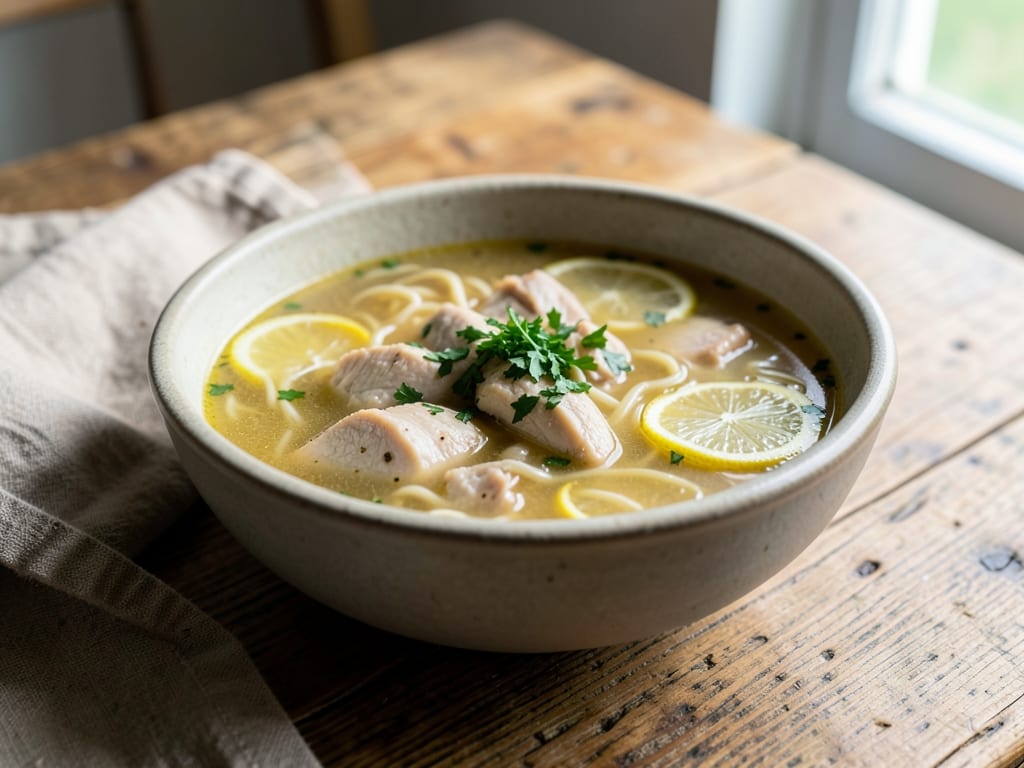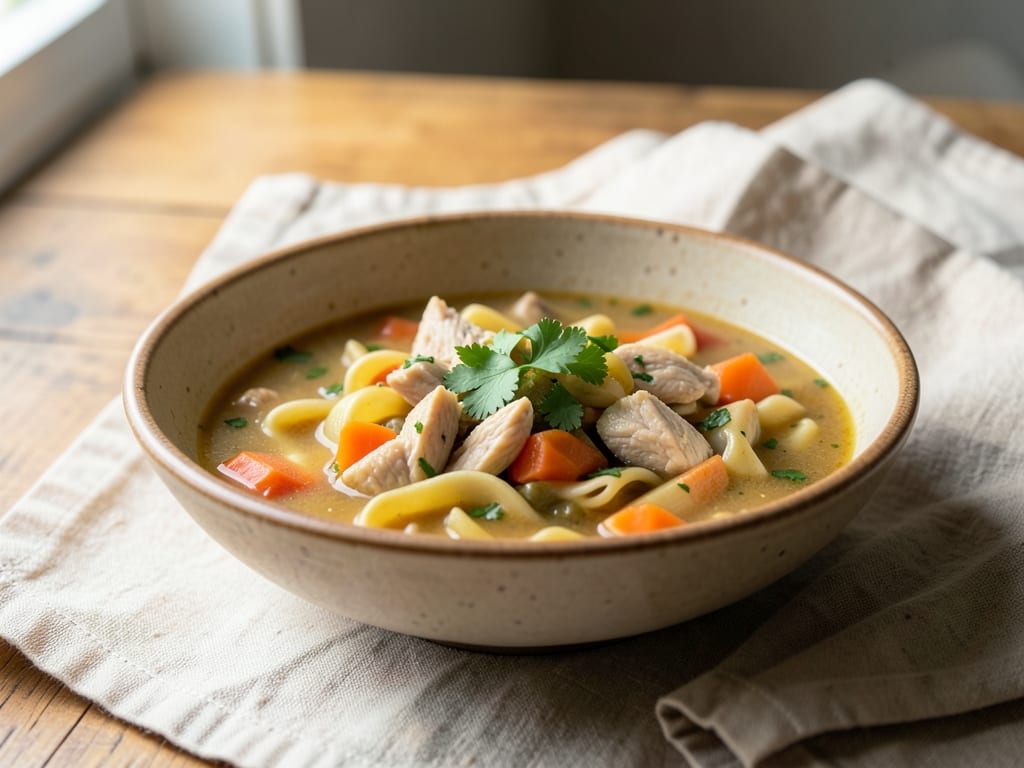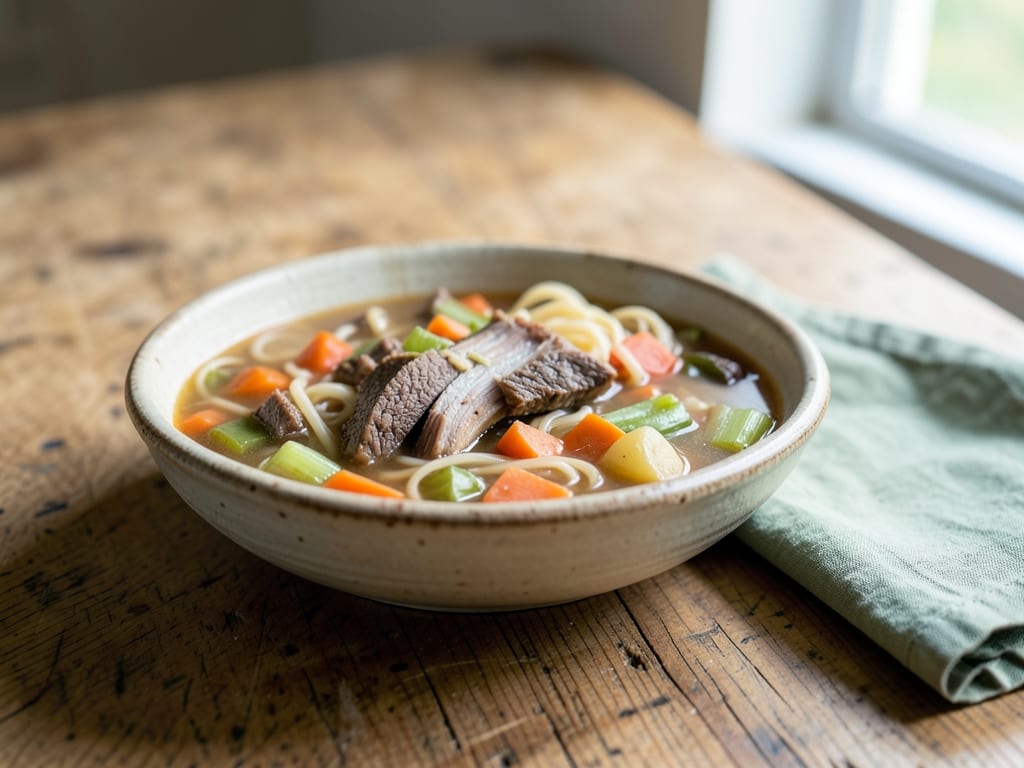
Argentine Sopa de Fideos with Beef and Vegetables
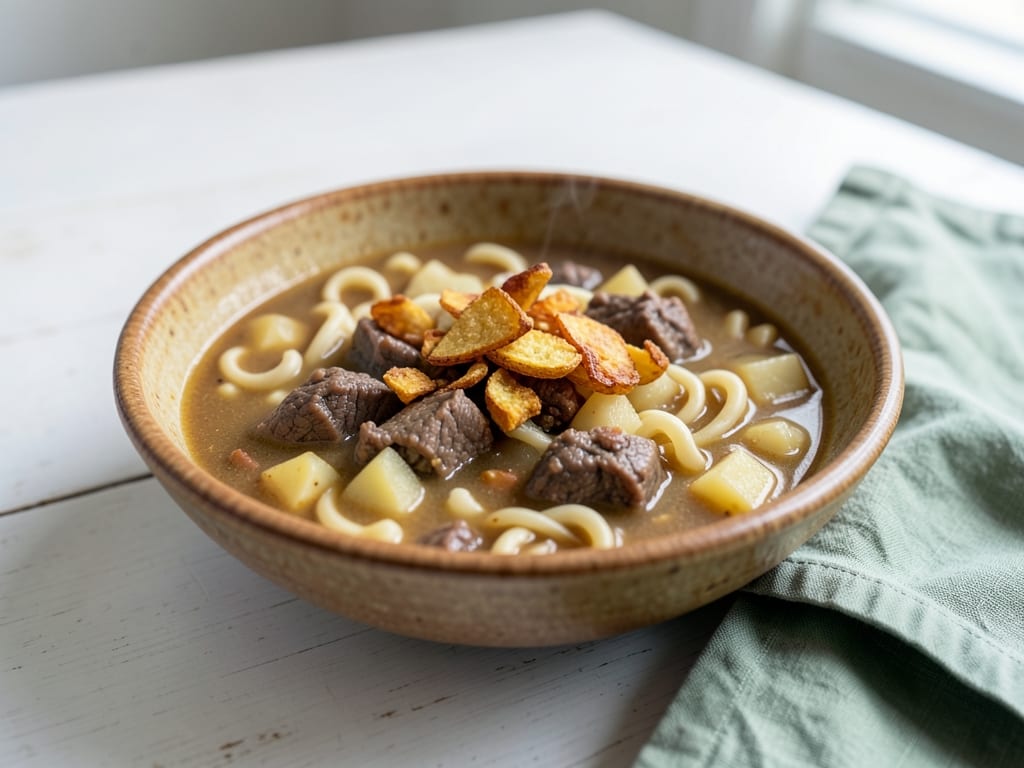
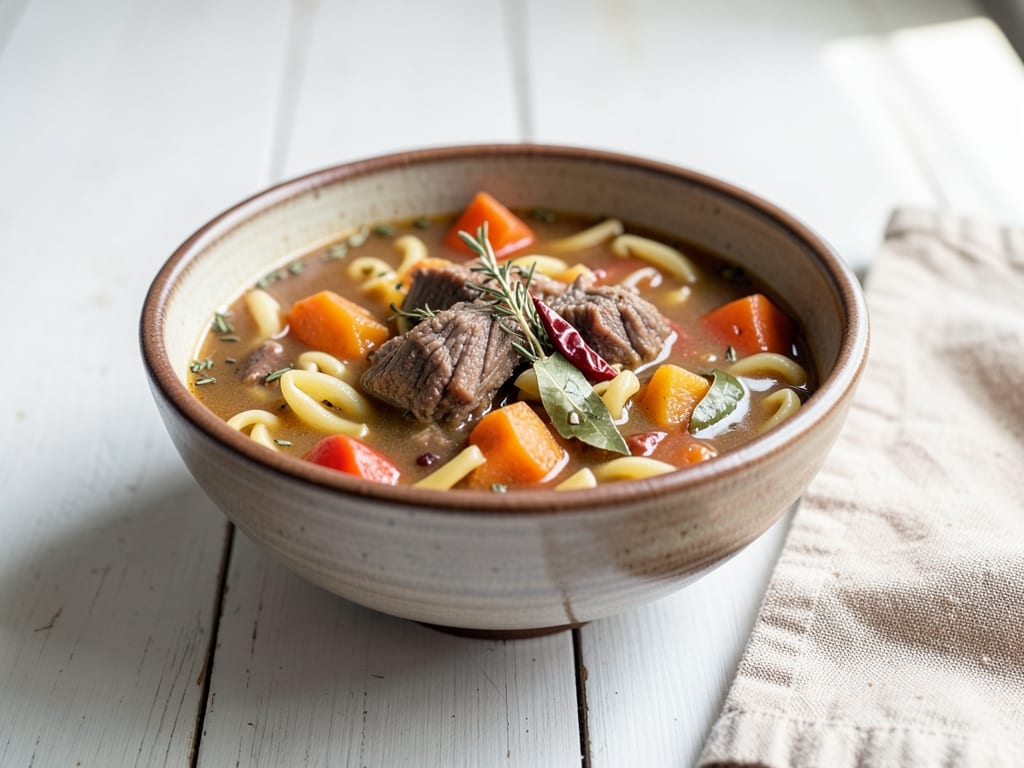
Tender beef shank, delicate tallarines, and fresh vegetables simmer together in this comforting Argentine soup. Rich, warming, and simple—this one-pot meal is an Argentine family staple that tastes even better the next day. Most of the cooking is hands-off simmering, making it perfect for a weeknight or weekend dinner.
- Prep
- 15 min
- Cook
- 20 min
- Wait
- 1 hr 5 min
- Total
- 1 hr 40 min
- Makes
- Serves 6, about 1.5 quarts (1.4 L)
Steps
Before you start
- Read through the recipe—this soup takes about 1 hour 40 minutes total, mostly hands-off simmering
- Prep all your vegetables and trim the beef before you start cooking (mise en place)
- Pat the beef dry before searing to ensure good browning
- Use a large pot that's at least 6 quarts (6 L) to fit everything comfortably
Sear the beef shank
- Pat the beef shank chunks dry with paper towels; this ensures even, deep browning.
- Heat the olive oil in a large pot (6-quart/6-liter or larger) or Dutch oven over medium-high heat until shimmering, about 1–2 minutes.
- Working in batches to avoid overcrowding, add the beef chunks and sear on all sides until deeply browned, about 8–10 minutes total.
- Transfer the seared beef to a clean plate.
+ Show details− Hide details
Ready when: Beef is deeply browned on all sides, with caramelized surfaces
Tip: Don't overcrowd the pan when searing—let each piece get good contact with heat. If pieces touch, they'll steam rather than brown.
Build the broth base
- Reduce heat to medium.
- In the same pot, add the quartered onion and sauté for about 1 minute.
- Add the minced garlic and cook for another minute until fragrant, stirring and scraping up any browned bits (fond) from the bottom of the pot—these concentrated flavors are essential to a rich broth.
- Pour in the 8 cups of water and tuck in the bay leaves.
- Return the beef shank chunks (and any accumulated juices) to the pot.
- Increase heat to medium-high and bring the liquid to a simmer, about 2–3 minutes.
+ Show details− Hide details
Ready when: Liquid reaches a gentle simmer with small bubbles breaking the surface
Tip: Scrape up the fond (caramelized bits stuck to the bottom)—don't leave any behind. These bits have incredible concentrated flavor.
Simmer beef until tender
- Once simmering, reduce heat to medium-low and partially cover the pot.
- Simmer gently for 45 minutes, stirring occasionally (every 10–15 minutes) and skimming any gray foam that rises to the surface.
- The beef is done when it's very tender, beginning to break apart at the seams, and the broth smells rich and meaty.
+ Show details− Hide details
Ready when: Beef is very tender and beginning to fall apart; broth is rich and meaty-smelling
Tip: Skim the gray foam that rises to the surface—this keeps the broth clear and improves flavor. If the broth is boiling vigorously, reduce heat slightly for a gentle simmer.
Add vegetables to broth
- Add the sliced leek rounds and carrot chunks to the pot, stirring gently to distribute them throughout the broth.
- Continue to simmer, uncovered or partially covered, for 10 minutes until the vegetables begin to soften.
+ Show details− Hide details
Ready when: Vegetables are beginning to soften but still hold their shape
Add pasta and cook
- Add the 8 oz of tallarines directly to the pot, stirring gently with a wooden spoon to separate them and distribute throughout the broth.
- Continue simmering for 8–10 minutes (check your pasta package for cooking time) until the noodles are tender.
- Stir occasionally to prevent sticking.
+ Show details− Hide details
Ready when: Pasta is tender but still holds its shape; easily broken with a spoon but not mushy
Tip: Check your pasta package for boiling-water cooking time and aim for the lower end or slightly shorter, since the noodles will continue to soften as they cool.
Season and serve
- Taste the soup broth and adjust the seasoning with salt and freshly ground black pepper.
- Remember that flavors have developed and concentrated over the long simmer, so start with a small pinch of salt and taste as you go.
- Stir in the chopped fresh parsley just before serving.
- Ladle the soup into bowls, making sure each serving gets beef, vegetables, and pasta.
- Serve hot.
+ Show details− Hide details
Tip: Taste carefully and season conservatively—salt intensifies flavors and becomes more pronounced as the soup cools. Start light.
Good to know
Tips
- Don't skip the searing step—it develops the deep, rich flavors that make this broth special. Those browned bits (fond) in the pan are liquid gold for flavor.
- Taste and season at the end. Start with less salt and add gradually; the broth concentrates as it simmers, and salt intensifies flavors. A last-minute taste is crucial.
- For an even richer broth, substitute beef bone broth for the water. Use 8 cups (1.9 L) of broth and reduce simmering time by 10 minutes, since the broth is already flavorful.
- If the soup thickens and the noodles absorb too much liquid before serving, add a splash of water or broth when reheating.
Make ahead
This soup is actually better the next day, as the flavors deepen and intensify. Make it up to 3 days ahead and refrigerate, or freeze for up to 3 months.
Storage & reheating
Room temperature (up to 2 hours). Refrigerator (up to 4 days in an airtight container). Freezer (up to 3 months). Reheat gently on the stovetop over medium heat, or in the microwave, adding a splash of water or broth if the soup has thickened.
Substitutions
- beef shank → beef chuck or bone-in short ribs. Similar cooking time and rich, meaty flavor; use the same weight
- tallarines (thin pasta noodles) → vermicelli, fideo, or other thin pasta. Cook time may vary slightly; check package directions and adjust timing accordingly
- leek, white and light green parts only → onion. Use 2–3 additional medium onions for similar volume; provides a more pungent flavor, less delicate than leek
- fresh flat-leaf parsley → fresh cilantro or chives. Different flavor profile but adds fresh herb brightness; cilantro brings a brighter, more distinctive taste