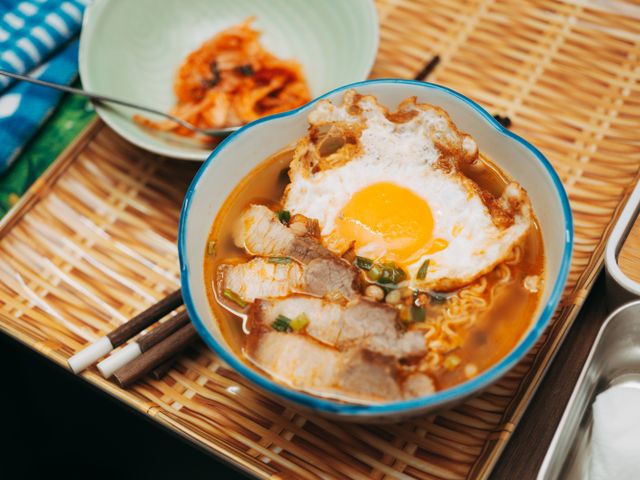
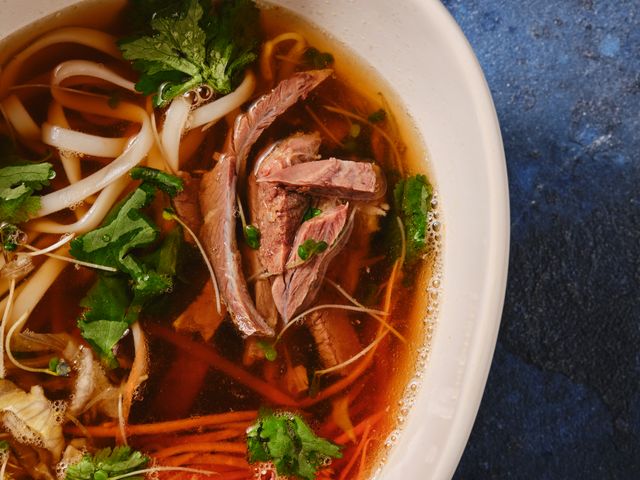
Korean Gochugaru Beef Noodle Soup
A warming, spicy Korean beef noodle soup with tender brisket simmered in a gochugaru-infused broth. Daikon radish, garlic, and sesame oil add depth to this comforting bowl, finished with chewy kalguksu noodles that soak up all the savory, spicy flavor. Perfect for cool weather or when you crave something bold.
- Prep
- 20 min
- Cook
- 2 hr
- Total
- 2 hr 20 min
- Makes
- 4 servings (about 2 cups broth + noodles per bowl)
Steps
Before you start
- Cut the beef brisket into 1½-inch (4 cm) chunks (partially freeze for 30 minutes if you want easier cutting)
- Measure out gochugaru before you start—it's easy to overestimate
- Have all aromatics prepped and within arm's reach of the stove
Blanch and rinse beef
- Place the beef chunks in the large pot and cover with cold water.
- Bring to a boil over high heat, then boil for 2 minutes.
- Drain through a fine-mesh strainer and rinse the beef under cold running water until the water runs clear, rubbing the pieces gently with your fingers to remove surface impurities.
- This removes scum and results in a clearer, cleaner-tasting broth.
+ Show details− Hide details
Ready when: Water reaches a rolling boil and foam rises to the surface
Tip: Don't skip this step—it's essential for a clear, refined broth rather than a murky one.
Build the broth base
- Return the cleaned beef to the pot and add the 10 cups of fresh water and the smashed garlic cloves.
- Bring to a boil over high heat, then reduce the heat to medium-low and maintain a gentle simmer.
- Skim any foam that rises to the top during the first 5 minutes.
- After skimming, add the daikon radish cubes.
+ Show details− Hide details
Ready when: Gentle bubbles break the surface regularly; no vigorous rolling boil
Tip: Gentle heat prevents the broth from becoming cloudy—resist the urge to maintain a hard boil.
Simmer beef and daikon
- Maintain the gentle simmer uncovered for 1½ to 1¾ hours, until the beef is fork-tender and the daikon is softened but not falling apart.
- Stir occasionally and continue to skim any foam if it appears.
- The broth should have a light golden color and smell deeply savory.
+ Show details− Hide details
Ready when: Beef yields easily to a fork; daikon is soft throughout but holds its shape
Tip: Don't let the pot boil hard—this long, slow simmer is what makes the beef tender and the broth rich.
Bloom gochugaru in sesame oil
- While the beef finishes, heat the 2 tbsp of sesame oil in a small bowl or skillet over medium-low heat.
- Once warm, add the 3 tbsp of gochugaru and stir constantly for about 1 minute.
- The mixture should become fragrant and the red chili flakes will deepen slightly in color.
- This blooming releases the chili's complex flavors and mellows any raw sharpness.
+ Show details− Hide details
Ready when: Mixture is fragrant and gochugaru has darkened slightly; small wisps of steam rise
Tip: Keep the heat low—burned gochugaru tastes bitter and harsh. Stir constantly to prevent scorching.
Temper gochugaru into broth
- Ladle about 1 cup of the hot broth into a small bowl.
- Slowly whisk the warm gochugaru-sesame oil mixture into this cup of broth, stirring until smooth and well combined.
- This prevents lumpy gochugaru from settling to the bottom.
- Pour the tempered mixture back into the pot and stir gently to distribute the chili flavor evenly.
+ Show details− Hide details
Ready when: Gochugaru is fully incorporated and the broth is an even reddish tone
Tip: Tempering prevents clumpy gochugaru that floats or sinks—the broth should be smooth.
Season the broth
- Stir in the 3 tbsp of soy sauce and a pinch of kosher salt and freshly ground black pepper.
- Taste the broth—it should be rich, savory, and noticeably spicy but not overwhelming.
- Adjust salt and pepper to your preference.
- The daikon and beef will have released their own umami, so taste before adding too much salt.
+ Show details− Hide details
Ready when: Flavors are balanced; no single component overpowers the others
Tip: Taste as you go—gochugaru heat varies by brand, so you may need less or more than 3 tbsp to suit your preference.
Cook the noodles
- Bring the broth back to a gentle boil over medium heat.
- Add the 12 oz of kalguksu noodles and stir gently to prevent them from sticking together.
- Simmer uncovered for 4 to 5 minutes, until the noodles are tender but still have a slight chew.
- Stir occasionally to help them cook evenly.
+ Show details− Hide details
Ready when: Noodles are soft but have a slight firmness when bitten; they no longer feel floury or raw
Tip: Stir frequently to keep noodles from clumping together at the bottom. If the broth level drops, the noodles will stick.
Serve immediately
- Ladle the soup into four deep bowls, dividing the beef, daikon, and noodles evenly.
- Make sure each bowl gets plenty of the spicy broth.
- Top each bowl with the white and light green scallion slices and a sprinkle of sesame seeds if desired.
- Serve immediately while piping hot.
+ Show details− Hide details
Ready when: Soup is steaming and fragrant; noodles are glossy
Tip: Add the dark green scallion tops at the very end so they stay bright and slightly crisp rather than turning limp from the heat.
Good to know
Tips
- Blanching and rinsing the beef at the start is not optional—it's what separates a clear, restaurant-quality broth from a cloudy, murky one. The brief boil releases impurities that would otherwise cloud the liquid.
- Bloom the gochugaru in sesame oil rather than adding it directly to the cold broth. Heating it releases deep, complex flavors instead of raw heat. Tempering it into a small amount of broth first prevents clumping.
- If you prefer less heat, reduce the gochugaru to 2 tbsp; if you want more fire, add up to 4 tbsp. Gochugaru varies in intensity by brand and how it's stored, so taste as you adjust.
- The soup tastes even better the next day once flavors have fully melded—if you have time, make the broth ahead and reheat it for service.
Make ahead
The broth (through step 6) can be made up to 2 days ahead, cooled, and refrigerated. Reheat gently over medium-low heat before adding the noodles. Cook the noodles fresh at serving time for the best texture.
Storage & reheating
Leftover soup keeps refrigerated in an airtight container for up to 3 days. The noodles will soften further as they sit in the broth. To reheat, warm gently over medium-low heat on the stovetop until steaming; add a splash of water if the broth has reduced too much. Do not microwave, as the noodles can become mushy and uneven. The soup does not freeze well due to the noodle texture.
Substitutions
- kalguksu noodles (Korean knife-cut noodles) → thick ramen noodles or fresh wheat noodles. Look for a thicker noodle similar in chew to kalguksu. Cooking time may vary by 1–2 minutes; check package directions.
- gochugaru (Korean red chili flakes) → red chili powder (use 2 tbsp instead of 3 tbsp for gentler heat) or gochujang mixed with water. Gochujang paste is fermented and sweeter; if you use it (about 2 tbsp), thin it with 3 tbsp water and bloom in sesame oil as directed. Heat will be milder.
- daikon radish → Korean radish (similar in flavor) or turnip cubes. Both hold their shape well in long-cooked broths. Turnip is slightly sweeter and softer; reduce cooking time by 10 minutes if using turnip.
- beef brisket → chuck roast or beef short ribs. Chuck roast cooks slightly faster (about 1 hour); short ribs may need an extra 15–20 minutes. Both yield a similarly tender result.