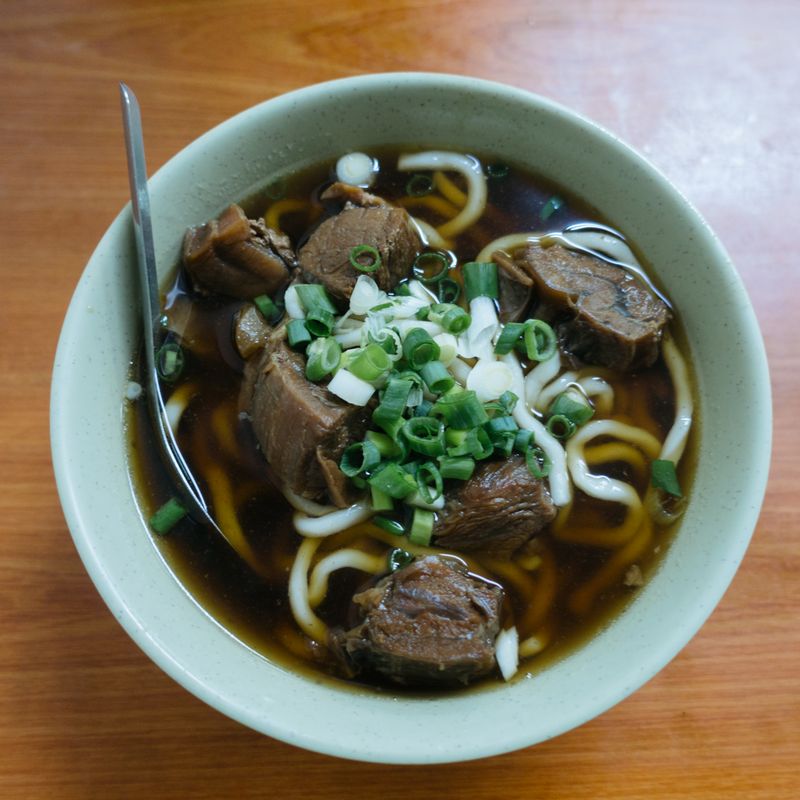
Taiwanese Beef Noodle Soup
Fall-apart beef shank simmers for two hours on the stovetop in a deeply savory, mildly spicy broth built on doubanjiang, soy sauce, star anise and tomato, then gets ladled over chewy wheat noodles and bok choy.
- Prep
- 35 min
- Cook
- 2 hr 35 min
- Wait
- 10 min
- Total
- 3 hr 20 min
- Makes
- 6 large bowls (about 2.5 liters / 10 cups of broth plus beef)
Steps
Before you start
- Read the timing: the beef needs about 2 hours of gentle simmering, so start at least 3½ hours before you want to eat.
- Buy whole beef shank (bone-in or boneless) and cut it yourself into big chunks. Small pieces dry out and shred during the long braise.
- Doubanjiang (fermented broad bean chili paste) is salty. Pixian brand is the classic. Do not add extra salt until you taste the finished broth.
- Wait to cook the noodles until the broth is finished and hot. Fresh noodles take only 3 to 5 minutes.
- This is a stovetop recipe. No oven is needed.
Prep the aromatics
- Cut the beef shank into 1½-inch (4 cm) chunks, keeping the silverskin on because it turns silky and gelatinous in the braise.
- Smash the ginger and garlic, cut the 4 braising scallions into 2-inch lengths, and wedge the tomatoes.
- Slice the 3 serving scallions and keep them in the fridge.
+ Show details− Hide details
Ready when: Beef pieces are roughly uniform in size, so they cook at the same rate.
Tip: Large chunks hold together better than small ones during the long braise.
Blanch the beef
- Bring about 2 quarts (1.9 L) of water to a rolling boil in the large pot.
- Add the beef and boil for 5 minutes.
- Scum and gray foam will rise.
- Drain into a colander, rinse the beef under warm running water to remove foam, and rinse out the pot.
+ Show details− Hide details
Ready when: Beef is grayish-brown on the outside and the rinse water runs mostly clear.
Tip: Do not skip this. It is what keeps the broth clean and clear instead of murky.
Fry the aromatics
- Heat the oil in the 6- to 8-quart soup pot over medium heat until shimmering.
- Add the ginger, garlic and braising scallions and stir for 1 to 2 minutes until fragrant and the edges begin to color.
- Add the doubanjiang and fry, stirring constantly, for 2 to 3 minutes until the oil turns deep red and the paste smells toasty.
+ Show details− Hide details
Ready when: Oil is stained brick red and the paste smells roasted, not raw or burnt.
Tip: Lower the heat if the paste sticks or darkens to brown-black, since scorched paste tastes bitter.
Brown with tomato
- Add the tomato wedges and cook for 3 minutes, pressing them lightly, until they begin to collapse.
- Add the drained beef and stir for 2 minutes so the chunks are coated in the red paste.
- Pour in the Shaoxing wine and let it bubble for 1 minute, scraping up any browned bits from the bottom.
+ Show details− Hide details
Ready when: Tomatoes are softened and the wine smell is no longer sharp.
Add liquid and spices
- Add the soy sauce, sugar, star anise, cinnamon, Sichuan peppercorns, dried chilies (if using) and 10 cups (2.4 L) of water.
- Stir well, raise the heat to high and bring to a boil, about 8 to 10 minutes.
- Skim off any foam from the surface.
+ Show details− Hide details
Ready when: Broth reaches a full boil and the surface is mostly free of gray foam.
Tip: The liquid should cover the beef by about an inch. Add a little hot water if it does not.
Braise until tender
- Reduce the heat to low so the broth barely bubbles, with just a few lazy bubbles breaking the surface.
- Cover with the lid slightly ajar and simmer on the stovetop for 2 hours, stirring gently every 30 minutes.
- Check at 1 hour 45 minutes by piercing a chunk with a fork.
+ Show details− Hide details
Ready when: A fork slides into the beef with almost no resistance and the meat is tender but still holds its shape (about 200°F / 93°C inside).
Tip: A hard boil makes the beef tough and the broth cloudy. Keep it at a bare simmer.
Rest and season
- Turn off the heat and let the pot rest, covered, for 10 minutes.
- Fish out and discard the star anise, cinnamon, ginger, scallion pieces, chilies and as many peppercorns as you can find.
- Spoon off excess red oil from the surface if you want a lighter soup (or keep it for flavor).
- Taste the broth and add salt only if needed, a pinch at a time.
+ Show details− Hide details
Ready when: Broth tastes deeply savory, lightly sweet and gently spicy, with a rounded saltiness.
Tip: Doubanjiang and soy sauce are already salty, so the broth often needs no extra salt.
Cook the bok choy
- Bring the 3 quarts (2.8 L) of remaining water to a boil in the large pot over high heat.
- Add the bok choy and blanch for 1 to 2 minutes until the stems are bright green and just tender.
- Lift out with a skimmer into a bowl and keep the water boiling.
+ Show details− Hide details
Ready when: Bok choy stems are bright green, tender-crisp and pierce easily with a knife tip.
Tip: Reheat the braise on low while you cook the noodles so the bowls are served piping hot.
Cook the noodles
- Loosen the fresh noodles, add them to the boiling water, and cook following the package time, usually 3 to 5 minutes, stirring once in the first 30 seconds so they don't stick.
- Drain well in a colander and divide among 6 warmed bowls.
+ Show details− Hide details
Ready when: Noodles are chewy and springy with no raw floury center when you bite one.
Tip: Drain thoroughly. Water clinging to the noodles dilutes the broth.
Assemble and serve
- Top each bowl of noodles with 4 to 5 chunks of beef and a share of the bok choy.
- Ladle about 1½ cups (360 ml) of hot broth over each bowl.
- Finish with the sliced scallions, cilantro, a few drops of sesame oil, and chili oil if you like.
- Serve immediately.
+ Show details− Hide details
Ready when: Broth is steaming hot and the noodles are just covered by liquid.
Tip: Serve right away. Noodles keep absorbing broth and soften quickly.
Good to know
Tips
- Keep the silverskin on the shank. It becomes tender and gives the broth body.
- Fry the doubanjiang in oil until it turns red. This step builds the color and savory depth of the soup.
- For a clearer broth, skim foam during the first 15 minutes and keep the simmer very gentle afterward.
- Cook noodles in a separate pot of water, never in the braise, or the broth turns starchy and cloudy.
Make ahead
The braised beef and broth taste even better made 1 to 2 days ahead. Cool completely, refrigerate in the pot or a container, and lift off the solidified fat if you like. Reheat gently on the stove until steaming, then cook the noodles and bok choy fresh.
Storage & reheating
Store the beef and broth separately from the noodles. Refrigerate in airtight containers for up to 4 days, or freeze for up to 3 months (leave 1 inch of headspace). Thaw overnight in the fridge and reheat in a pot over medium-low heat until the broth is steaming and the beef is hot throughout. Cooked noodles and bok choy do not store well; cook them fresh. Not recommended at room temperature for more than 2 hours.
Substitutions
- beef shank → bone-in beef short rib or boneless chuck. Chuck gives a less gelatinous result. Cut into 2-inch chunks and braise about 15 minutes less.
- doubanjiang (spicy fermented broad bean paste) → gochujang plus 1 tbsp extra soy sauce. Sweeter and less funky, but still gives color and gentle heat. Taste before salting.
- Shaoxing rice wine → dry sherry. Use the same amount. Avoid cooking wines with added salt.
- fresh wheat noodles (thick, round or flat) → dried wheat noodles or udon. Dried noodles (about 400 g / 14 oz) need cooking 1 to 3 minutes longer. Follow the package.
More noodle soups
See all →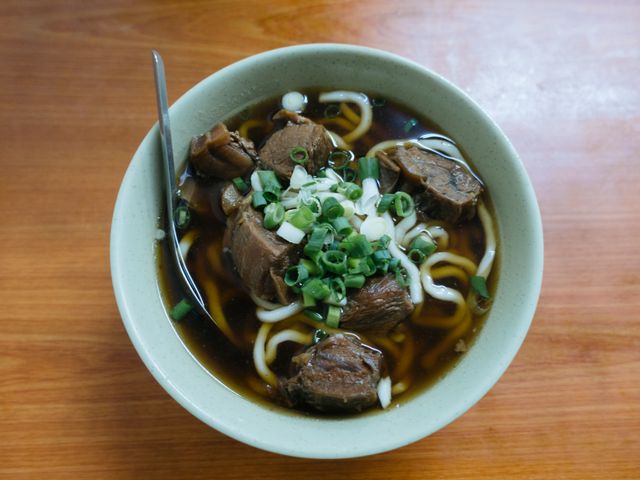
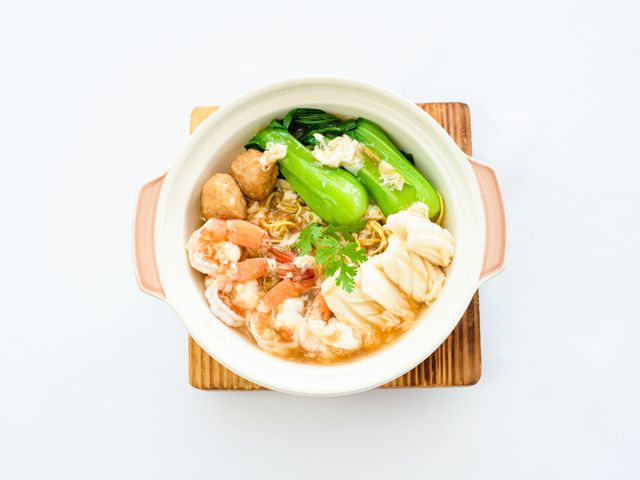
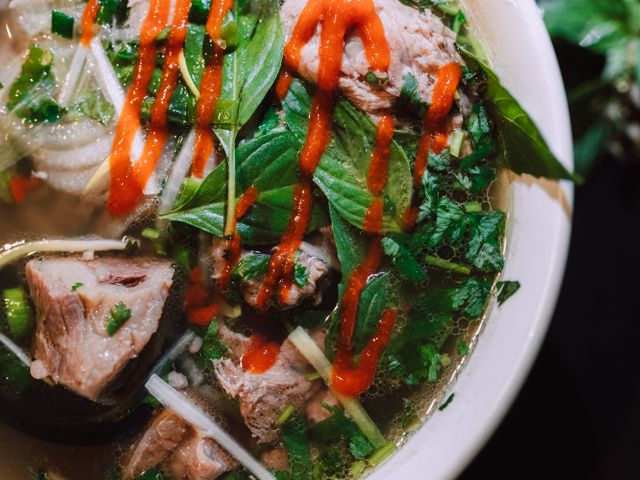
Find more like this
- Meal
- Dinner
- Cuisine
- Chinese
- Main ingredient
- Beef
- Diet
- Dairy-Free
- Method
- Stovetop