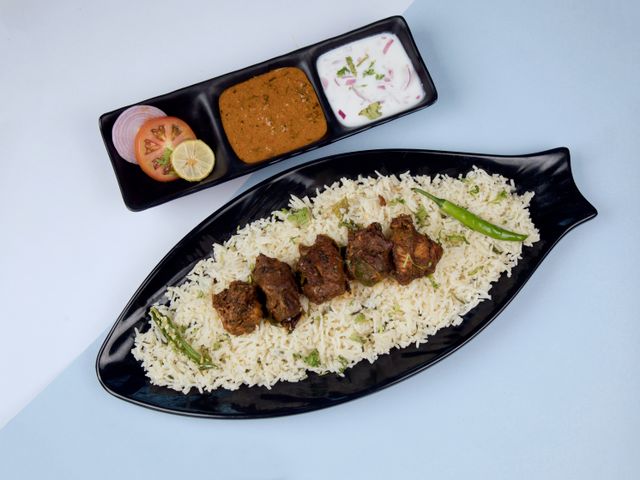
Spanish Seafood Paella Biryani
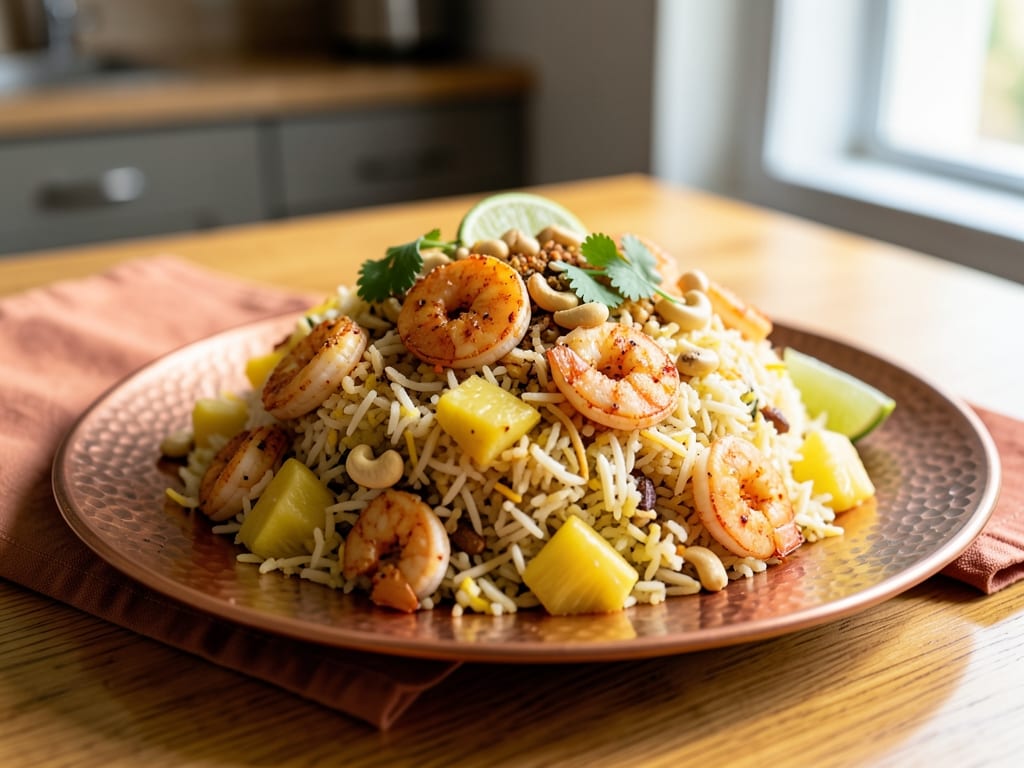
A fusion of Spanish paella and Indian biryani traditions, this one-pot seafood dish layers fragrant basmati rice with saffron, tomatoes, and fresh prawns and mussels. The cooking method honors biryani's aromatic approach while embracing paella's vibrant, seafood-forward flavors. Served with crispy caramelized edges and tender, perfectly cooked shellfish.
- Prep
- 25 min
- Cook
- 45 min
- Wait
- 15 min
- Total
- 1 hr 25 min
- Makes
- Serves 6 (about 1½ cups per person)
Steps
Before you start
- Soak saffron threads in ¼ cup warm water for 15 minutes before cooking
- Clean mussels and remove beards; discard any that don't close when tapped
- Pat prawns dry with paper towels to prevent sticking
- Have all ingredients prepped and within arm's reach—this dish moves quickly once you start
Toast Aromatics and Spices
- Heat 2 tbsp (30 ml) olive oil in the 12-inch (30 cm) paella pan over medium heat.
- Once shimmering, add the diced onion and cook for 3–4 minutes, stirring occasionally, until softened and translucent.
- Stir in the minced garlic and grated ginger, cooking for 1 minute until fragrant.
- Add the ground cumin, smoked paprika, turmeric, crushed cardamom pods, cinnamon stick, and bay leaves.
- Stir constantly for 30 seconds to bloom the spices and release their oils.
+ Show details− Hide details
Ready when: Spices are fragrant and onions are soft and translucent
Tip: Don't skip blooming the spices—it deepens their flavor and prevents a raw taste
Add Tomatoes and Cook Down
- Stir in the diced tomatoes and cook for 3–4 minutes, stirring frequently, until they begin to break down and release their juices.
- The mixture should darken slightly and smell intensely savory.
+ Show details− Hide details
Ready when: Tomatoes soften and juices pool in the pan; aroma is rich and concentrated
Tip: Breaking down the tomatoes creates a flavorful base for the rice to absorb
Toast the Rice
- Increase heat to medium-high.
- Add the rinsed and drained basmati rice to the pan, stirring constantly for 2 minutes.
- Each grain should become slightly translucent at the edges and feel dry, not wet.
- This toasting step prevents the rice from becoming mushy.
+ Show details− Hide details
Ready when: Rice is fragrant and grains appear slightly translucent at edges; no moisture visible
Tip: Toasted rice holds its shape better—skip this and your biryani becomes porridge
Add Stock and Saffron
- Pour the warmed seafood stock into the pan along with the saffron and its soaking liquid.
- Stir well to distribute the saffron evenly throughout.
- Bring to a boil, then reduce heat to medium-low.
- Season with salt and freshly ground black pepper to taste.
- The liquid should just barely cover the rice.
+ Show details− Hide details
Ready when: Mixture comes to a boil, then settles into a gentle simmer with small bubbles breaking the surface
Tip: Warm stock prevents shocking the rice and maintains even cooking temperature
Simmer Rice Until Tender
- Maintain a gentle simmer over medium-low heat for 12–15 minutes, stirring gently every 3 minutes to prevent sticking.
- The rice should be almost tender when pierced with a fork, and most liquid should be absorbed.
- Do not cover; you want to monitor the moisture level closely.
+ Show details− Hide details
Ready when: Rice is just tender; liquid is mostly absorbed but surface may look slightly wet
Tip: Stir occasionally to ensure even cooking and prevent hot spots from burning the bottom
Nestle Prawns into Rice
- Arrange the patted-dry prawns across the surface of the rice, gently pressing them slightly into the rice without fully submerging them.
- Drizzle the remaining 2 tbsp (30 ml) olive oil over the top.
- Increase heat to medium-high and cook, uncovered, for 3–4 minutes until the prawns begin to turn pink on their exposed tops.
+ Show details− Hide details
Ready when: Prawn tops are pink and opaque; bottoms touching rice are pale pink
Tip: Don't stir—let the heat from below start cooking the prawns and crisp the rice bottom
Add Mussels and Finish Cooking
- Scatter the cleaned mussels over the rice and prawns, nestling them in gently.
- Cover the pan with a tight-fitting lid or aluminum foil.
- Reduce heat to medium and cook for 5–6 minutes until all mussels have opened and prawns are fully pink and opaque throughout.
- Discard any mussels that do not open.
+ Show details− Hide details
Ready when: All mussels are open; prawn flesh is opaque and firm; rice is tender and fragrant
Tip: Discard unopened mussels—they may be spoiled and are unsafe to eat
Rest and Crisp Bottom
- Uncover the pan and remove from heat.
- Let the paella rest, covered with a clean kitchen towel, for 3 minutes.
- This allows the rice to finish absorbing any remaining liquid and the mussels to firm up slightly.
- If you prefer a crispy, caramelized bottom layer (socarrat), return the uncovered pan to medium-high heat for 30 seconds to 1 minute, listening for a gentle crackling sound without burning.
+ Show details− Hide details
Ready when: Steam stops rising from the paella; mussels are fully set; if searing bottom, a faint crackling sound emerges
Tip: The socarrat crust is prized in paella—a gentle crackling is ideal; thick burnt smell means you've gone too far
Garnish and Serve
- Sprinkle the chopped fresh cilantro and mint (if using) over the top.
- Nestle the lemon wedges around the paella for squeezing at the table.
- Serve directly from the pan, or transfer to a serving platter, and divide among shallow bowls.
- Each serving should have rice, seafood, and a piece of lemon.
+ Show details− Hide details
Tip: Add fresh herbs just before serving to preserve their brightness and aroma
Good to know
Tips
- Warm your stock before adding it to the pan—cold liquid will stop the cooking process and extend the time needed. Boil it in a kettle or pot while you're building the base.
- Pat prawns and mussels very dry before cooking. Excess moisture releases steam, which raises the pan's humidity and makes the rice soggy rather than tender with crispy edges.
- Don't stir the rice constantly once the stock is added. Unlike risotto, biryani benefits from a brief rest where the grains cook undisturbed, creating distinct kernels rather than creamy texture.
- Listen for the gentle crackling of socarrat in Step 8—this crispy, caramelized bottom layer is a hallmark of great paella. A soft, quiet sizzle is right; a sharp crackling or burnt smell means you've overcooked it.
Make ahead
Prepare all ingredients (mise en place) up to 2 hours ahead: dice onion, tomato, and garlic; mince ginger; clean and pat dry prawns and mussels. Soak saffron in warm water 15 minutes before you start cooking. Do not cook the rice ahead—biryani paella is best made fresh and served immediately.
Storage & reheating
Leftovers (if any) can be stored in an airtight container in the refrigerator for up to 1 day. To reheat, sprinkle with a few tablespoons of stock or water, cover loosely with foil, and warm gently over medium-low heat for 5–7 minutes, stirring occasionally, until heated through. Do not microwave, as it can make the rice rubbery and toughen the seafood. Freezing is not recommended—the texture of the mussels and prawns will suffer significantly.
Substitutions
- fresh mussels, cleaned and debearded → Fresh clams (littleneck or Manila), cleaned and rinsed. Clams have a similar sweet brininess and open in the same way. Increase cooking time in Step 7 by 1–2 minutes if clams are large.
- large prawns (shrimp), peeled and deveined → Large scallops (sea scallops work best), patted completely dry. Scallops cook quickly like prawns but will not turn pink—they're done when opaque and just firm to the touch (about 3–4 minutes in Step 6).
- basmati rice, uncooked → Short-grain paella rice (bomba or arborio). These rices absorb liquid differently and hold their grain shape better for a traditional paella texture. Use the same volume but reduce stock by ¼ cup (60 ml) to avoid mushiness.
- saffron threads → Turmeric (add another ½ tsp / 1 g) or annatto seeds (soaked and ground into a paste). Neither will replicate saffron's subtle floral notes, but they provide color and a subtle earthy depth. Avoid food coloring, which adds no flavor.