
Italian Pesto Chicken Biryani
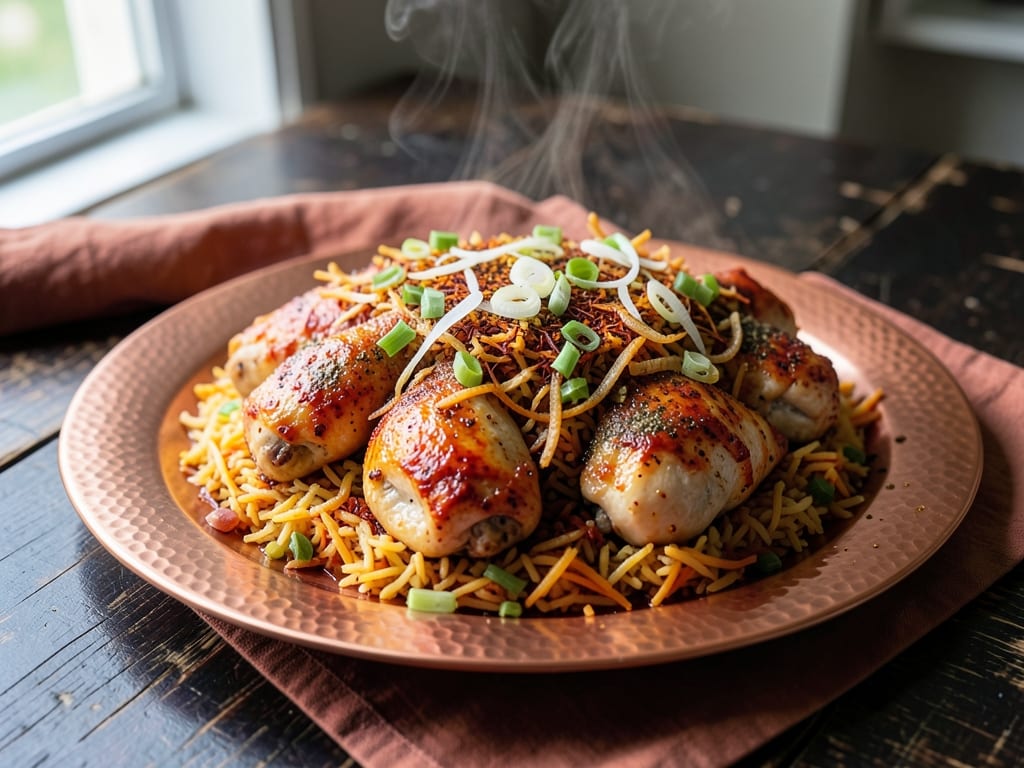
A contemporary fusion biryani that layers fragrant basmati rice with chicken infused in basil pesto, finished with toasted pine nuts and melted Parmesan. The sealed-pot dum pukht method steams everything together, creating a creamy, herbaceous rice dish where Italian and Indian techniques meet. Garlic-forward, aromatic, and richly layered with subtle nods to both traditions.
- Prep
- 25 min
- Cook
- 50 min
- Wait
- 15 min
- Total
- 1 hr 30 min
- Makes
- 4 servings (about 1½ cups per person)
Steps
Before you start
- Toast pine nuts in a dry skillet over medium heat (2–3 minutes) and set aside to prevent them from burning during the biryani.
- Soak basmati rice in cold water for 30 minutes, then drain thoroughly—this prevents clumping and ensures separate grains.
- Have a heavy-bottomed pot with a tight-fitting lid ready (5–6 quart); the seal is essential for dum pukht cooking.
- Cut chicken into 2-inch pieces and pat dry so the pesto adheres properly.
Marinate the chicken
- In a small bowl, combine the yogurt, basil pesto, minced garlic, lemon juice, 1 teaspoon of salt, and black pepper.
- Mix until smooth.
- Add the dry chicken pieces and toss gently to coat evenly.
- Set aside for 10 minutes while you prepare the rice and aromatics.
+ Show details− Hide details
Ready when: Chicken is evenly coated and glistening
Tip: Don't over-marinate; 10 minutes is enough for flavor absorption without drying the meat.
Parboil the rice
- Bring the 2¾ cups of water to a boil in the heavy pot over high heat.
- Add the soaked, drained rice, the remaining ½ teaspoon of salt, crushed cardamom pods, bay leaves, and cinnamon stick.
- Stir once, then let it boil for 7–8 minutes until the rice is 60–70% cooked (grains are partially tender but still al dente in the center).
+ Show details− Hide details
Ready when: Rice is softened but still slightly firm in the center when bitten; water is not fully absorbed
Tip: Don't fully cook the rice—it will finish cooking during the dum phase. Undercooked rice at this stage is better than overcooked.
Drain and set aside rice
- Drain the parboiled rice in a fine-mesh strainer, reserving about 2 tablespoons of the cooking water.
- Discard the bay leaves but keep the cardamom pods and cinnamon stick mixed in with the rice—they add flavor throughout.
+ Show details− Hide details
Ready when: Rice is drained and aromatics are removed from the water
Tip: Save that cooking liquid to add back into the pot if needed during the final cooking.
Crisp the onions
- Heat 3 tablespoons of ghee in the heavy pot over medium-high heat.
- Add the sliced onions and cook, stirring frequently, for 8–10 minutes until golden brown and crispy at the edges.
- Transfer half the onions to a small plate; keep the remaining onions and ghee in the pot.
+ Show details− Hide details
Ready when: Onions are caramelized and turning golden brown, some edges are crispy
Tip: Stir regularly to ensure even browning; burnt onions will taste bitter. Lower the heat slightly if they're browning too fast.
Layer chicken and finish onions
- Reduce the heat to medium.
- Spread the pesto-marinated chicken pieces evenly over the remaining onions in the pot.
- Scatter the reserved crispy onions on top, then drizzle with the remaining 1 tablespoon of ghee.
+ Show details− Hide details
Ready when: Chicken and onions are layered and ghee is distributed
Tip: Don't stir once you've layered the chicken and rice; the layers stay distinct and flavor the rice as steam circulates.
Layer the rice
- Gently pour the drained parboiled rice over the chicken layer, spreading it evenly.
- It's okay if some rice falls through to nestle with the chicken—this creates flavor exchange.
- Do not stir.
- Sprinkle most of the toasted pine nuts over the rice, reserving a small handful for garnish.
+ Show details− Hide details
Ready when: Rice is evenly spread over chicken in a mound
Tip: The pine nuts will toast further during dum cooking and impart a rich, subtle nuttiness.
Seal and dum cook
- Place the tight-fitting lid on the pot.
- If you don't have a perfect seal, lay a piece of aluminum foil under the lid to trap steam.
- Set the pot over medium heat for 40–45 minutes.
- You should hear a faint sizzle for the first 5–7 minutes as the pot comes to a gentle steam, then it should be mostly silent (that's the sealed steam doing the work).
- Check once at the 30-minute mark by carefully lifting a corner of the lid to peek—you should see steam inside.
- If the bottom is scorching (you'll smell burnt rice), reduce heat to medium-low.
+ Show details− Hide details
Ready when: No steam escapes when you lift the lid corner; a light crust may form on the bottom
Tip: Resist the urge to stir. The dum pukht method relies on undisturbed steam circulation. If you see water pooling on top, reduce heat slightly.
Rest and finish
- Remove the pot from heat and let it rest, covered, for 5 minutes.
- Then lift the lid carefully away from you (hot steam rises).
- Gently fluff the rice with a fork, incorporating a few layers at a time—the rice should separate into individual grains and some pesto-soaked threads will be visible.
+ Show details− Hide details
Ready when: Rice is tender, chicken is cooked through (no pink), and grains are separate
Tip: The crust on the bottom (called *tahdig*) is desirable and adds textural contrast; only scrape it if you prefer.
Garnish and serve
- Transfer the biryani to a serving platter or bowl.
- Top with the remaining toasted pine nuts, the finely grated Parmesan cheese, and the fresh torn basil leaves (if using).
- Serve immediately while the rice is fragrant and warm.
+ Show details− Hide details
Ready when: Dish is plated and garnishes are visible
Tip: Parmesan will melt slightly from residual heat, adding a creamy element. Fresh basil should be added just before eating to preserve its bright flavor.
Good to know
Tips
- Soaking basmati rice before cooking is crucial—it prevents mushiness and ensures each grain cooks individually.
- The dum pukht seal is everything. If steam escapes, the rice will not cook properly. A tight-fitting lid and foil backup are worth the effort.
- Don't skip the toasting of pine nuts in a dry skillet. It deepens their flavor and prevents them from tasting raw or watery inside the biryani.
- The pesto-yogurt marinade is rich and flavorful; don't oversalt the rest of the dish. Taste before serving and adjust salt if needed, especially when adding Parmesan.
Make ahead
Marinate the chicken in the pesto-yogurt mixture for up to 4 hours ahead in the refrigerator; bring it to room temperature for 15 minutes before cooking. Basil pesto can be made fresh or store-bought; homemade tastes brighter but either works well. You can also toast the pine nuts up to 1 day ahead and store them in an airtight container.
Storage & reheating
Store leftovers in an airtight container in the refrigerator for up to 3 days. Reheat gently in a 300°F (150°C) oven for 10–15 minutes, covered, until warmed through—this prevents the rice from drying out. Freeze in an airtight container for up to 2 months; thaw in the refrigerator overnight before reheating. Do not microwave, as it will dry out the rice.
Substitutions
- fresh basil pesto → arugula or rocket pesto, or even a cilantro-mint pesto. Arugula pesto brings a slightly peppery note; cilantro-mint skews more Indian-fusion. Use the same volume and adjust salt in the marinade by ¼ teaspoon if needed.
- ghee or clarified butter → unsalted butter. Use the same amount; butter adds a slightly lighter, less nutty flavor but works well. Avoid salted butter to maintain control over seasoning.
- boneless, skinless chicken thighs, cut into 2-inch pieces → boneless, skinless chicken breasts, cut into 1½-inch pieces. Breasts are leaner; reduce dum cooking time by 5 minutes (total 35–40 minutes) to prevent drying out. Thighs are preferred for juiciness.
- Parmigiano-Reggiano cheese, finely grated → Pecorino Romano or Grana Padano. Pecorino is saltier and more peppery; use ⅔ cup. Grana Padano is milder; use ¾ cup. Both work beautifully as finishing touches.
More biryani
See all →


Find more like this
- Meal
- Dinner
- Main ingredient
- Chicken ThighsBasmati Rice
- Method
- Oven
- Quick & Easy
- One-Pot