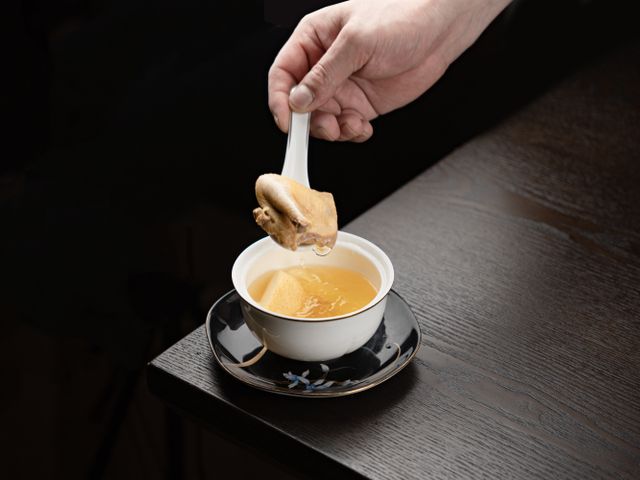
Spanish Rabbit and Rosemary Broth
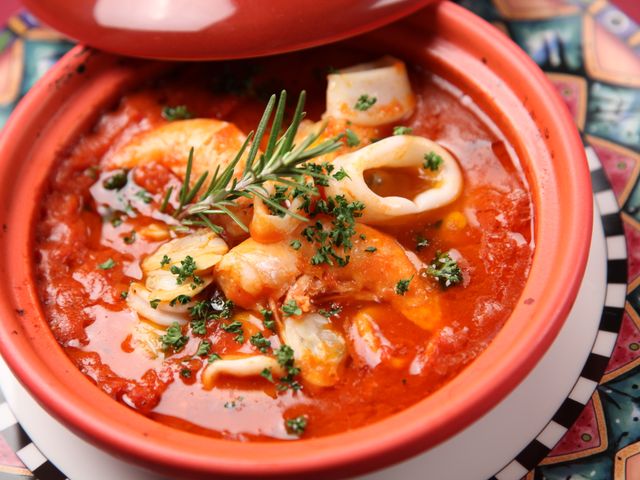
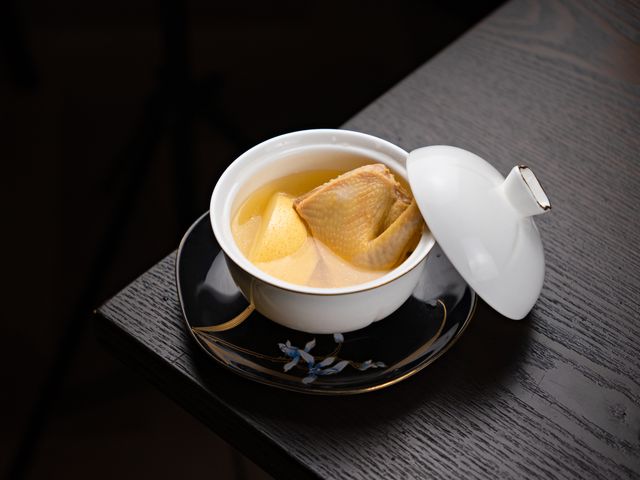
A rustic, fragrant Spanish broth made from rabbit bones simmered gently with fresh rosemary, white wine, and aromatics. This clear, clean-tasting broth is the foundation for Spanish game soups and stews, or can be sipped on its own as a restorative dish. The long, slow simmer extracts delicate flavor from the bones while the rosemary adds an herbaceous, pine-like note characteristic of Spanish hunting cuisine.
- Prep
- 15 min
- Cook
- 2 hr
- Wait
- 10 min
- Total
- 2 hr 25 min
- Makes
- About 6 cups (1.4 liters) broth
Steps
Before you start
- Rinse the rabbit bones under cold water to remove any debris
- Have all aromatics prepped and ready before you start simmering
- Use a heavy-bottomed pot or stockpot with a lid to maintain gentle heat
Blanch the rabbit bones
- Place the rinsed rabbit bones in the stockpot and cover with the cold water.
- Bring to a boil over high heat.
- Once boiling, let the bones bubble for 2 minutes, then drain in a fine-mesh sieve.
- Rinse the bones thoroughly under cold running water, scrubbing gently to remove any gray scum or impurities.
- Rinse the pot as well.
- This step ensures a clear, clean broth.
+ Show details− Hide details
Ready when: Water comes to a rolling boil; bones turn pale and scum rises to the surface
Tip: Don't skip the blanching step—it makes the difference between a cloudy and crystal-clear broth.
Start the broth base
- Return the cleaned bones to the rinsed pot and add fresh cold water (8 cups / 2 liters).
- Add the quartered onion (skin on), crushed garlic cloves (skin on), bay leaves, and black peppercorns.
- Pour in the white wine.
- Bring to a bare simmer over medium-high heat, then reduce heat to low so only occasional lazy bubbles break the surface.
+ Show details− Hide details
Ready when: Liquid reaches a bare simmer; wine aroma is fragrant
Tip: A gentle, steady simmer extracts the most delicate flavors. Too vigorous a boil will cloud the broth and make it taste harsh.
Simmer with rosemary
- Add the fresh rosemary sprigs to the pot.
- Partially cover with the lid, leaving it slightly ajar so steam can escape.
- Maintain a gentle simmer on low heat for 2 hours.
- You should see only the occasional bubble break the surface.
- The liquid will reduce slightly and take on a pale golden color infused with the aroma of rosemary and rabbit.
+ Show details− Hide details
Ready when: Liquid is golden and fragrant; bones are pale and any remaining meat is completely tender
Tip: Resist the urge to stir the pot—letting it sit undisturbed helps keep the broth clear.
Strain the broth
- Remove from heat and let the broth cool for 5 minutes.
- Place a fine-mesh sieve over a large heatproof bowl and carefully ladle the broth through, discarding all solids (bones, vegetables, aromatics, and peppercorns).
- If you prefer an extra-clear broth, line the sieve with cheesecloth and pour the broth through it slowly.
+ Show details− Hide details
Ready when: All solids are removed and the broth flows freely through the sieve
Tip: Chill the broth and any fat will solidify on the surface, making it easy to skim away if you prefer a leaner broth.
Season to taste
- Taste the warm broth and season with sea salt.
- Add salt gradually—a teaspoon at a time—stirring gently and tasting until the broth tastes rich and well-balanced without being overtly salty.
- The broth should highlight the delicate rabbit flavor and herbaceous rosemary, not salt.
+ Show details− Hide details
Ready when: Broth is flavorful and balanced; salt enhances rather than dominates the taste
Tip: Go easy on salt—you can always add more, but you cannot remove it. Remember that if you reduce the broth further later, the salt will concentrate.
Good to know
Tips
- For a richer, more concentrated broth, after straining, return the liquid to the pot and simmer gently, uncovered, for another 30–45 minutes to reduce by one-quarter to one-third. This deepens the flavor and extends storage time.
- If the broth develops a film of fat on the surface during cooling, don't discard it—this fat adds richness. You can skim most of it if you prefer a lighter version, or leave it on for depth.
- Rabbit broth pairs beautifully with white beans, root vegetables, and crusty bread, making it ideal for traditional Spanish game soups like conejo con chocolate or conejo a la cazadora.
- Always use a heavy-bottomed pot with good heat distribution. Thin pots can cause hot spots and result in uneven, simmering that clouds the broth.
Make ahead
The broth can be made up to 3 days ahead. Strain and cool completely, then refrigerate in an airtight container. Or freeze for up to 3 months in ice cube trays or freezer containers for easy portioning.
Storage & reheating
Room temperature: Cool completely before covering; use within 2 hours (food safety). Refrigerator: Up to 3 days in an airtight container; reheat gently in a pot over medium heat until steaming. Freezer: Up to 3 months in an airtight container or ice cube trays; thaw overnight in the fridge or reheat directly from frozen over medium heat.
Substitutions
- rabbit bones (from a butchered rabbit or spare bones from a butcher) → chicken bones or a combination of chicken and game bird bones. Yields a milder broth with less distinctive flavor, but still aromatic with rosemary.
- dry white wine → dry vermouth or an extra 1 cup water. Vermouth adds herbal notes; water makes a cleaner, less complex broth.
- fresh rosemary sprigs → fresh thyme or a mix of thyme and sage. Thyme is earthier; sage adds pepper-like warmth. Do not use dried rosemary as the flavor becomes overpowering.
- bay leaf → one 3-inch piece of dried orange peel (no pith). Adds a subtle citrus note traditional in some Spanish broths; use 1 piece instead of 2 bay leaves.