
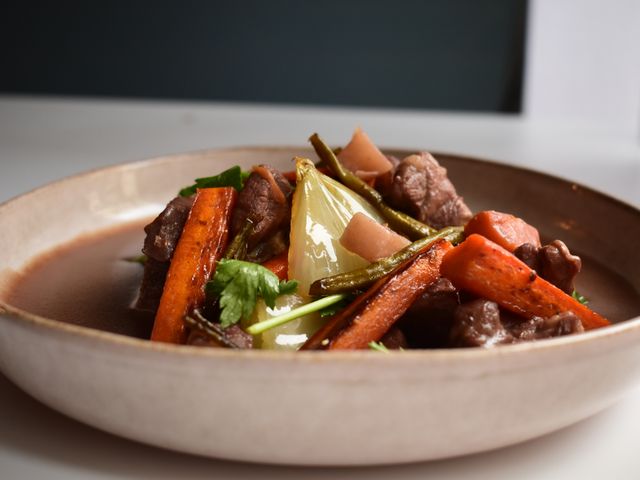
Spanish Beef and Rioja Broth
A rich, deeply flavored beef broth made with marrow bones, Spanish Rioja wine, and aromatic vegetables cooked low and slow in a slow cooker. The wine adds subtle complexity while hours of gentle cooking extract gelatin and collagen from the bones, creating a silky, flavorful broth perfect for Spanish dishes or as a foundation for soups and sauces. Minimal hands-on work with maximum flavor payoff.
- Prep
- 15 min
- Cook
- 8 hr
- Wait
- 50 min
- Total
- 9 hr 5 min
- Makes
- About 2.5 liters (10 cups) beef broth
Steps
Before you start
- Thaw any frozen bones in the refrigerator overnight before starting
- Have a fine-mesh strainer and a large heatproof pot or container ready for straining
- Use a 6-quart or larger slow cooker with a tight-fitting lid to minimize evaporation
Prepare ingredients
- If the beef bones are frozen, thaw them in the refrigerator overnight.
- Under cold running water, rinse the bones thoroughly to remove any surface debris, then pat them completely dry with paper towels.
- Halve the onions lengthwise, keeping the papery skin intact (the skin contributes color and subtle mineral depth to the broth).
- Peel the carrots and cut them into rough 2-inch pieces.
- Using a sharp knife, cut the garlic head in half horizontally across its center, so you expose all the cloves.
+ Show details− Hide details
Ready when: All ingredients are cleaned, peeled, and cut as specified
Tip: Leave the onion skins on—they contribute color and subtle tannin-like depth to the finished broth
Layer ingredients in slow cooker
- Place the 3 lbs of beef bones in the bottom of a 6-quart slow cooker.
- Arrange the carrot pieces, onion halves, and garlic halves around the bones, distributing them evenly.
- Scatter the bay leaves, fresh thyme sprigs, and whole black peppercorns over the vegetables and bones.
- Pour in 1.5 cups of Rioja wine, letting it settle into the pot.
- Add 10 cups of cold water, ensuring that the bones and vegetables are submerged by about 1 inch of liquid.
- Sprinkle 1 teaspoon of kosher salt over the entire mixture.
+ Show details− Hide details
Ready when: All ingredients are evenly distributed in the slow cooker and liquid level reaches 1 inch above solids
Tip: Using cold water maximizes gelatin and collagen extraction from the bones during the long, gentle cooking process
Cook on low heat
- Cover the slow cooker with its lid.
- Set the heat to LOW and cook for 8 hours.
- (Alternatively, you may cook on HIGH for 4 to 5 hours if time is limited, though the low setting yields deeper, more developed flavor.) Do not lift the lid during cooking—each opening releases heat and effectively adds 15 minutes to the total cooking time.
- The broth is done when it has turned a deep amber color and the bones have begun to separate slightly from the marrow.
+ Show details− Hide details
Ready when: Broth is deep amber in color; bones have separated slightly from the marrow
Tip: Resist the urge to open the lid—each lift releases valuable heat and extends the cooking process
Remove bones and vegetables
- Once the cooking time is complete, use tongs or a slotted spoon to carefully lift out the large bones and vegetable pieces directly from the slow cooker.
- Discard all solids—bones, vegetables, herbs, and bay leaves.
- Work carefully to avoid splashing the hot broth.
- This step should take about 10 minutes.
+ Show details− Hide details
Ready when: All large solids have been removed from the slow cooker
Tip: Save the bones and vegetable solids in a separate bowl until you finish straining, in case you need to retrieve a bay leaf or other item
Strain through fine sieve
- Place a fine-mesh strainer over a large heatproof pot or container.
- Slowly and carefully pour the entire remaining contents of the slow cooker into the strainer, allowing the liquid to drip through into the pot below.
- Do not press the solids or force the liquid—allow gravity to do the work, which may take 20 to 30 minutes.
- Once all liquid has drained through, discard the fine solids (peppercorns, herb fragments, and any vegetables that passed through).
+ Show details− Hide details
Ready when: All liquid has passed through the strainer and no more broth drips after 2 minutes of waiting
Tip: For crystal-clear, consommé-quality broth, line your strainer with damp cheesecloth before pouring—this yields a professional-grade result but requires 45 to 60 minutes of patient straining
Cool and season to taste
- Allow the strained broth to cool to room temperature, about 30 minutes.
- (Do not taste it while it is extremely hot.) Once cooled, taste a small spoonful and evaluate the flavor.
- The broth should taste distinctly savory with a rich beef backbone and subtle wine complexity from the Rioja.
- Add kosher salt 1/4 teaspoon at a time, stirring and tasting, until the flavor feels balanced and clean.
- Avoid over-salting at this stage—you can always add more salt when using the broth in future recipes, but you cannot remove it.
+ Show details− Hide details
Ready when: Broth is at room temperature and seasoned to your preference
Tip: Err on the side of under-seasoning now—the flavor will concentrate if you reduce the broth later in a saucepan
Good to know
Tips
- For the clearest, most elegant broth (suitable as a light consommé), line your strainer with damp cheesecloth and strain very slowly—allow 45 to 60 minutes for the liquid to drip through undisturbed; this extra time yields a crystal-clear result
- Do not discard the fat layer that congeals on top of refrigerated broth—it is rich and flavorful. Use it for cooking vegetables or meat, or leave it in place as a natural seal to protect the broth underneath
- If you have access to veal bones or a mix of beef and veal bones (in a 3:1 ratio), use them—they will produce an exceptionally rich, silky broth with refined flavor
- Taste the broth before adding it to other recipes—if it tastes under-salted at this stage, it is perfect for reducing in a saucepan for sauces, but if you use it directly in soups, add salt then for better control
Make ahead
Yes, this is an ideal make-ahead recipe. Prepare it up to 3 days in advance and refrigerate in an airtight container with the fat layer intact (the fat acts as a natural seal and preservative). The broth also freezes beautifully for up to 6 months in airtight containers or ice cube trays.
Storage & reheating
Refrigerator: Store in a clean, airtight container for 4 to 5 days. A layer of fat will solidify on top—leave it in place, as it protects the broth beneath and adds deep flavor. Freezer: Transfer to airtight freezer containers or ice cube trays and freeze for up to 6 months. To reheat: Thaw overnight in the refrigerator if frozen. Warm gently over medium heat on the stovetop, stirring occasionally, until it reaches a gentle simmer (about 10 to 15 minutes). Do not boil aggressively, as this can diminish delicate flavors.
Substitutions
- Dry Rioja wine → Spanish Tempranillo, French Burgundy, or Châteauneuf-du-Pape (any full-bodied dry red wine). Rioja is traditional to Spanish cooking; any high-quality dry red wine will add complexity. Avoid sweet or oaked wines—they can overpower the broth
- Fresh thyme sprigs → 1 teaspoon dried oregano or 1 teaspoon dried marjoram. Fresh thyme is preferred for its bright, clean flavor, but dried herbs work well if you reduce the quantity. Oregano is closer in spirit to Spanish cooking than marjoram
- Dried bay leaves → 1 teaspoon dried marjoram or simply omit. Bay leaves add a subtle herbal note; the broth is perfectly fine without them if you cannot find fresh bay leaves
- Beef marrow bones or knuckle bones → Beef knuckle bones, beef shin with meat, or a mix of beef and veal bones. Marrow bones and knuckle bones are ideal; veal bones produce an especially silky, refined broth if you can source them. Any beef bones will produce good results
More broths
See all →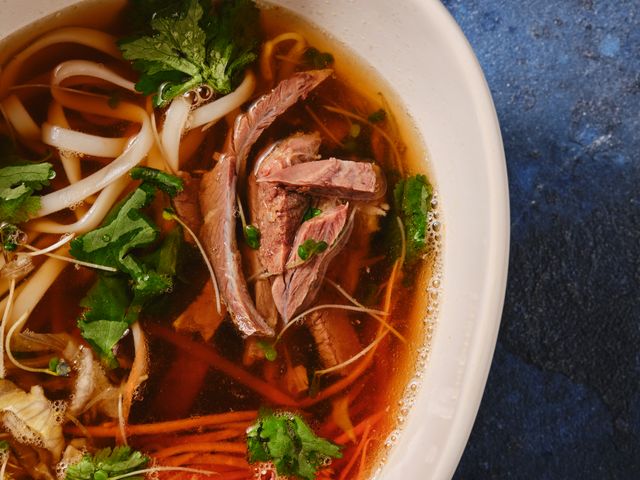

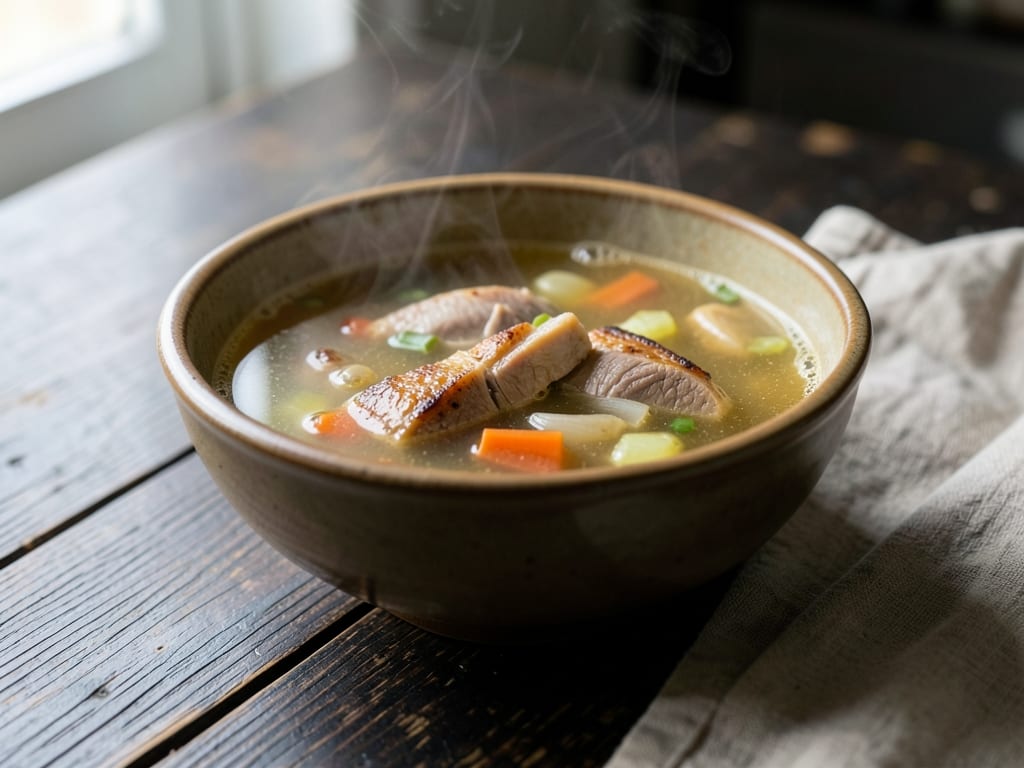
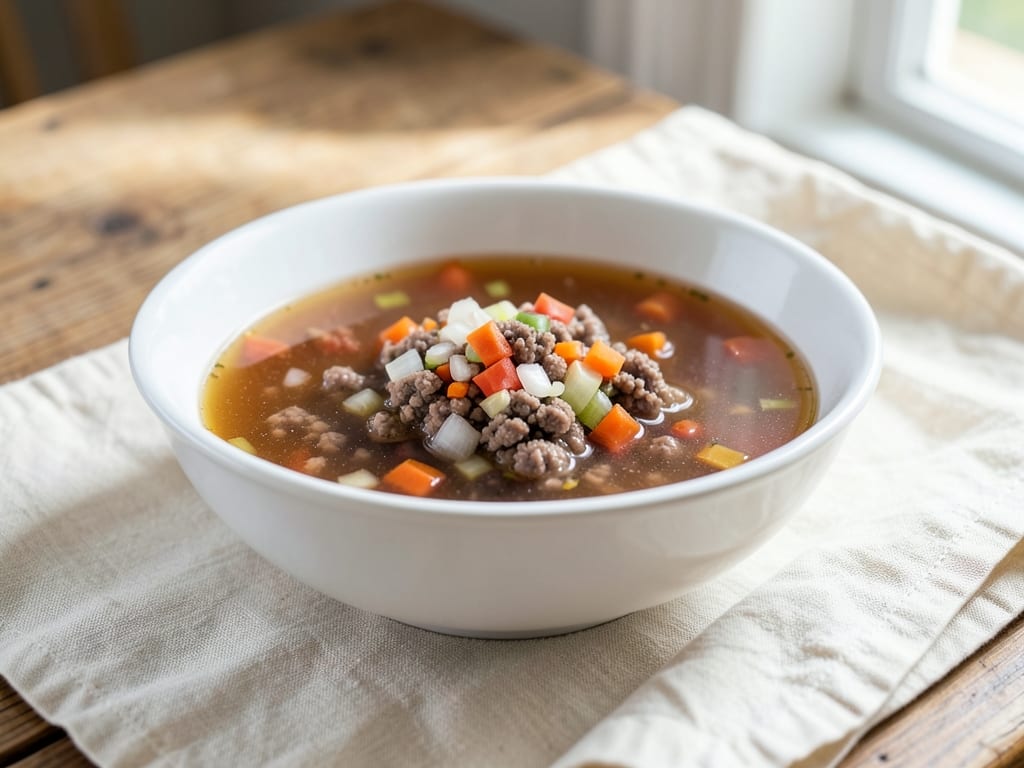
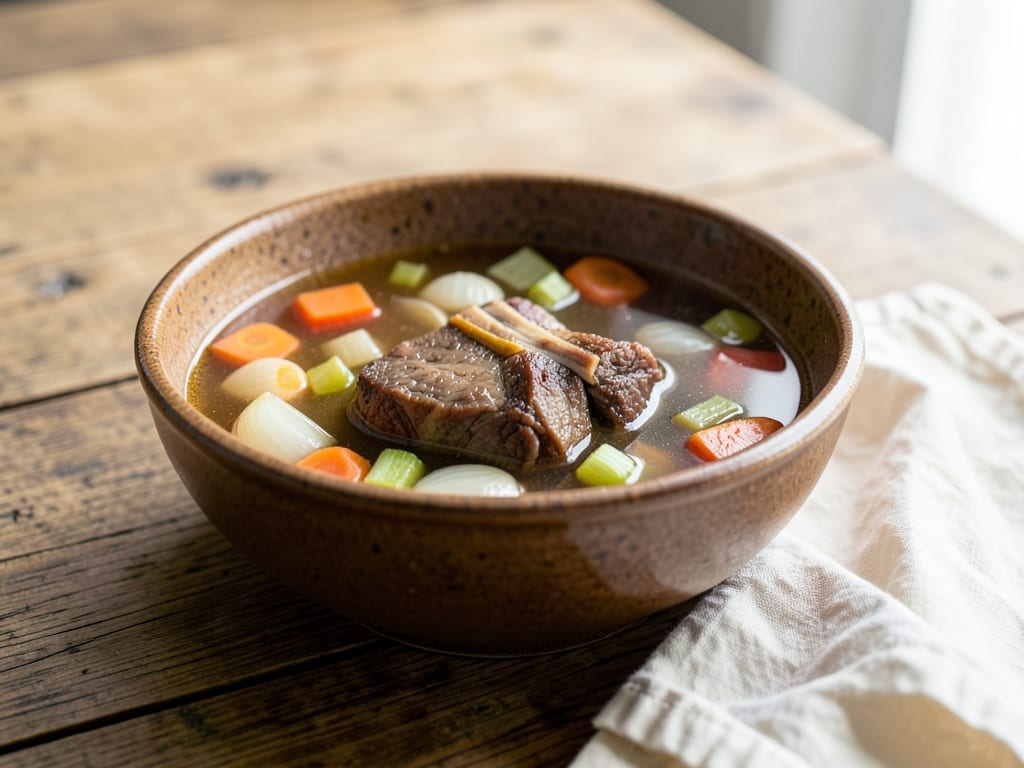
Find more like this
- Meal
- Dinner
- Cuisine
- Spanish
- Main ingredient
- Beef
- Method
- Slow Cooker
- Quick & Easy
- EasyBeginnerOne-PotMake AheadFreezer Friendly