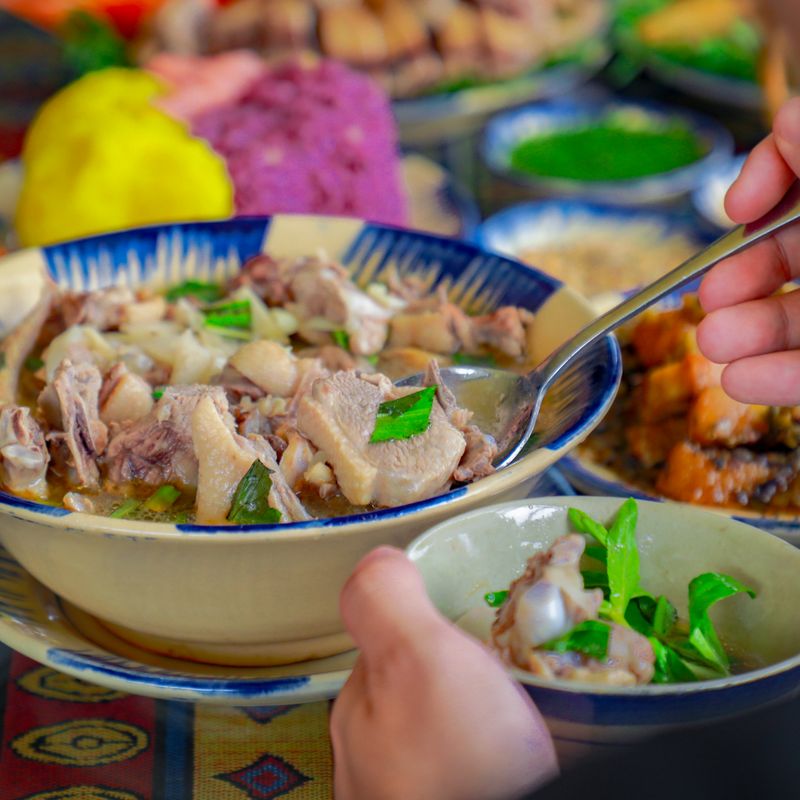
Greek Lamb Broth with Orzo Pasta
A rustic Greek lamb broth simmered gently with aromatics, finished with orzo pasta, fresh lemon juice, and dill. The long, slow cooking extracts deep savory flavor from lamb bones while developing a naturally silky body. Serve hot as a warming, soul-satisfying one-pot meal.
- Prep
- 15 min
- Cook
- 1 hr 35 min
- Total
- 1 hr 50 min
- Makes
- 4 servings (about 2 cups per bowl)
Steps
Before you start
- Trim visible fat from the lamb bones; this prevents excess grease in the broth
- Have all aromatics and herbs measured and ready before you begin simmering
- Bring a small pot of salted water to a boil if cooking the orzo separately to avoid starch clouding the broth (optional but recommended)
Start the broth
- Place the patted-dry lamb bones in a large 5-quart (4.7-liter) pot and add the cold water.
- Bring to a boil over high heat, about 8–10 minutes.
- As it comes to a rolling boil, foam and impurities will rise to the surface.
- Using a large spoon, carefully skim off and discard this gray foam for the first 2–3 minutes until it subsides.
- This step is key to a clear, refined broth.
+ Show details− Hide details
Ready when: Foam stops rising; surface is mostly clear
Tip: Skimming impurities prevents a murky, unclean-tasting broth. Do not skip this step.
Add aromatics and herbs
- Reduce heat to medium-low.
- Add the halved onion, carrot pieces, celery, bay leaves, dried oregano, and black peppercorns.
- Stir gently to combine.
- The broth should simmer very gently, with just a few small bubbles rising lazily to the surface.
+ Show details− Hide details
Tip: Keep the heat low and steady. A vigorous boil will break down the bones too quickly and cloud the broth.
Simmer the broth
- Maintain a gentle simmer for 75 minutes.
- Check once or twice midway through; the broth should barely bubble.
- Skim any additional foam or fat that rises to the surface using a spoon.
- The broth will gradually deepen in color and develop rich, savory lamb notes.
+ Show details− Hide details
Ready when: Broth is aromatic and golden-amber; meat is easily pulled from bones
Tip: Resist the urge to increase heat. Low and slow is the hallmark of a silky, well-developed broth.
Strain the broth
- Place a fine-mesh sieve over a large bowl.
- Carefully pour the broth through the sieve, discarding the solids (bones, vegetables, aromatics).
- You should have about 7–8 cups (1.65–1.9 liters) of clear, fragrant broth.
- Return the strained broth to the pot.
+ Show details− Hide details
Ready when: Broth is clear and free of solids
Tip: Don't press the solids through the sieve; let gravity do the work for a clear, clean broth.
Season the broth
- Taste the strained broth.
- Add 1.5 teaspoons (9 g) of kosher salt and adjust as needed; it should taste savory and well-seasoned but not overwhelming.
- Bring the broth back to a gentle simmer over medium heat.
+ Show details− Hide details
Ready when: Broth comes to a gentle simmer
Tip: Season to taste; if you used high-salt bones, you may need less salt. Always adjust gradually.
Cook the orzo
- Add the 0.75 cup (150 g) orzo pasta directly to the simmering broth and stir well.
- Maintain a gentle simmer and cook, stirring occasionally, for 9–10 minutes.
- The orzo should be al dente (tender but still with a slight bite).
- If you prefer softer pasta, simmer 1–2 minutes longer.
+ Show details− Hide details
Ready when: Orzo is tender and al dente; broth is creamy from released starch
Tip: Stir the orzo a couple of times to prevent sticking. The broth will thicken slightly as the pasta releases its starch, which is desirable.
Finish with lemon and dill
- Remove the pot from heat.
- Stir in the fresh lemon juice (3 tablespoons/45 ml) and finely chopped dill (2 tablespoons/6 g).
- Taste and adjust salt and lemon to your liking.
- The broth should have a bright, citrusy note that complements the rich lamb flavor.
+ Show details− Hide details
Tip: Add lemon off the heat to preserve its fresh, vibrant flavor. A squeeze of fresh lemon is crucial to Greek lamb broth.
Serve
- Ladle the broth and orzo into warm bowls.
- If desired, drizzle each serving with a small amount of extra-virgin olive oil.
- Serve immediately while hot.
+ Show details− Hide details
Tip: Warm the bowls before serving to keep the broth hot longer. A tiny drizzle of olive oil adds richness and elegance.
Good to know
Tips
- Choose lamb bones with some meat clinging to them (neck or shank bones are ideal) for deeper flavor; entirely bare knuckle bones will yield a thinner broth.
- For an even more luxurious broth, simmer for 90 minutes instead of 75. Longer cooking extracts more collagen, yielding a silky mouthfeel and richer body.
- If you have a mortar and pestle, lightly crush the dried oregano and black peppercorns before adding them to release their oils and intensify their flavor.
- Greek lamb broth is naturally lean; the olive oil drizzle at the end is optional but adds an authentic finishing touch and helps carry the flavors of the herbs and lemon.
Make ahead
You can make the broth up to 2 days ahead (steps 1–4). Refrigerate in an airtight container; the fat will solidify on top and can be easily lifted off and discarded if you prefer a leaner broth. Reheat gently before adding the orzo and finishing with lemon and dill.
Storage & reheating
Refrigerate the finished broth in an airtight container for up to 3 days. The broth and orzo may thicken slightly as it cools; thin with a splash of water or broth when reheating. To reheat, warm gently in a pot over medium heat until simmering, then stir in a squeeze of fresh lemon juice and a pinch of dill before serving. Do not freeze the finished broth with orzo (the pasta becomes mushy), but you can freeze the strained broth alone (without orzo) in a freezer-safe container for up to 3 months. Thaw overnight in the refrigerator and cook fresh orzo when ready to serve.
Substitutions
- orzo pasta → Small pasta shapes (ditalini, pastina, or broken angel hair). Use the same weight. Ditalini and pastina will cook slightly faster (7–8 minutes), while angel hair cooks in 6–7 minutes. Adjust cooking time as needed.
- fresh dill → Fresh parsley or a mix of parsley and mint. Dill is traditional, but fresh parsley offers a brighter, more neutral herb note. Mint adds unexpected richness and pairs beautifully with lamb.
- dried oregano → Fresh oregano (use 1 tablespoon / 3 g). Fresh oregano is more delicate and floral. Add it in the last 10 minutes of simmering to preserve its flavor.
- fresh lemon juice → Aged red wine vinegar or white wine vinegar (2 tablespoons / 30 ml). Vinegar adds brightness and depth. Use slightly less than lemon juice, as it is more acidic. Adjust to taste.
More broths
See all →


Find more like this
- Meal
- Dinner
- Cuisine
- Greek
- Main ingredient
- Lamb ShoulderPasta
- Method
- Stovetop