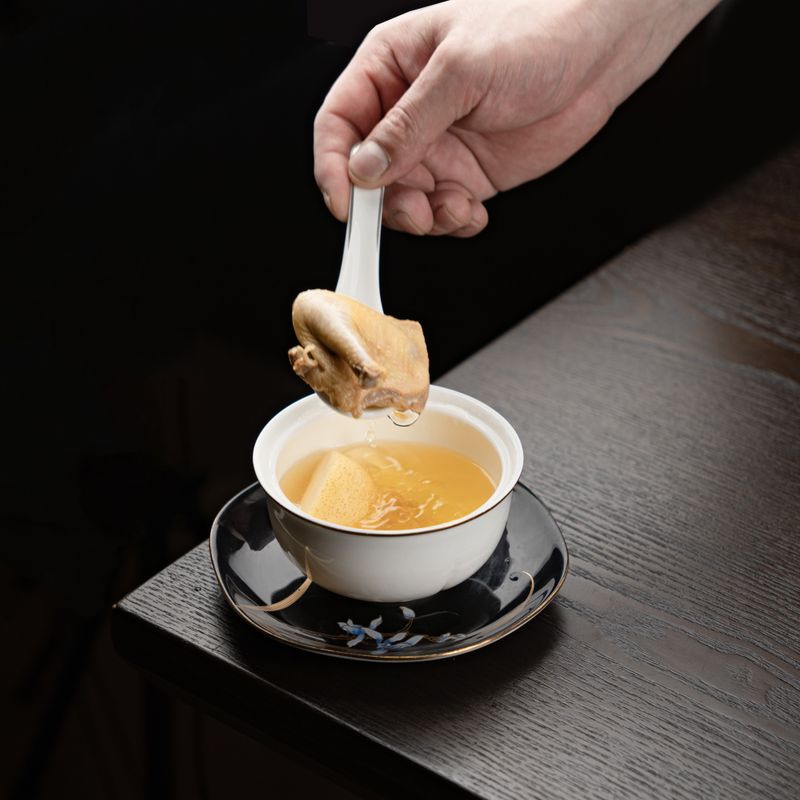
Tuscan Chicken Broth with Sage
A delicate, herbaceous broth infused with fresh sage, rosemary, and garlic. This Tuscan-style broth is simmered slowly from chicken bones and aromatics, creating a golden, aromatic liquid perfect as a base for risotto, pasta, or sipped warm with crusty bread. The sage adds an earthy warmth while white wine brightens the depth of the broth.
- Prep
- 10 min
- Cook
- 1 hr 30 min
- Total
- 1 hr 40 min
- Makes
- 6 cups (1.4 L) broth
Steps
Before you start
- Have all aromatics washed and ready.
- Use a tall 6–8 quart stock pot so ingredients stay submerged.
- This broth freezes beautifully, so make a double batch if you prefer.
Build the broth base
- Place rinsed chicken bones in a 6–8 quart stock pot.
- Add the cold water and white wine.
- Bring to a gentle boil over medium-high heat, then immediately reduce heat to low.
- As foam and impurities rise to the surface (this takes 2–3 minutes), skim them off with a ladle or slotted spoon for a clear, clean broth.
- This step is optional but gives you a refined result.
+ Show details− Hide details
Ready when: Foam and impurities rise to the surface; broth reaches a boil
Tip: Skimming removes coagulated proteins; don't skip it for a clear broth.
Add aromatics and herbs
- Add the halved onion (skin on—it adds color), carrot chunks, celery chunks, smashed garlic cloves, sage leaves, rosemary sprigs, bay leaves, and black peppercorns.
- Stir gently to combine.
- Reduce heat to low so the broth maintains a very gentle simmer—just a few lazy bubbles breaking the surface.
+ Show details− Hide details
Tip: A gentle simmer (not a rolling boil) extracts flavor without clouding the broth.
Simmer the broth
- Maintain a bare simmer over low heat for 1½ hours (90 minutes).
- The broth should be fragrant and golden, and the chicken bones will have released their gelatin and flavor.
- The broth will reach 165°F (74°C) or higher, ensuring food safety.
- Do not stir; let it bubble gently undisturbed.
- The vegetables will soften and flavor will deepen.
+ Show details− Hide details
Ready when: Broth is golden and fragrant; bones are pale and soft; internal temperature reaches 165°F (74°C)
Tip: Resist the urge to boil hard—a slow simmer yields better flavor and a silkier mouthfeel.
Strain the broth
- Line a fine-mesh strainer with cheesecloth and set it over a large heatproof bowl.
- Carefully pour the broth through the strainer, letting it drain into the bowl.
- Discard the solids—bones, vegetables, and herbs have given their all.
- You should have about 6 cups (1.4 L) of clear, golden broth.
+ Show details− Hide details
Ready when: All liquid has drained; solids remain in the strainer
Tip: Don't squeeze the cheesecloth or force anything through—let gravity do the work for the clearest broth.
Season to taste
- Taste the broth.
- Season gently with sea salt, stirring and tasting as you go.
- The broth should taste savory and herbaceous, with the sage and rosemary clearly present but not overpowering.
- Remember that if you're using this as a base for other dishes, it will be concentrated further, so don't oversalt now.
+ Show details− Hide details
Ready when: Broth tastes savory and well-balanced
Tip: Taste before adding salt; you can always add more, but you can't remove it.
Good to know
Tips
- For the clearest broth, never let it boil hard and always skim impurities in the first few minutes.
- If your broth tastes weak or watery, reduce it by simmering uncovered over medium heat for 20–30 minutes to concentrate the flavors.
- Freeze broth in ice cube trays (2 tablespoons per cube) for easy portioning into soups, risottos, or sauces.
- This broth pairs beautifully with fresh pasta, creamy risottos, or simply sipped hot with a torn piece of focaccia and a drizzle of fruity olive oil.
Make ahead
You can make this broth up to 4 days ahead. Let it cool to room temperature, then refrigerate in an airtight container. Before using, gently reheat over medium heat until steaming. For longer storage, freeze in ice cube trays or containers.
Storage & reheating
Refrigerator (airtight container): up to 4 days. Freezer (airtight container or ice cube trays): up to 3 months. To reheat: thaw in the refrigerator overnight, then warm over medium heat until steaming.
Substitutions
- fresh sage leaves → fresh thyme leaves. Use the same amount. Thyme is more delicate, so add it toward the end of simmering to preserve its brightness.
- fresh rosemary sprigs → additional sage or fresh marjoram sprigs. Marjoram is milder and less piney than rosemary; use 3 sprigs if substituting.
- dry white wine → dry vermouth or additional water. If using water instead of wine, add ½ teaspoon of lemon juice at the end to brighten the broth.
- chicken bones and carcasses (backs, wings, necks) → rotisserie chicken carcass (picked clean) plus 1 lb additional chicken backs or wings. This yields a quicker broth with slightly deeper flavor from the roasted meat.
More broths
See all →

Find more like this
- Meal
- Dinner
- Cuisine
- Tuscan
- Main ingredient
- Chicken Breast
- Method
- Stovetop