Spanish Bollería Integral Buns
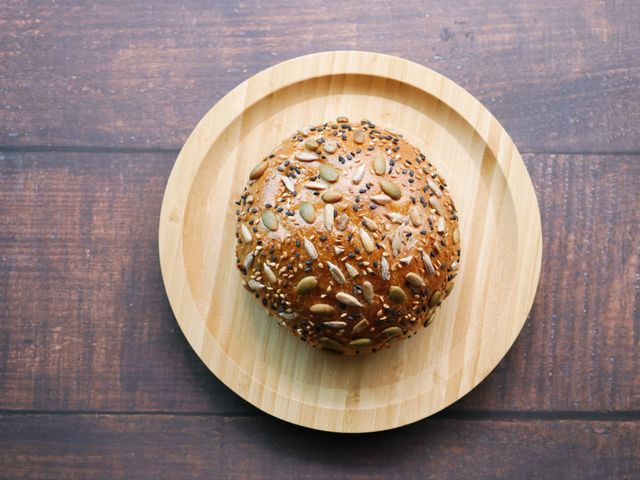
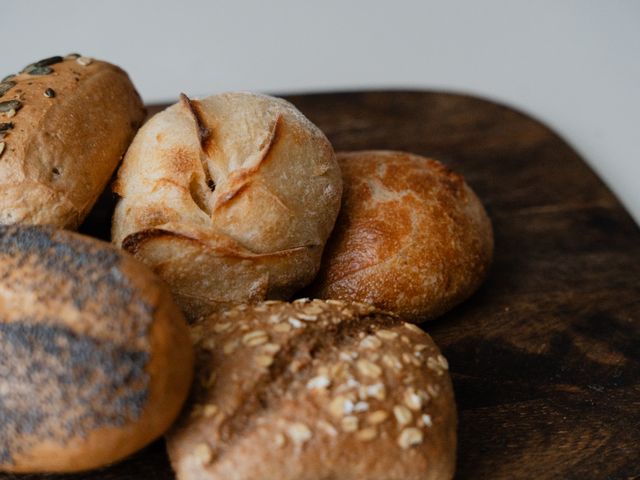
Rustic Spanish whole grain buns made with a blend of whole wheat and rye flour, sweetened with honey and enriched with olive oil. These tender, nutty buns have a soft crumb and crispy crust, perfect for breakfast, sandwiches, or serving alongside soup. A staple of Spanish bakeries, they're easier to make at home than you'd expect.
- Prep
- 20 min
- Cook
- 25 min
- Wait
- 1 hr 30 min
- Total
- 2 hr 15 min
- Makes
- 12 buns
Steps
Before you start
- Warm the water to 110°F (43°C) for the yeast to activate properly
- Line two large baking sheets with parchment paper
- Set out all ingredients at room temperature before beginning
Mix dough
- In a large mixing bowl, combine the warm water, honey, and yeast.
- Let sit for 2 minutes until foamy.
- Add the whole wheat flour, rye flour, olive oil, and salt.
- Stir with a wooden spoon or use a stand mixer with the dough hook attachment on medium-low speed until all flour is incorporated and a shaggy dough forms, about 2–3 minutes.
- The dough should be slightly sticky and cohesive but not wet.
+ Show details− Hide details
Ready when: All flour is incorporated and dough is cohesive
Tip: Don't overwork whole grain dough—it should be slightly sticky. Over-kneading toughens it.
Rest dough
- Cover the bowl with a damp kitchen towel.
- Let the dough rest at room temperature for 10 minutes.
- This autolyse period allows the whole grains to fully hydrate.
+ Show details− Hide details
Ready when: Dough is visibly more cohesive
Bulk fermentation
- Keep the dough covered and let it rise at room temperature (68–72°F / 20–22°C) for 60–70 minutes, or until increased in volume by about 50% and jiggles slightly when the bowl is shaken.
- The dough should look puffy but not doubled—whole grain doughs rise more slowly than white bread.
+ Show details− Hide details
Ready when: Dough is about 50% larger and jiggles when bowl is moved
Tip: Warmer kitchens speed fermentation; cooler ones slow it. Aim for 65–75 minutes total.
Divide and shape
- Turn the dough onto a lightly oiled or floured surface.
- Gently divide it into 12 equal pieces (about 65 g each).
- Shape each piece into a smooth round ball by gently pulling the edges toward the center and rolling it on the work surface with your cupped hand, using light pressure.
- Place 6 buns on each prepared baking sheet, spacing them about 2 inches (5 cm) apart.
+ Show details− Hide details
Ready when: Buns are evenly shaped and placed on sheets
Tip: Don't overwork the dough when shaping—gentle handling preserves the tender crumb structure.
Final proofOven 425°F / 220°C
- Cover both baking sheets loosely with a damp kitchen towel.
- Let the buns proof at room temperature for 20–25 minutes.
- They should increase in size by about 30% and feel light and airy when gently pressed, but not doubled.
- Preheat your oven to 425°F (220°C) about halfway through this resting period.
+ Show details− Hide details
Ready when: Buns are visibly plumped and feel airy; spring back slowly when poked
Tip: Don't over-proof—if buns look too puffy, they may collapse in the oven or become dense.
Add toppings (optional)
- If using sunflower seeds, lightly mist the tops of the buns with water using a spray bottle, then sprinkle a few sunflower seeds on each.
- This is traditional for Spanish bollería integral.
+ Show details− Hide details
Ready when: Toppings are evenly distributed
Bake bunsOven 425°F / 220°C
- Place both baking sheets in the preheated 425°F (220°C) oven.
- Bake for 22–26 minutes until the buns are deep golden brown on the tops and bottoms.
- For extra crust, spray the oven interior with water 1 minute after placing the buns inside (optional, but creates a crispier exterior).
- The internal temperature should reach 205–210°F (96–99°C) when measured with an instant-read thermometer inserted into the center of a bun.
+ Show details− Hide details
Ready when: Buns are deep golden brown; internal temperature is 205–210°F (96–99°C)
Tip: Bake both sheets at once, swapping rack positions halfway if your oven has hot spots. If browning too fast, lower heat to 400°F (200°C).
Cool
- Transfer the buns to a wire cooling rack.
- Let them cool for at least 10 minutes before serving.
- They'll firm up as they cool, and the crust will become crispier.
- Serve warm or at room temperature.
+ Show details− Hide details
Ready when: Buns are cool enough to handle; crust is firm
Tip: Don't wrap warm buns in foil or plastic—this traps steam and softens the crust. Let them breathe.
Good to know
Tips
- Whole grain flours absorb more water than white flour, so the dough will feel noticeably stickier. This is normal—don't add extra flour or your buns will become dense and dry.
- Spanish bakeries often use a long, cool fermentation (overnight in a cool room or overnight in the fridge) for deeper, more complex flavor. If time allows, try this: after bulk fermentation, shape, cover, and refrigerate for 12–16 hours, then bake straight from cold without a second proof.
- For a crispier crust, bake on the bottom rack of the oven, or place a baking sheet on the lowest rack and slide your pan onto the middle rack above it.
- These buns freeze beautifully. Bake a double batch, cool completely, and freeze. They're perfect for quick breakfasts or packed lunches throughout the week.
Make ahead
You can prepare the dough up to 8 hours ahead: after step 2 (rest dough), cover tightly and refrigerate. The next day, remove from the fridge, let come to room temperature for 30 minutes, then shape and proceed with final proof and baking. Alternatively, shape the buns, cover, and refrigerate for up to 12 hours; bake cold straight from the fridge, adding 5–8 minutes to bake time.
Storage & reheating
Store cooled buns in an airtight container at room temperature for up to 3 days. Refresh them by wrapping in foil and warming in a 350°F (175°C) oven for 8–10 minutes. Freeze baked buns in an airtight freezer bag for up to 3 months; thaw at room temperature and refresh as above, or slice and toast from frozen.
Substitutions
- rye flour → Spelt flour or additional whole wheat flour. Reduces the earthy rye flavor; if using all whole wheat, the crumb will be slightly lighter and less complex.
- honey → Barley malt syrup or organic cane sugar (use 1.5 tablespoons / 20 g). Honey adds subtle sweetness and browning; barley malt gives deeper flavor, sugar keeps buns neutral.
- extra virgin olive oil → Unsalted butter (softened) or neutral oil. Butter creates a slightly richer bun; neutral oil is less flavorful but neutral. Don't use cold butter.
- sunflower seeds → Sesame seeds, flax seeds, or pumpkin seeds. Sunflower seeds are traditional and add mild nuttiness; other seeds offer different flavors and textures.