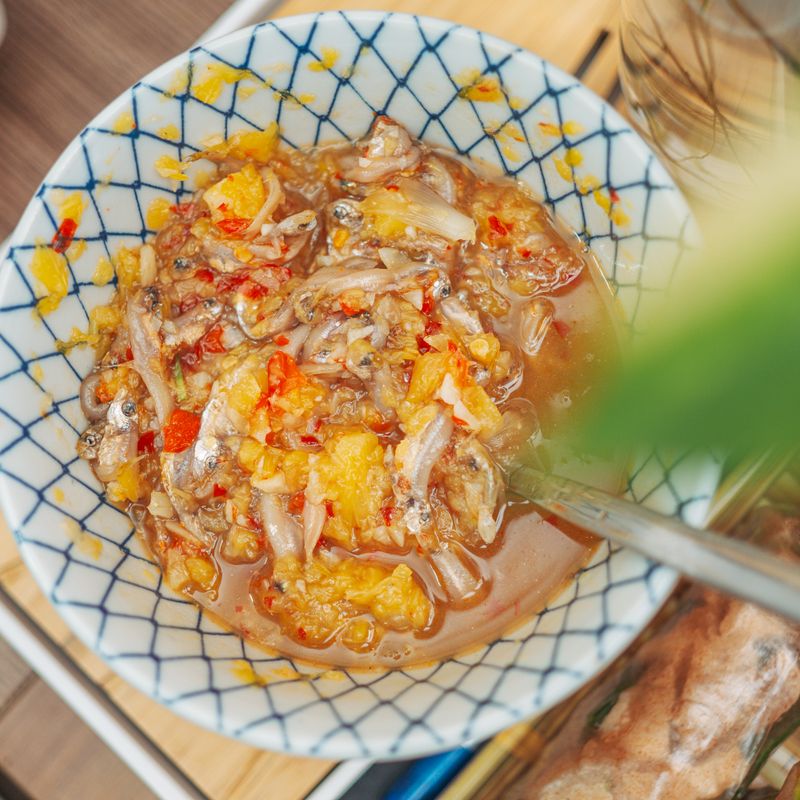
Sourdough Vietnamese Caramelized Fish Sauce Rounds
Crispy sourdough rounds brushed with a deeply savory-sweet Vietnamese-inspired caramelized fish sauce glaze, finished with fragrant roasted garlic. These savory flatbreads are best served warm and are excellent as an appetizer or side dish with other Asian dishes. The contrast of tangy sourdough with umami-rich fish sauce and caramelized brown sugar creates a complex, memorable bite.
- Prep
- 20 min
- Cook
- 25 min
- Wait
- 2 hr
- Total
- 2 hr 45 min
- Makes
- 12 rounds (3 to 4 inches each)
Steps
Before you start
- Ensure your sourdough starter is active and bubbly (fed 4–8 hours ahead)
- Preheat your oven to 425°F (220°C) and line two large baking sheets with parchment paper
- Have all glaze ingredients measured and ready before baking begins
Mix the dough
- In a medium bowl, combine the active sourdough starter, bread flour, room-temperature water, and fine sea salt.
- Stir with a wooden spoon until all flour is hydrated and you have a shaggy, cohesive dough.
- Do not knead; the dough should be slightly sticky but hold together.
+ Show details− Hide details
Ready when: All flour is hydrated and incorporated
Tip: A wetter dough produces airier, crispier rounds; resist over-mixing.
First rise
- Cover the bowl loosely with a tea towel or plastic wrap and let the dough rise at room temperature (68–72°F / 20–22°C) for 1 hour, until it increases in volume by about 50% and shows some bubbles on the surface.
+ Show details− Hide details
Ready when: Dough has visibly risen and has bubbles on top
Tip: If your kitchen is cooler, add 10–15 minutes to the rise time.
Shape the rounds
- Lightly flour a work surface and turn out the dough.
- Gently stretch and flatten it into a rough rectangle.
- Use a 3- to 4-inch (8–10 cm) round cutter, cake pan, or ring mold to cut out 12 rounds, working quickly and without re-rolling.
- Space them 2 inches (5 cm) apart on the prepared baking sheets, 6 rounds per sheet.
+ Show details− Hide details
Ready when: 12 neat rounds are cut and arranged on baking sheets
Tip: Dip your cutter in flour between each cut to prevent sticking. Work confidently so the dough doesn't cool too much.
Second rise
- Cover the rounds loosely with a tea towel and let them rise at room temperature for 1 hour, until they puff slightly and feel airy when gently pressed.
+ Show details− Hide details
Ready when: Rounds are noticeably puffed and springy to a light touch
Tip: Avoid covering too tightly, as condensation can make the tops soggy.
Preheat and prepare glazeOven 425°F / 220°C
- About 15 minutes before the second rise is complete, preheat your oven to 425°F (220°C).
- While it heats, make the glaze: In a small saucepan over medium heat, melt the butter.
- Add the minced garlic and cook for 1 minute, stirring constantly, until fragrant but not brown.
- Add the brown sugar and fish sauce, stirring until the sugar dissolves, about 2 minutes.
- Remove from heat and stir in the water.
- Let the glaze cool slightly; it will thicken as it cools.
+ Show details− Hide details
Ready when: Sugar is dissolved and glaze is smooth
Tip: Watch the garlic carefully—burnt garlic tastes bitter and will ruin the glaze.
Brush and bakeOven 425°F / 220°C
- Using a small spoon or pastry brush, lightly brush the top of each risen round with the caramelized fish sauce glaze, using about ½ to 1 teaspoon per round.
- Place both baking sheets in the preheated 425°F (220°C) oven and bake for 12–14 minutes, until the rounds are golden brown and the edges are crispy and slightly caramelized.
- Rotate the sheets halfway through baking for even browning.
+ Show details− Hide details
Ready when: Tops are golden brown and edges are dark and crispy; the glaze appears caramelized
Tip: If glaze pools in the center, the round is slightly tilted—rotate partway through for more even baking.
Cool and serve
- Transfer the rounds to a wire cooling rack for 2–3 minutes to cool slightly and allow the edges to firm up.
- Serve warm while the caramel is still slightly sticky and the sourdough is at its best.
+ Show details− Hide details
Ready when: Rounds are warm but no longer piping hot, and edges are firm to the touch
Tip: These are best eaten within 1–2 hours of baking, while the sourdough crumb is still tender and the glaze is set but soft.
Good to know
Tips
- For extra crispness, brush the rounds a second time with glaze halfway through baking—this creates a darker, more caramelized crust.
- Fish sauce mellows and becomes pleasant as it bakes; the aroma will be strong while raw, but the final flavor is savory and umami-forward, not fishy.
- These rounds pair beautifully with Vietnamese pickled vegetables, fresh herbs, or alongside other Southeast Asian dishes.
- If your sourdough starter is less active, extend the first rise to 1.5 hours or add ¼ teaspoon instant yeast to the dough for more predictable rising.
Make ahead
You can prepare and shape the rounds up to 4 hours ahead, then refrigerate them covered. Bring them to room temperature for 30 minutes before the second rise and final bake. Alternatively, freeze shaped, unproofed rounds for up to 1 month; thaw in the fridge overnight and proof for 1.5–2 hours before glazing and baking.
Storage & reheating
Store cooled rounds in an airtight container at room temperature for up to 2 days (though they are best within 4 hours of baking). Freeze in a freezer-safe bag for up to 2 weeks. Reheat unwrapped on a baking sheet at 350°F (175°C) for 5–6 minutes until warm and the glaze softens again.
Substitutions
- fish sauce → soy sauce mixed with a pinch of anchovy paste. Fish sauce provides umami and funk; soy sauce with anchovy paste approximates the flavor profile, though the result will be less pungent.
- packed light brown sugar → granulated sugar or honey. Brown sugar adds molasses depth. Granulated sugar will be slightly less rich; honey adds moisture and caramel notes, so reduce water by ½ tablespoon.
- bread flour → all-purpose flour. Bread flour produces a slightly chewier, crispier crumb. All-purpose flour will work and yield a more tender round.
- active sourdough starter → 1½ cups (360 ml) fresh sourdough culture or biga. Use any active, bubbly sourdough starter or pre-ferment at room temperature and fully active.
More sourdough
See all →


Find more like this
- Meal
- Snack
- Cuisine
- Vietnamese
- Main ingredient
- Fish
- Diet
- Halal
- Method
- Oven