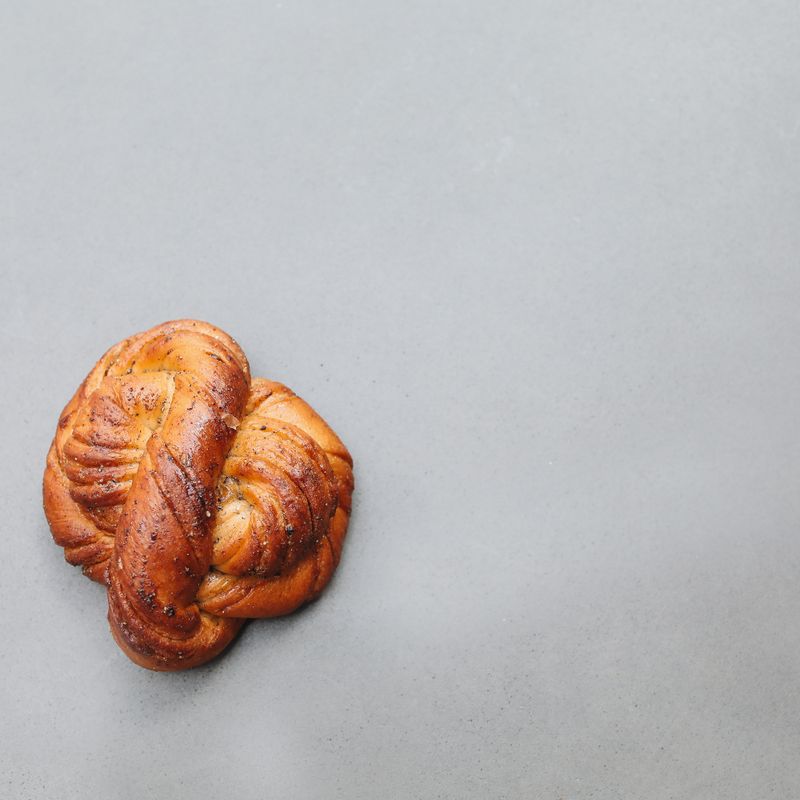
Sourdough Eid Rose Water Cardamom Buns
Soft, pillowy sweet buns made with active sourdough starter and enriched with butter and eggs. The filling features warming cardamom and delicate rose water—classic Middle Eastern flavors that pair beautifully with the subtle tang of fermented dough. Topped with a silky rose water glaze and optional garnish of edible petals or pistachios. Perfect for Eid mornings or any special breakfast. The sourdough fermentation develops complex flavor while keeping the crumb light and open. Make-ahead friendly—proof overnight for maximum convenience and best flavor."
- Prep
- 50 min
- Cook
- 30 min
- Wait
- 7 hr 20 min
- Total
- 8 hr 40 min
- Makes
- 12 buns
Steps
Before you start
- Have active sourdough starter at room temperature and at peak (bubbly and risen 4–8 hours after feeding)
- Soften butter for the filling to room temperature (at least 1 hour before you start)
- Warm milk to exactly 110°F (43°C) before mixing—use a thermometer
- Plan ahead: this recipe works beautifully with overnight refrigeration after shaping, making it perfect for a relaxed morning bake
Mix and autolyse the dough
- In the bowl of a stand mixer, combine the active sourdough starter, warmed milk (110°F), egg yolks, granulated sugar, and fine salt.
- Mix briefly on low speed until combined, about 1 minute.
- Add all-purpose flour and mix on low speed with the dough hook for 2–3 minutes until a shaggy dough forms—you may see some dry flour streaks.
- Stop the mixer and let the dough rest uncovered for 15 minutes at room temperature.
- This autolyse period allows the flour to fully hydrate and gluten to begin developing naturally, which makes the dough easier to knead and results in better texture.
- After resting, the dough will feel more cohesive.
+ Show details− Hide details
Ready when: shaggy dough forms with some dry flour visible; after rest, dough becomes more cohesive
Tip: Don't skip the autolyse—it makes kneading dramatically easier and improves the dough's extensibility and strength
Incorporate cold butter and knead
- With the mixer running on medium speed, add the cold butter cubes a few at a time, allowing each addition to mostly incorporate before adding the next (about 3–4 minutes total to add all butter).
- Once all butter is added, continue kneading on medium speed for 8–10 minutes.
- The dough will go through stages: first it will look broken and shaggy, then gradually become smoother and start to become glossy.
- The dough is ready when it's smooth, glossy, elastic, and barely sticks to your fingertip when poked.
- You should not see streaks of butter—it should be completely incorporated.
- In the final 30 seconds, add the vanilla extract and mix until evenly distributed.
+ Show details− Hide details
Ready when: dough is smooth, glossy, and elastic; butter is fully incorporated with no visible streaks; dough barely sticks when poked
Tip: If the dough feels warm (above 80°F), stop and let it cool for 10 minutes before continuing—overheated dough can collapse during proofing. The speed of the mixer matters; high speed generates heat, so medium speed is ideal.
First rise (bulk fermentation)
- Lightly flour a bowl and transfer the dough to it.
- Cover the bowl with plastic wrap or a damp kitchen towel.
- Let the dough rise at room temperature (around 68–72°F) for 4–6 hours until it's nearly doubled in size—it should feel airy and jiggly.
- Alternatively, and recommended for best flavor and ease, refrigerate the dough for 8–12 hours or overnight.
- The cold fermentation develops deeper sourdough flavor and makes the dough easier to handle when shaping.
- If you refrigerate, remove the dough 30 minutes before proceeding to the next step to let it relax slightly at room temperature.
+ Show details− Hide details
Ready when: dough is nearly doubled in volume; surface may show slight bubbling or cracks; dough feels airy and light
Tip: A cool environment (60–72°F) is ideal for sourdough fermentation. If your kitchen is warm, the dough will rise faster—check at 3 hours. Overnight refrigeration is the home baker's friend: less monitoring and better flavor.
Make the cardamom-rose water filling
- In a small bowl, beat the softened butter and packed brown sugar together with an electric mixer on medium speed, or by hand with a wooden spoon, for 2–3 minutes until light, fluffy, and pale in color.
- Stir in the ground cardamom thoroughly, breaking up any lumps, until evenly distributed.
- Finally, add the rose water and fold it in gently until the mixture is uniform.
- The filling should be thick, spreadable, and aromatic.
- Taste a tiny bit and adjust rose water if you prefer (it's potent and floral—taste carefully before adding more).
+ Show details− Hide details
Ready when: mixture is light, fluffy, and pale; cardamom is evenly distributed with no visible specks of unmixed sugar
Tip: Make the filling while the first rise is finishing so it's ready to use. Rose water is potent and floral—it's easy to overdo. You can always taste the glaze and add more rose water to suit your preference, but you cannot remove it.
Shape the buns
- Turn the risen dough out onto a lightly floured work surface.
- Gently stretch and shape it into a 16×12-inch rectangle (about ¼-inch thick)—don't punch it down aggressively; treat it gently to preserve the bubbles.
- Spread the cardamom-rose water filling evenly over the dough with an offset spatula or the back of a spoon, leaving a ½-inch plain border along the top long edge (this plain edge will be the last part rolled and will seal the buns).
- Starting from the long side opposite the plain border, tightly roll the dough into a log, pulling gently as you roll to create tension.
- Use a sharp knife or bench scraper dipped in water to cut the log cleanly into 12 equal pieces, each about 1.3 inches wide.
- Place the cut pieces cut-side up in the 9×13-inch baking pan, arranging them in 3 rows of 4 buns.
- Leave about 1 inch of space between them for now; they will expand and touch during proofing.
+ Show details− Hide details
Ready when: 12 evenly sized bun pieces are arranged cut-side up in the pan with approximately 1 inch between each
Tip: If the dough becomes very soft and sticky while rolling, chill it for 15–20 minutes before continuing—cold dough is much easier to work with. A bench scraper dipped in water cuts cleaner than a knife and prevents sticking.
Proof the buns (second rise)
- Cover the baking pan loosely with plastic wrap (leave a little air space—don't seal it tightly).
- Let the buns rise at room temperature for 1–2 hours until they're visibly puffy, domed on top, and just beginning to touch each other.
- To test readiness, gently poke one bun with your fingertip: it should spring back slowly, about halfway.
- If it springs back quickly, the buns need more time.
- If it doesn't spring back at all and feels soft all the way through, they may be over-proofed and could collapse in the oven—bake them immediately if this happens.
+ Show details− Hide details
Ready when: buns are visibly puffy and domed; they just begin to touch each other; a gentle poke springs back slowly to about halfway
Tip: Don't over-proof. Under-proofed buns will bake better than over-proofed ones. In a warm kitchen (above 75°F), check at 45 minutes. In a cool kitchen, they may need the full 2 hours.
Bake the bunsOven 375°F / 190°C
- About 15 minutes before the buns finish proofing, preheat your oven to 375°F (190°C) with a rack positioned in the middle.
- Once the buns are properly proofed, carefully place the baking pan on the middle oven rack and bake for 25–30 minutes.
- The buns are done when the tops are deep golden brown (almost caramelized) and the sides are set and firm to the touch (though not hard—they should feel soft inside).
- To verify doneness, insert an instant-read thermometer into the center of a middle bun; it should read 190–195°F (88–90°C) internally.
- If the tops brown too quickly before the interior is done, loosely tent the pan with foil for the last 8–10 minutes.
+ Show details− Hide details
Ready when: tops are deep golden brown and caramelized; internal temperature reaches 190–195°F (88–90°C); sides are set and firm
Tip: Oven temperatures vary significantly, so monitor the buns after 20 minutes. If they're browning too quickly, tent with foil. A thermometer is the most reliable way to ensure they're fully baked through.
Cool, glaze, and garnish
- Remove the baking pan from the oven and let the buns cool in the pan for 5 minutes.
- While they cool, whisk together the powdered sugar, milk, and rose water in a small bowl until smooth and pourable—the glaze should have a pourable consistency, like heavy cream.
- If it's too thick, whisk in a few drops more milk; if too thin, add a pinch more powdered sugar.
- Transfer the warm buns to a wire cooling rack (or leave them in the pan if you prefer).
- Generously brush or drizzle the glaze over the warm buns while they're still steaming—the heat will help the glaze flow and set with a beautiful sheen.
- If using edible rose petals or crushed pistachios, sprinkle them over the wet glaze while it's still sticky so they adhere.
- Let the buns cool for 10–15 minutes before serving; the glaze will set and become opaque as they cool.
+ Show details− Hide details
Ready when: glaze is applied and beginning to set; buns are still warm to the touch but cool enough to handle
Tip: Glaze is best applied to still-warm buns so it flows slightly and sets with a beautiful matte finish. Rose water flavor intensifies as the buns cool—the fragrance will fill the kitchen.
Good to know
Tips
- Rose water is potent and floral—taste the glaze before drizzling it on the buns. You can always add more rose water, but you cannot remove it. Start with the amount called for and increase only if you want a stronger floral note.
- For the most authentic Middle Eastern flavor, use freshly ground cardamom from whole pods if possible. Lightly toast the green pods in a dry skillet for 30 seconds, then cool and grind in a spice grinder or mortar and pestle just before use. Pre-ground cardamom loses potency over time.
- Don't rush the first rise. Slower fermentation in a cool environment (60–72°F) develops richer sourdough flavor, better digestibility, and is more forgiving than a fast warm rise. Overnight refrigeration is the ideal approach for home bakers.
- These buns are best enjoyed fresh on the day they're baked, but they reheat beautifully. Wrap in foil and warm in a 300°F oven for 10 minutes to refresh the crumb and soften the glaze. The fragrance is phenomenal when warm.
Make ahead
Yes. After shaping (Step 5), cover the pan with plastic wrap and refrigerate overnight (8–12 hours). In the morning, let the buns come to room temperature for 30–45 minutes on the counter, then bake as directed. You can also refrigerate the mixed dough after Step 2 and complete the recipe the next day—let it warm to room temperature before proceeding. Both methods improve flavor through extended cold fermentation.
Storage & reheating
Room temperature: Store covered in an airtight container for up to 2 days. Refrigerator: Keep covered for up to 5 days. Reheat gently: wrap loosely in foil and warm in a 300°F oven for 10 minutes. Freezer: Cool completely, then freeze in a freezer-safe container for up to 1 month. Thaw overnight at room temperature and reheat in a 300°F oven, covered, for 12–15 minutes until warm through.
Substitutions
- ground cardamom → Black or green cardamom pods, lightly toasted and freshly ground. Black cardamom has a deeper, smoky, more complex flavor that adds sophistication. Green cardamom is lighter and more traditional. Toast pods briefly in a dry skillet before grinding for maximum aroma. Use 2–3 whole pods (grind to make 2 tsp).
- rose water → Orange blossom water. Provides a different floral note—more citrusy and less perfumy than rose water. The flavor is lovely and equally elegant. Use the same amount (1 tbsp in filling, 1 tsp in glaze).
- brown sugar → Granulated white sugar. Works perfectly fine; the filling will lose the molasses depth but maintains the cardamom and rose water aromatics. Use the same amount.
- active sourdough starter → 1 tablespoon (15g) instant yeast mixed with 150ml (150g) warm milk, allowed to rest 10 minutes. You'll lose the characteristic sourdough tang and the complex fermented flavor, but the dough structure and final texture will be similar. Reduce the first rise to 2–3 hours at room temperature (instead of 4–6 hours or overnight) since instant yeast works faster than sourdough.
More rolls & buns
See all →

Find more like this
- Meal
- Breakfast
- Cuisine
- Middle Eastern
- Main ingredient
- Eggs
- Diet
- VegetarianHalal
- Method
- Oven
- Quick & Easy
- Make Ahead
- Occasion
- Eid