Sourdough Ramadan Cheese Spinach Borek Rolls
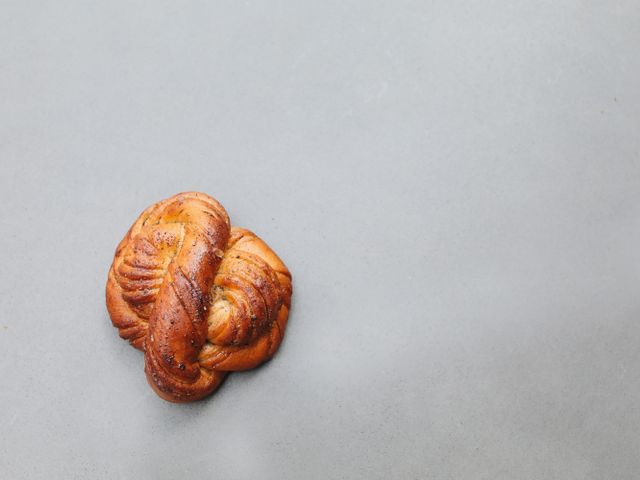
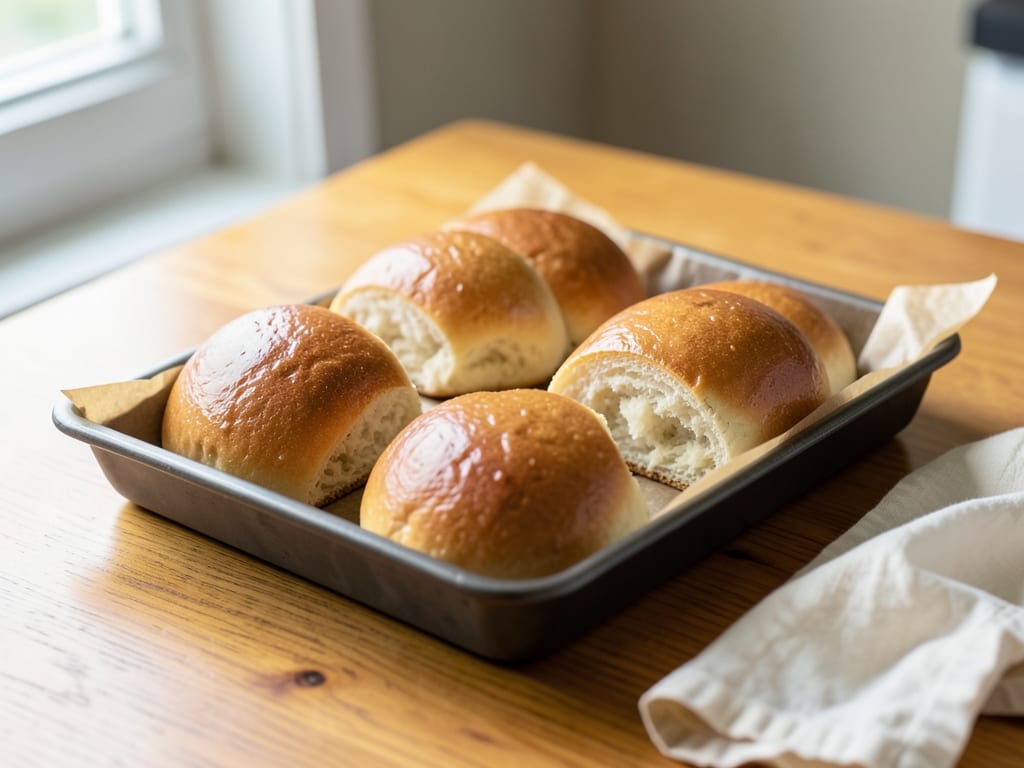
Turkish borek rolls combining crispy-tender sourdough dough with a savory filling of sautéed spinach and creamy feta cheese. Made with sourdough discard, these rolls are perfect for Ramadan iftar (breaking the fast) or any Turkish-inspired meal. Golden-baked and topped with an egg wash, melted butter, and optional seeds.
- Prep
- 52 min
- Cook
- 30 min
- Wait
- 42 min
- Total
- 2 hr 4 min
- Makes
- 12 borek rolls (3 rolls per person as appetizer; serves 6–8 with other iftar dishes)
Steps
Before you start
- Preheat oven to 400°F (200°C) while the dough rests.
- Have your sourdough discard at room temperature; it doesn't need to be bubbly or active—regular refrigerated discard works perfectly.
- If using frozen spinach, thaw it completely and squeeze out excess moisture at least 30 minutes ahead; excess moisture will create a soggy filling.
- Line a large baking sheet with parchment paper.
Sauté spinach and onions
- Melt 1 tbsp butter in an 8-inch (20 cm) skillet over medium heat.
- Add diced onion and sauté for 3–4 minutes, stirring occasionally, until softened and just beginning to turn translucent.
- Add the roughly chopped fresh spinach (or thawed and well-squeezed frozen spinach), increase heat to medium-high, and cook for 5–7 minutes, stirring frequently, until all excess moisture has evaporated.
- The spinach should look dry, not wet or glistening—this step is crucial, as excess moisture will make the dough soggy and ruin the texture.
- Season with a pinch each of salt, black pepper, and nutmeg.
- Transfer the spinach mixture to a clean bowl and let it cool completely for at least 10 minutes (the filling should be cool to the touch before mixing with feta).
- Once cool, gently fold in the crumbled feta cheese until evenly distributed.
- Taste and adjust seasoning if needed.
+ Show details− Hide details
Ready when: Spinach is completely dry with no visible moisture, and feta is evenly distributed throughout
Tip: Fully evaporate spinach moisture to prevent a soggy filling; pat with paper towels if any pooling occurs
Mix sourdough dough
- In a large mixing bowl, combine the sourdough discard, all-purpose flour, melted butter, and salt.
- Stir with a wooden spoon until a shaggy mass forms and most flour is incorporated.
- Sprinkle 3 tablespoons (45 ml) of warm water over the mixture and begin kneading by hand for 8–10 minutes, working the dough steadily and firmly.
- (Alternatively, use a stand mixer on low speed for 5–6 minutes.) Fully incorporate the water before adding more; if the dough is still very stiff and barely moist after 3–4 minutes of kneading, add the remaining 1 tablespoon (15 ml) of warm water, 1 teaspoon at a time.
- The finished dough should be smooth, soft, and elastic, with a slight tackiness that doesn't stick heavily to your fingers.
- The sourdough discard provides subtle tang and gentle fermentation without needing commercial yeast.
+ Show details− Hide details
Ready when: Dough is smooth, soft, and springs back slightly when gently poked
Tip: Avoid overworking the dough or it will become tough; stop once it's smooth and elastic
First rise
- Cover the bowl tightly with a damp kitchen towel or plastic wrap.
- Let the dough rest at room temperature (68–72°F / 20–22°C) for 20–30 minutes.
- Because sourdough discard doesn't rely on commercial yeast, it won't dramatically double in size like standard yeast dough; instead, it will become noticeably puffier and relaxed, increasing by roughly 30–50% in volume.
- This rest allows the gluten to relax, making the dough easier to roll, and gives the sourdough cultures time to develop additional flavor.
+ Show details− Hide details
Ready when: Dough is visibly puffier, feels airier, and springs back slowly when poked
Tip: This rest prevents excessive shrinkage during rolling and makes the dough much easier to work with
Roll dough into rectangleOven 400°F / 205°C
- While the dough is resting (or as it finishes), preheat your oven to 400°F (200°C).
- Once the dough has rested, transfer it to a lightly floured work surface.
- Using your hands, gently press the dough into a rough rectangle about 10×8 inches.
- Using a rolling pin, gently and evenly roll the dough out to a 12×9-inch (30×23 cm) rectangle, working from the center outward.
- The thickness should be fairly even, about 1/8 inch (3 mm) throughout.
- If the dough keeps springing back and won't stay at the desired size, let it rest for 2–3 minutes, then continue rolling—gluten needs time to relax.
+ Show details− Hide details
Ready when: Dough is rolled to 12×9 inches with even thickness
Tip: If dough springs back stubbornly, a 2–3 minute rest allows the gluten to relax further
Fill and roll into log
- With the dough rectangle in front of you, long side nearest you, evenly spread the cooled spinach-feta filling over the dough, leaving a 1/2-inch (1.25 cm) border on all four sides.
- This border helps seal the edges and prevents filling from leaking out during baking.
- Starting from the long side closest to you, firmly roll the dough into a tight log, pinching and sealing the long edge to itself as you roll.
- The roll should be snug but not compressed so tightly that filling squeezes out—a firm, even roll ensures uniform slices and helps hold the filling in place while baking.
+ Show details− Hide details
Ready when: Dough is rolled into a tight log with the seam pinched and sealed shut
Tip: Roll firmly but not crushingly; a tight roll prevents filling spillage without forcing fillings out
Cut log and arrange rolls
- Line your baking sheet with parchment paper.
- Using a sharp serrated bread knife or chef's knife, cut the log into 12 equal pieces, each approximately 1 inch (2.5 cm) wide.
- Wipe the knife clean with a damp cloth between cuts—this prevents dough from sticking and distorting the rolls.
- Place each roll cut-side up on the prepared baking sheet, spacing them about 1 inch (2.5 cm) apart, arranged in 3 rows of 4 rolls.
- The rolls should not be touching; the spacing allows hot air to circulate underneath and around them for even browning and crisping.
+ Show details− Hide details
Ready when: You have 12 evenly sized rolls with visible cut faces, arranged with spacing between them
Tip: A serrated knife and wiping between cuts prevents the soft dough from dragging and losing its shape
Brush with egg wash, seeds, and butter
- In a small bowl, whisk together 1 large egg and 1 tablespoon (15 ml) of water until well combined.
- This egg wash is the traditional finish for Turkish borek and creates a beautiful golden-brown sheen.
- Using a pastry brush, lightly brush the top and sides of each roll with the egg wash.
- If desired, sprinkle each roll with 1/4 to 1/2 teaspoon of sesame seeds or nigella seeds (nigella seeds give a slightly peppery, authentic flavor; sesame adds nutty sweetness).
- The seeds are optional but add traditional appeal and an extra layer of flavor.
- Let the egg wash dry for 2 minutes, then brush each roll with the 2 tablespoons (28 g) of melted butter for a richer golden finish and extra crispiness.
+ Show details− Hide details
Ready when: Each roll is uniformly coated with egg wash, topped with seeds, and brushed with melted butter, giving a shiny appearance
Tip: Don't over-brush with egg wash or it may pool around the rolls; the butter brushing adds richness and crispiness
Bake until golden brownOven 400°F / 205°C
- Place the baking sheet in the preheated 400°F (200°C) oven on the middle rack.
- Bake for 25–30 minutes, watching carefully after 20 minutes.
- The rolls are finished when the tops are deep golden brown and the bottoms are lightly golden and firm (check by carefully lifting one edge with a spatula).
- The dough should be fully set and cooked through, not doughy or gummy inside.
- If the tops are darkening too quickly before the insides cook through, lower the oven temperature to 375°F (190°C) and extend the bake time by 5 minutes.
- A tap on the bottom of a finished roll should produce a nearly hollow sound, indicating the interior is fully cooked.
+ Show details− Hide details
Ready when: Rolls are deep golden brown on top and bottom; dough is firm, set, and cooked through; bottoms sound hollow when tapped
Tip: Tap the bottom of a cooked roll—it should sound hollow or nearly hollow, indicating the interior is fully cooked
Good to know
Tips
- Sourdough discard doesn't need to be bubbly, fed, or active—regular discard kept in the refrigerator works perfectly. The mild fermentation adds subtle flavor without requiring an active starter.
- Completely dry out the spinach to prevent a soggy filling. Pat the cooked spinach with paper towels if any moisture remains after cooking, and don't skip the cooling step.
- These borek are a traditional Ramadan iftar food in Turkey. Serve warm with thick Greek yogurt, fresh Turkish salad (tomatoes, cucumbers, olive oil, lemon), or a drizzle of good olive oil and fresh lemon juice.
- For maximum richness and a traditional golden finish, the two-step brushing with egg wash followed by melted butter adds both shine and crispiness that sets these rolls apart.
Make ahead
The spinach-feta filling can be made up to 2 days ahead and refrigerated in an airtight container. Assembled unbaked rolls can be refrigerated for up to 8 hours or frozen for up to 2 months. Bake from frozen, adding 5–8 minutes to the bake time and watching for golden browning.
Storage & reheating
Room temperature: Store in an airtight container for up to 2 days. Refrigerator: Up to 4 days in an airtight container; reheat at 350°F (175°C) for 10 minutes until heated through. Freezer: Up to 2 months in a freezer-safe bag; reheat from frozen at 350°F (175°C) for 15–20 minutes until warmed through and crispy.
Substitutions
- fresh spinach, roughly chopped → Frozen spinach (10 oz / 280 g package, thawed and squeezed completely dry). Frozen spinach saves time and is equally delicious; just ensure it's very dry to prevent a soggy filling.
- crumbled feta cheese → Mix 3/4 cup (180 g) ricotta cheese with 1/2 cup (75 g) crumbled feta for a milder, creamier filling. This creates a softer texture and mellower flavor; reduce salt slightly as ricotta is mild.
- unsalted butter, melted → Brush rolls with extra-virgin olive oil instead of melted butter before baking. Olive oil browns less dramatically but adds authentic Mediterranean flavor; use high-quality oil.
- all-purpose flour → Bread flour (may need slightly less water due to higher protein content). Bread flour creates a chewier crust and tougher crumb; all-purpose flour yields a more tender result.