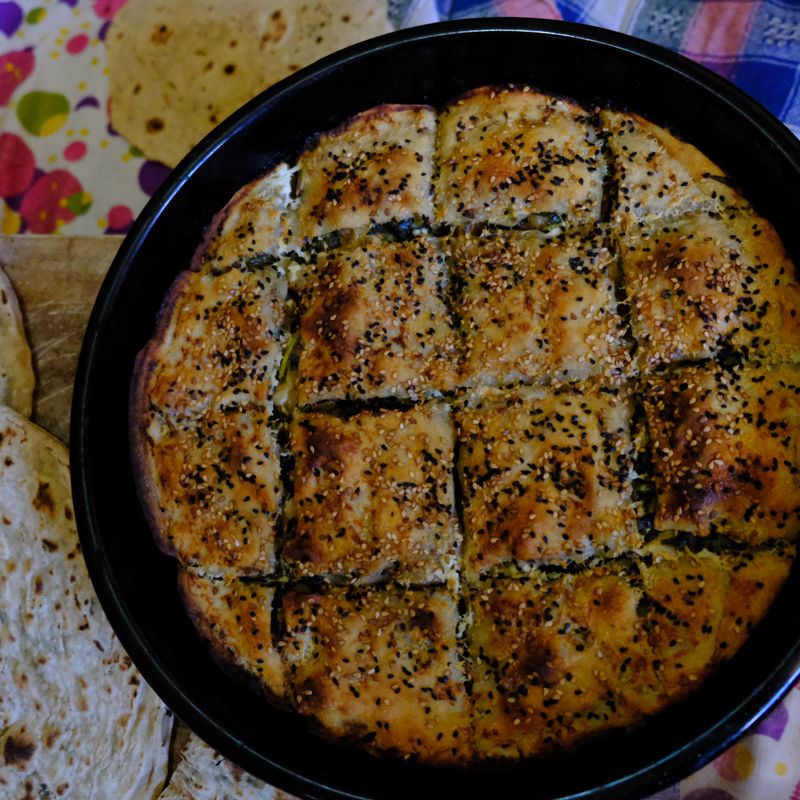
Sourdough Discard Durum Wheat and Nigella Seed Flatbread
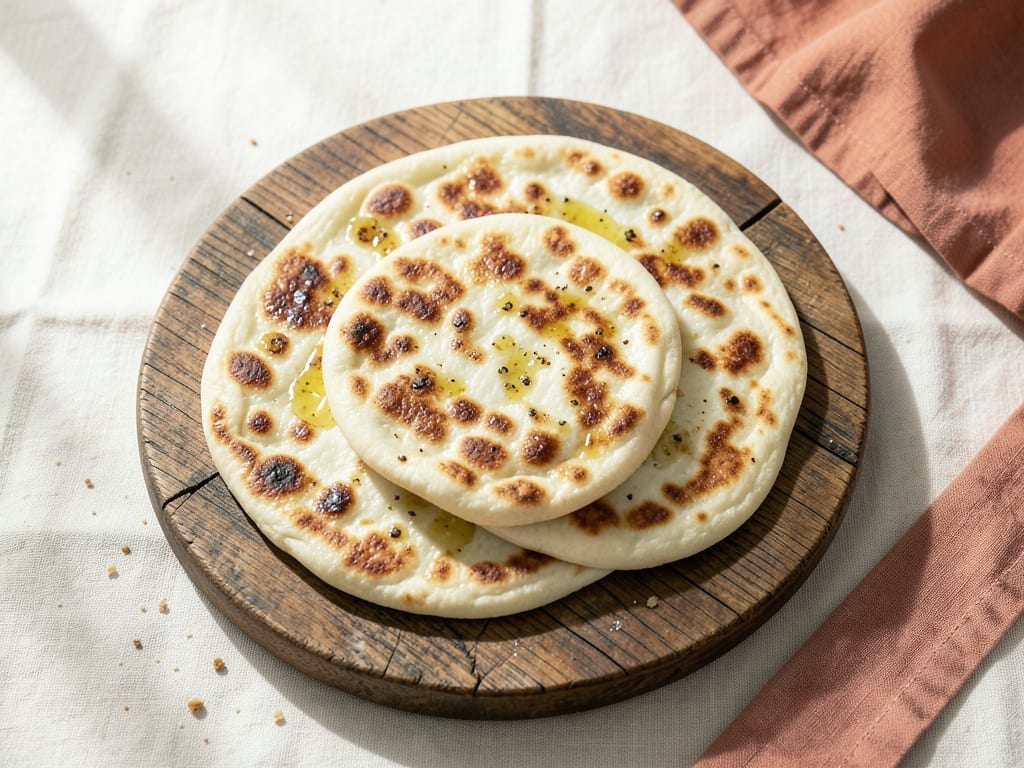
A rustic Mediterranean flatbread made with sourdough discard and nutty durum wheat flour, studded with aromatic nigella seeds. Pan-fried until golden and crispy on the outside with a tender, slightly chewy interior. These flatbreads are ready in under an hour and pair beautifully with dips, cheese, or as wraps for vegetables and proteins.
- Prep
- 15 min
- Cook
- 12 min
- Wait
- 18 min
- Total
- 45 min
- Makes
- 4 large flatbreads
Steps
Before you start
- Remove sourdough discard from the refrigerator 15 minutes before mixing to take the chill off
- Measure all ingredients before you begin
- Have a nonstick skillet or cast-iron pan ready
Mix dough
- In a mixing bowl, combine the sourdough discard (180 ml), durum wheat flour (180 g), all-purpose flour (65 g), nigella seeds (18 g), salt (5 g), warm water (60 ml), and extra-virgin olive oil (30 ml).
- Stir with a wooden spoon until all flour is hydrated and a shaggy dough forms.
- The dough should be slightly sticky but hold together.
- Mix for about 1 minute until no dry flour remains.
+ Show details− Hide details
Ready when: All flour hydrated and dough holds together
Tip: Don't overmix; you want to activate just enough gluten for structure without developing it fully, which keeps the flatbread tender.
Let dough rest
- Cover the bowl loosely with a damp kitchen towel or plastic wrap and let the dough rest at room temperature for 10 minutes.
- This autolyse period allows the flours to fully absorb moisture and makes the dough easier to divide.
Divide dough into portions
- Turn the dough out onto a lightly floured surface.
- Divide it into 4 equal portions (each roughly 60 g).
- Shape each portion into a loose ball by gathering the edges toward the center.
- Place them on a parchment paper–lined work surface, spaced about 2 inches apart.
- Cover with the damp towel.
+ Show details− Hide details
Ready when: Dough is divided into 4 balls
Tip: Wetting your hands rather than flouring them prevents the dough from sticking while shaping.
Bulk ferment dough
- Let the dough balls rest, covered, for 8 minutes at room temperature.
- This brief ferment adds a subtle tang and allows the gluten to develop slightly, giving the flatbreads better structure when cooked.
Stretch and shape flatbreads
- Working with one dough ball at a time, place it on the parchment paper and gently stretch it into a roughly 6-inch (15 cm) round by pressing with your fingertips from the center outward.
- The flatbread should be about ¼ inch (6 mm) thick—thicker than a cracker but thinner than focaccia.
- If the dough springs back, let it rest for 1 minute, then stretch again.
- Repeat with the remaining dough balls.
+ Show details− Hide details
Ready when: Dough is stretched to roughly 6-inch rounds, about ¼ inch thick
Tip: Don't oil the parchment or your hands too much, or the dough will slide around. Lightly wet hands work best for stretching sourdough.
Heat skillet and prepare to cookOven 350°F / 175°C
- Place a 12-inch (30 cm) nonstick skillet or cast-iron pan over medium-high heat.
- Add 2 tablespoons (30 ml) of olive oil and let it warm until it shimmers and a small piece of dough sizzles on contact, about 2 minutes.
- This should reach roughly 350°F (175°C).
+ Show details− Hide details
Ready when: Oil shimmers and sizzles when dough touches it
Tip: Use nonstick or well-seasoned cast iron; the dough is delicate when raw and needs a non-stick surface to release cleanly.
Cook first flatbread
- Carefully slide the first stretched flatbread from the parchment into the hot oil.
- Cook for 2–3 minutes on the first side without moving it.
- The bottom should turn golden brown and develop some charred spots.
- Flip the flatbread and cook the second side for 1–2 minutes until it is also golden and cooked through.
- The flatbread will puff slightly as moisture escapes.
- Transfer to a plate and cover loosely with foil to keep warm.
+ Show details− Hide details
Ready when: Bottom is golden brown with light charring; flatbread is cooked through and no longer doughy
Tip: Resist the urge to flip too early; wait until the bottom is deeply golden so the crust sets properly and the flatbread doesn't stick or tear.
Cook remaining flatbreads
- Repeat Step 7 with the remaining three flatbreads, cooking each for 2–3 minutes per side.
- You may need to adjust the heat slightly—if they brown too fast, drop to medium; if they're pale and greasy, raise the heat back to medium-high.
- Stack the finished flatbreads on a plate, loosely covered with foil, to keep them warm and slightly steamed.
+ Show details− Hide details
Ready when: All four flatbreads are golden brown on both sides and cooked through
Tip: If the oil becomes too dark (from nigella seeds falling off), replace it with fresh oil between flatbreads to avoid a burnt taste.
Good to know
Tips
- Sourdough discard can vary in hydration and fermentation level. If your dough feels very wet after mixing, add 1 tablespoon (8 g) more all-purpose flour; if it's stiff and dry, add 1 tablespoon (15 ml) more water.
- Nigella seeds have a subtle bitter, onion-like flavor that shines when toasted in hot oil. Don't skip them—they are essential to this recipe's character.
- These flatbreads pair wonderfully with labneh, hummus, baba ganoush, or creamy feta. They also work as wraps for grilled vegetables, falafel, or roasted chicken.
- For extra flavor, brush the warm flatbreads lightly with garlic-infused olive oil or sprinkle with fleur de sel after cooking.
Make ahead
These flatbreads are best served fresh and warm, but you can prepare the dough up to 8 hours ahead: after the bulk ferment (Step 4), wrap the dough balls in plastic wrap and refrigerate. When ready to cook, bring them to room temperature (15–20 minutes) before stretching and pan-frying.
Storage & reheating
Store cooled flatbreads in an airtight container at room temperature for up to 2 days. To reheat, warm them in a dry skillet over medium heat for 1–2 minutes per side, or wrap in foil and warm in a 350°F (175°C) oven for 5 minutes. Freeze cooled flatbreads in a freezer bag for up to 3 months; thaw and reheat as above.
Substitutions
- durum wheat flour → whole wheat flour or spelt flour. Whole wheat or spelt will make the flatbread denser and earthier. You may need 5–10 ml more water to reach the same dough consistency.
- nigella seeds (black onion seeds) → sesame seeds, caraway seeds, or fennel seeds. Each seed brings a different flavor: sesame adds nuttiness, caraway brings earthiness, and fennel adds a subtle anise note. Use the same weight.
- sourdough discard (from your starter) → plain yogurt or buttermilk. Use equal volume (180 ml). Yogurt or buttermilk will add tang without fermentation time, and you can skip the 8-minute bulk ferment (Step 4).
- all-purpose flour → additional durum wheat flour. For an all-durum flatbread, use 245 g durum flour and omit the all-purpose flour. The flatbread will be slightly denser and more nutty.
More flatbread doughs
See all →
Find more like this
- Meal
- Lunch
- Cuisine
- Mediterranean
- Method
- Stovetop