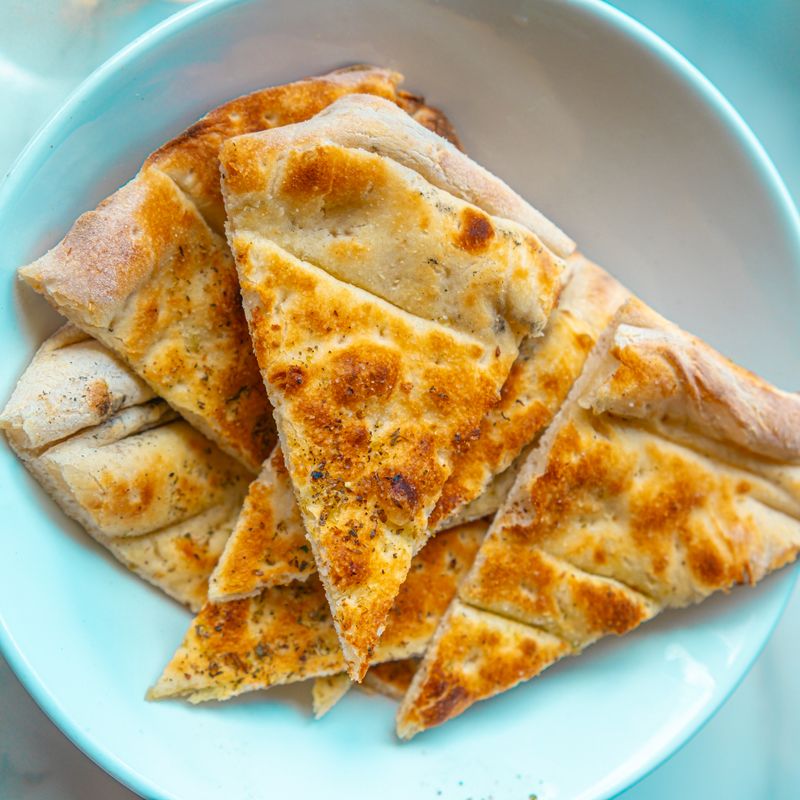
Rosemary Garlic Flatbread Dough
A rustic Mediterranean flatbread dough infused with aromatic fresh rosemary and minced garlic. Simple, herbaceous, and versatile—ready to pan-fry, grill, or bake into focaccia-style flatbreads, appetizers, or hearty sides. No yeast required; knead and rest to develop flavor and a tender crumb.
Steps
Before you start
- Finely chop the fresh rosemary and mince the garlic before starting
- Measure all ingredients and have room temperature water ready
- Set up your work surface with flour for dusting and gather a damp kitchen towel
Mix dry ingredients
- In a medium bowl, whisk together the flour and salt.
- Add the finely chopped rosemary and minced garlic, stirring until evenly distributed throughout the flour.
- The mixture should be uniform with herbs and garlic visible but not clumped.
+ Show details− Hide details
Ready when: Dry ingredients are evenly combined with rosemary and garlic distributed throughout
Tip: Mixing fresh herbs and garlic with flour first ensures they're evenly distributed in the final dough rather than clumping together
Add wet ingredients
- Make a well in the center of the flour mixture.
- Pour the room temperature water and olive oil into the well.
- Using a fork, gradually mix the wet ingredients into the surrounding flour, stirring in a circular motion from the center outward.
- Continue mixing until a shaggy dough forms and no dry flour remains in the bottom of the bowl.
+ Show details− Hide details
Ready when: Shaggy dough forms with no dry flour visible in the bowl
Tip: Adding wet ingredients to a well in the center of the dry ingredients helps you control the mixing and ensures the liquid is incorporated evenly without patches of dry flour
Knead the dough
- Turn the shaggy dough onto a lightly floured work surface.
- Knead for 8–10 minutes, folding the dough over itself repeatedly and pushing it with the heel of your hand in a rhythmic motion.
- The dough should become smooth, elastic, and slightly sticky to the touch.
- Test by pressing your finger gently into it; the dough should spring back slowly.
- Once the dough is smooth and elastic, stop kneading.
+ Show details− Hide details
Ready when: Dough is smooth and elastic, springs back slowly when poked, and is slightly tacky but holds together
Tip: Stop kneading once the dough becomes smooth and elastic. Overworking the dough makes flatbread tough and dense
Rest the dough
- Lightly brush the kneaded dough with olive oil or place it in a lightly oiled bowl.
- Cover the bowl with a damp kitchen towel or plastic wrap and let rest at room temperature for 30–40 minutes.
- The dough will become slightly puffy and noticeably more elastic and easier to stretch.
+ Show details− Hide details
Ready when: Dough has increased slightly in volume and feels more elastic and supple when pressed
Tip: Don't skip the rest period—it relaxes the gluten and makes shaping much easier without the dough tearing or springing back
Good to know
Tips
- Room temperature water helps gluten develop evenly and is easier to mix in; cold water makes kneading harder and slower.
- The rest period is essential—it relaxes the gluten and develops flavor. Don't rush this step.
- Shape flatbreads directly before cooking for best results; the dough is most pliable right after resting and will hold the best texture.
- If the dough springs back aggressively when shaping, cover it and let it rest for 5–10 minutes before continuing—the gluten is overworked.
Make ahead
Prepare the dough up to 3 days ahead and refrigerate, or freeze for up to 3 months. Thaw frozen dough in the refrigerator overnight before using.
Storage & reheating
Room temperature: Keep in an airtight container or well-wrapped for up to 1 day. Refrigerator: Wrap the dough tightly in plastic wrap and store for up to 3 days; allow it to come to room temperature for 15–20 minutes before shaping. Freezer: Wrap tightly in plastic wrap and freeze for up to 3 months; thaw in the refrigerator overnight before using.
Substitutions
- fresh rosemary → Dried rosemary (2 tsp). Dried rosemary is more concentrated, so use half the amount. Mix it with the dry ingredients from the start rather than adding at the end for better distribution.
- garlic cloves → 2 tbsp minced fresh herbs (oregano, thyme, or Italian parsley). Omit the garlic entirely and replace with other Mediterranean herbs for a different herbaceous flavor without the garlic bite.
- water → Whole milk or a half-and-half mixture of milk and water. Milk adds a richer, more tender crumb; use the same volume (180 ml or 0.75 cup) and expect a slightly softer dough.
- all-purpose flour → Replace up to 1 cup (120 g) of the all-purpose flour with whole wheat flour. Creates a nuttier flavor and heartier, denser texture; you may need an extra 2–3 tbsp (30–45 ml) of water since whole wheat absorbs more liquid.
More flatbread doughs
See all →
Find more like this
- Meal
- Dinner
- Cuisine
- Mediterranean
- Quick & Easy
- 5 Ingredients or LessEasyBeginner