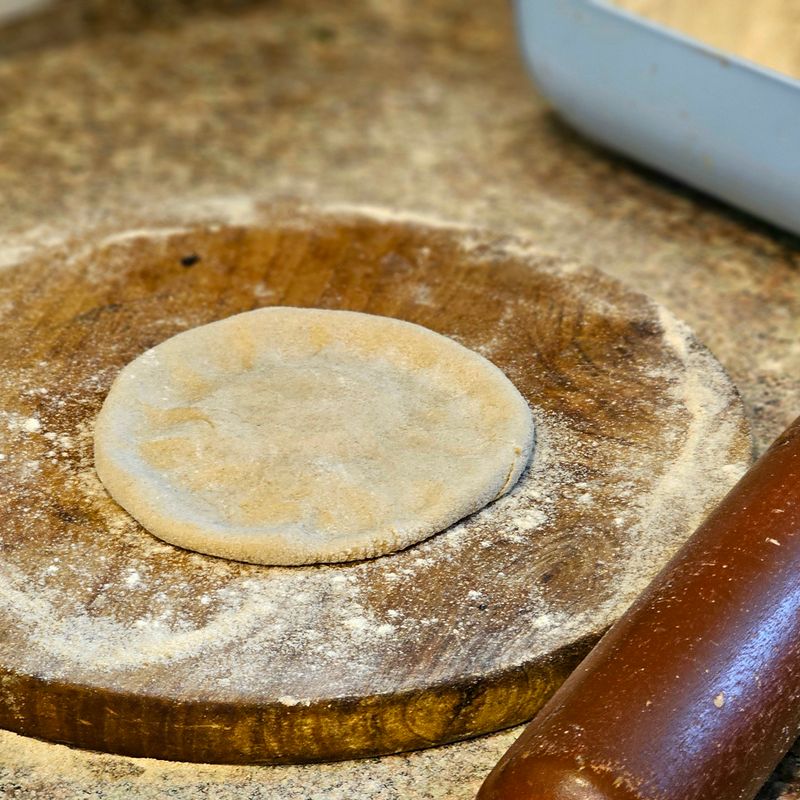
Einkorn Wheat Flatbread Dough
Einkorn is an ancient hulled wheat with a delicate gluten structure and distinctive nutty flavor. This minimal-ingredient dough lets the grain's subtle character shine. Unlike bread doughs, einkorn flatbread dough has lower hydration and comes together quickly, with a softer, more extensible texture. The brief autolyse followed by gentle kneading respects einkorn's fragile gluten, and the bulk fermentation develops complexity without requiring hours. Use this dough immediately for tender, rustic flatbreads, or refrigerate it for extended flavor development.
- Prep
- 20 min
- Cook
- —
- Wait
- 55 min
- Total
- 1 hr 15 min
- Makes
- 680g dough, enough for 4 flatbreads
Steps
Before you start
- Have all ingredients at room temperature before mixing.
- Use filtered or room-temperature water; cold water can shock the dough and delay fermentation.
- Understand that einkorn has a more delicate gluten structure than modern bread wheat—the dough will be softer and more extensible, which is normal and desirable.
- If measuring by volume, spoon the flour into the measuring cup and level it off without pressing; packing flour significantly increases the weight.
Combine flour and water
- In a large 3-quart mixing bowl, add the room-temperature water.
- Sprinkle the einkorn flour over the water and stir with a wooden spoon or silicone spatula until all flour is moistened and a shaggy, uneven dough forms.
- Do not knead at this stage—simply mix until no dry flour remains.
+ Show details− Hide details
Ready when: All flour is moistened and a rough, shaggy dough has formed
Autolyse (rest dough)
- Cover the bowl loosely with plastic wrap or a kitchen towel and let the dough rest undisturbed for 15 minutes at room temperature (68–72°F / 20–22°C).
- During this time, the flour fully hydrates and the dough begins to develop gluten structure on its own, without active kneading.
- The mixture will look slightly more cohesive when you return to it.
+ Show details− Hide details
Ready when: Dough looks slightly more cohesive; flour is fully hydrated
Tip: Autolyse is especially beneficial for einkorn flour, which has a delicate gluten structure. This rest develops elasticity and extensibility gently, making the dough more forgiving to work with.
Add salt and knead
- Sprinkle the salt evenly over the dough.
- Using your hands or a wooden spoon, fold the dough over itself repeatedly, turning it after each fold.
- Knead steadily for 5–7 minutes.
- The dough will gradually become smoother and more uniform.
- It will remain soft and slightly tacky—considerably softer than bread dough.
- When the salt is fully incorporated and the dough feels smooth and supple, stop kneading.
- Avoid overworking the dough, as einkorn's gluten structure is more fragile than modern wheat.
+ Show details− Hide details
Ready when: Dough is smooth, uniform, and slightly tacky; all salt is fully incorporated. It should feel supple but not stick excessively to your hands.
Tip: Einkorn dough is naturally soft and extensible. It should never feel as stiff as bread dough. If it seems overly sticky, resist the urge to add flour; the dough will firm up slightly as it rests.
Incorporate olive oil
- If using olive oil for added flavor and richness, drizzle it over the kneaded dough.
- Knead gently for 1–2 minutes, folding the dough over itself until the oil is fully incorporated and the dough returns to a smooth, uniform texture.
+ Show details− Hide details
Ready when: Oil is completely incorporated and dough is smooth and uniform
Tip: Adding oil after initial kneading prevents it from interfering with gluten development and distributes it more evenly throughout the dough.
Bulk fermentation
- Transfer the dough to a clean bowl (or keep it in the same bowl, lightly oiled if desired).
- Cover loosely with a kitchen towel or plastic wrap.
- Let it rest at room temperature (68–72°F / 20–22°C) for 30–45 minutes.
- The dough should increase noticeably in volume—perhaps by 25–50%—and feel softer and more relaxed than when first kneaded.
- The dough is ready when it jiggles slightly when you gently shake the bowl.
+ Show details− Hide details
Ready when: Dough has increased by 25–50% in volume and feels noticeably softer and more extensible; it jiggles when the bowl is gently shaken.
Tip: Einkorn dough rises more slowly and subtly than bread dough. Expect a modest increase in volume, not a dramatic doubling. If your kitchen is cool, fermentation may take up to 60 minutes.
Divide and prepare to cook
- Divide the dough into 4 equal portions (about 170g / 6 oz each).
- On a lightly floured work surface, gently shape each portion into a ball or press it into a thick disk.
- At this point, the dough can be used immediately: roll or stretch it thin, dust off excess flour, and cook in a hot skillet or on a griddle.
- Alternatively, cover the portions with a damp towel and let them rest for 10–15 minutes before shaping and cooking.
- This resting period relaxes the gluten and makes the dough easier to stretch.
+ Show details− Hide details
Tip: Einkorn flatbread dough is best used fresh and warm. If you need to make it ahead, refrigerate covered for up to 24 hours; bring to room temperature for 15–20 minutes before shaping and cooking.
Good to know
Tips
- Use a kitchen scale if possible: Einkorn's hydration is sensitive, and volume measurements can vary. A digital scale gives reliable results and adjusts easily if you want to change the dough size.
- Einkorn dough is naturally soft: Don't be alarmed if the dough is softer than bread doughs you've made. The extensible, delicate gluten is ideal for flatbreads and allows the dough to stretch without tearing or needing aggressive kneading.
- Room temperature matters: Fermentation speed depends on ambient temperature. In a warm kitchen (72°F / 22°C), bulk fermentation may finish in 30 minutes. In a cool kitchen (65°F / 18°C), it could take 50–60 minutes. Adjust timing by watching the dough, not the clock.
- Einkorn flatbread is best served fresh: These flatbreads are most delicious warm, within a few hours of cooking. The nutty, subtle flavor of einkorn is most pronounced when the bread is fresh.
Make ahead
Yes. The dough can be made up to 24 hours ahead. After bulk fermentation (Step 5), cover the dough or individual portions and refrigerate. The cold fermentation develops flavor. Remove from the fridge 15–20 minutes before shaping and cooking to bring to room temperature. Cold dough is stiffer and harder to shape, so this rest is important.
Storage & reheating
Room temperature: The prepared dough is best used the same day. If covered, it will keep at room temperature for up to 8 hours, but fermentation will continue and the dough may overproof. Refrigerator: After bulk fermentation, cover the dough or shape into portions and wrap individually in plastic wrap. Refrigerate for up to 24 hours. Allow 15–20 minutes at room temperature before shaping and cooking. Freezer: You can freeze individual portions of dough (wrapped well in plastic wrap and then foil) for up to 3 months. Thaw in the refrigerator overnight, then bring to room temperature (15–20 minutes) before using.
Substitutions
- einkorn wheat flour → Spelt flour. Spelt is another ancient grain with a similar fragile gluten structure. Use the same weight or volume (400g). The dough will be slightly stronger and rise a bit more; reduce fermentation time by 5 minutes if desired.
- einkorn wheat flour → Whole wheat flour. Modern whole wheat creates a denser, more robust dough. Use 380g and increase water to 250ml (1 cup plus 2 tbsp) since whole wheat absorbs more moisture. The flavor will be earthier and less delicate than einkorn.
- einkorn wheat flour → All-purpose or bread flour. These flours have stronger gluten and can handle more kneading. Use the same 400g and 240ml water; expect a tighter, less extensible dough. Fermentation will develop faster, so reduce time to 25–30 minutes.
- extra-virgin olive oil → Coconut oil or grapeseed oil. Use the same volume (1 tbsp / 15ml). Coconut oil adds subtle sweetness; grapeseed oil is neutral. Both provide similar richness and tenderness.
More flatbread doughs
See all →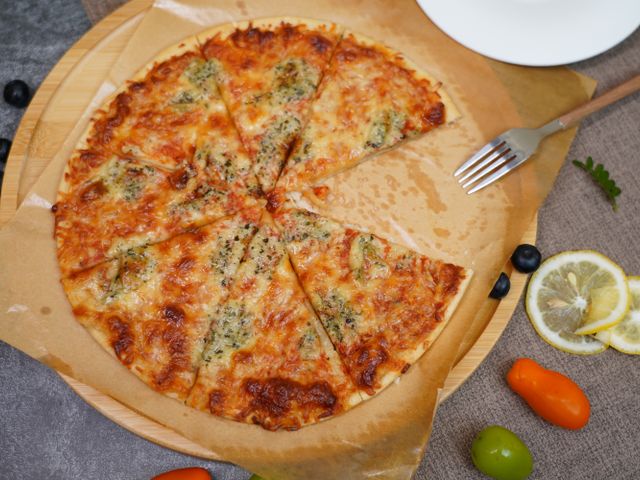
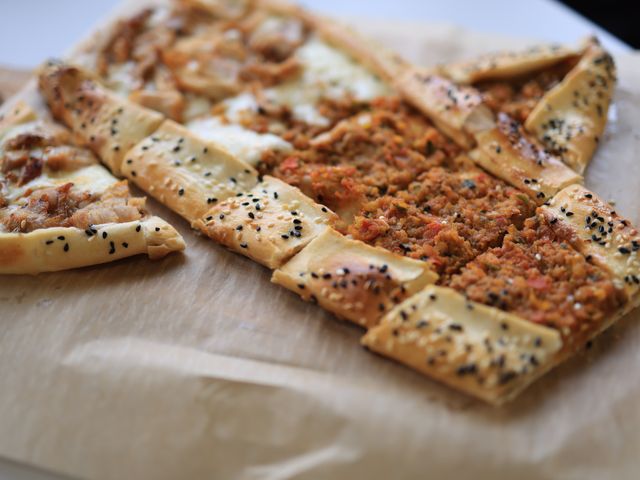
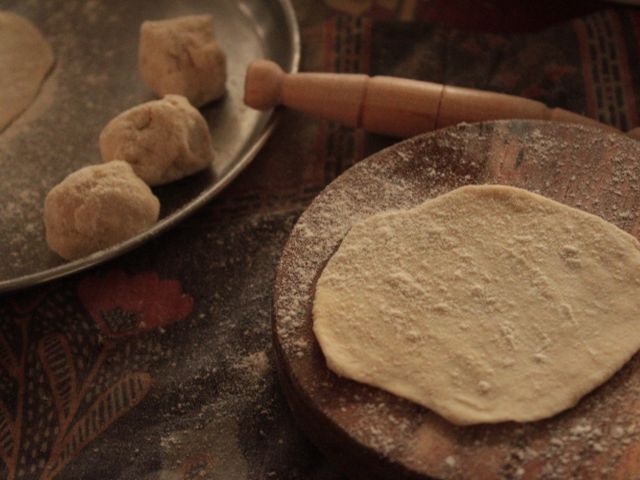
Find more like this
- Meal
- Dinner
- Quick & Easy
- 5 Ingredients or LessEasyBeginner