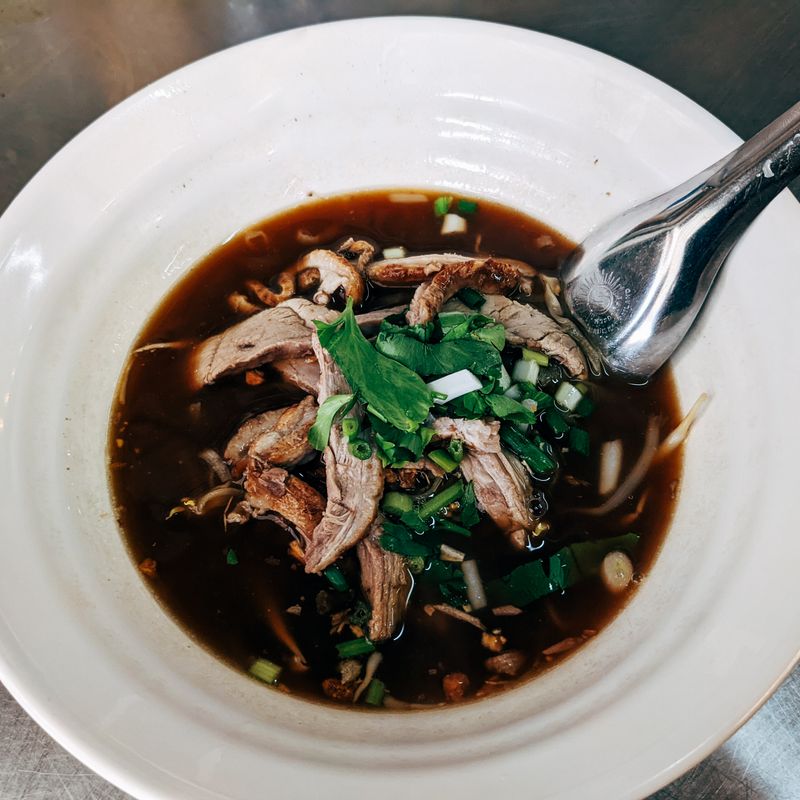
Slow Cooker Duck and Orange Broth
A French-inspired duck broth infused with orange, thyme, and aromatics, slow-cooked for deep, savory flavor. Roasted duck bones release gelatin and collagen over eight hours, creating a silky, rich golden liquid with subtle citrus notes. Perfect as a soup base, sauce foundation, or refined consommé.
- Prep
- 15 min
- Cook
- 25 min
- Wait
- 9 hr 45 min
- Total
- 10 hr 25 min
- Makes
- About 2.5 quarts (2.4 liters) broth
Steps
Before you start
- Duck bones (wing tips, necks, backs) are ideal; ask your butcher or save them from roasted ducks.
- Plan for 8–9 hours total, including slow cooking and cooling. Start in the morning for broth by evening, or overnight for morning broth.
- Preheat your oven while prepping vegetables so the bones roast immediately.
- Read through all steps to understand the process, especially the optional fine-straining step for restaurant-quality clarity.
Roast duck bonesOven 425°F / 220°C
- Preheat your oven to 425°F (220°C).
- Pat the duck bones dry with paper towels and spread them in a single layer in a 9×13-inch (23×33 cm) roasting pan.
- Roast for 20–25 minutes, stirring the bones halfway through with a wooden spoon, until they are deep golden brown and the edges are caramelized.
- This step is crucial—roasting develops complex Maillard flavors and rich, savory notes that you cannot achieve through slow simmering alone, and it ensures the bones reach a safe internal temperature of 165°F or higher.
+ Show details− Hide details
Ready when: Bones are golden brown with caramelized edges; aroma fills the kitchen
Tip: Roasting at 425°F for 20–25 minutes ensures duck bones reach safe internal temperature (≥165°F) for food safety AND develops exceptional depth and flavor complexity. Do not skip this step.
Prepare aromatics
- While the bones roast, quarter the unpeeled onion and cut the orange into 2-inch (5 cm) wedges, keeping the pith and skin intact—they add body, color, and subtle tannins to the broth.
- Lightly smash the garlic cloves with the side of a knife so they release their oils but stay intact.
- Gather the thyme sprigs; fresh sprigs can go in whole.
+ Show details− Hide details
Ready when: All vegetables are cut and ready for the slow cooker
Tip: Keep the onion skin on for natural caramel color and tannins that deepen the broth.
Layer slow cooker
- Transfer the roasted duck bones to a 6-quart (5.7-liter) slow cooker.
- Add the quartered onion, orange wedges, smashed garlic, thyme sprigs, black peppercorns, and bay leaves.
- Pour the 3 quarts (2.8 liters) of cold water over everything, ensuring all bones are fully submerged.
- If some float, gently press them down with a spoon.
+ Show details− Hide details
Tip: Use cold water, not hot, to gently extract gelatin from bones without clouding the final broth.
Slow cook on low
- Cover the slow cooker and cook on low for 8 hours.
- The broth should maintain a gentle simmer with small bubbles breaking the surface—never a rolling boil.
- After 8 hours, the broth will be rich, golden, and deeply fragrant.
- The bones will have surrendered their gelatin and marrow, enriching every drop.
- Throughout the slow cooking, the broth maintains a temperature above 165°F, ensuring complete food safety.
+ Show details− Hide details
Ready when: Broth is rich and golden-amber; the aroma is deep and savory
Tip: Resist lifting the lid frequently; each peek releases heat and extends cooking time by several minutes.
Strain broth
- Set a fine-mesh strainer over a large bowl or pot.
- Carefully pour the broth through the strainer, discarding the bones, vegetables, and aromatics.
- Use a wooden spoon to gently press down on the vegetables to extract any remaining liquid and subtle flavors, but do not force solids through the mesh—this keeps the broth clear and refined.
+ Show details− Hide details
Ready when: All liquid has passed through the strainer
Tip: Gentle pressing is key; aggressive squeezing clouds the broth.
Fine strain for clarity
- For a crystal-clear, consommé-style broth, line the strainer with cheesecloth and slowly pour the strained broth through it again.
- This optional step removes very fine sediment particles, transforming your broth from rustic to elegant—the result is a jewel-like, glossy liquid.
+ Show details− Hide details
Ready when: Broth is completely clear and bright
Tip: This step is optional but transforms the broth into a restaurant-quality consommé.
Cool and season
- Let the strained broth cool to room temperature, about 1–2 hours.
- As it cools, you may notice a layer of fat rising to the surface and solidifying—this is rendered duck fat, liquid gold.
- Scoop it into a separate container and refrigerate or freeze for cooking (it keeps 2 weeks refrigerated, 3 months frozen).
- Once cooled, season the broth lightly with kosher salt to taste.
- Remember that broth concentrates in flavor if reduced later, so season conservatively.
+ Show details− Hide details
Ready when: Broth is at room temperature with fat layer solidified on top
Tip: Never discard the duck fat—it's exceptional for sautéing vegetables, roasting potatoes, or pan-frying meat.
Good to know
Tips
- Roasting the bones is non-negotiable for a broth with depth, body, and food safety. This single step eliminates pathogens by heating bones to ≥165°F and elevates the final product from adequate to exceptional.
- The rendered duck fat that rises and solidifies as the broth cools is precious. Store it separately in a jar in the refrigerator or freezer; use it for sautéing vegetables, roasting potatoes, or cooking any meat. It keeps refrigerated for 2 weeks, frozen for 3 months.
- For the clearest, most elegant broth, always fine-strain through cheesecloth (Step 6). This transforms a rustic broth into a consommé-like liquid suitable for refined presentations or delicate soups.
- Use this broth as the foundation for classic French dishes: duck confit, cassoulet, coq au vin, or any sauce requiring deep savory depth. A spoonful enriches light vegetable soups, risottos, or grain pilafs.
Make ahead
This broth is designed for advance preparation. Make it 2–3 days ahead and refrigerate, or freeze for up to 3 months. Thawed broth can be reheated gently on the stovetop or in a slow cooker.
Storage & reheating
Room temperature: Up to 2 hours before refrigerating. Refrigerator: Up to 4 days in airtight containers; the fat layer can remain on top (adds flavor) or be skimmed off (lighter broth). Freezer: Up to 3 months in freezer-safe containers or ice cube trays for easy portioning. Reheat: Thaw overnight in the refrigerator, then warm on the stovetop over medium heat until steaming, about 5–10 minutes. Or reheat from frozen over low heat, stirring occasionally, about 15–20 minutes.
Substitutions
- fresh thyme sprigs → 1 teaspoon dried thyme, or 1–2 fresh rosemary sprigs. Dried thyme is more concentrated; use half the amount. Rosemary adds a piney note that complements duck beautifully in the French tradition.
- orange, medium → Zest of 1 orange plus 2 tablespoons fresh juice, or 1 lemon quartered. Zest and juice create a brighter citrus note. Lemon yields a lighter, more delicate broth. Omit citrus entirely for a classic, unsweetened French fond.
- duck bones (wing tips, necks, backs) → Chicken bones, or 2 lbs duck bones plus 2 lbs chicken bones. Chicken broth will be lighter and less rich but still excellent. A 50/50 mix gives you duck depth with chicken clarity.
- black peppercorns → 1 pinch freshly ground black pepper, added at the end. Ground pepper gives a more subtle, dispersed peppery finish without whole peppercorns floating throughout.
More broths
See all →
Find more like this
- Meal
- Dinner
- Cuisine
- French
- Method
- OvenSlow Cooker
- Quick & Easy
- EasyMeal PrepMake AheadFreezer Friendly