Provençal Fish Broth for Bouillabaisse
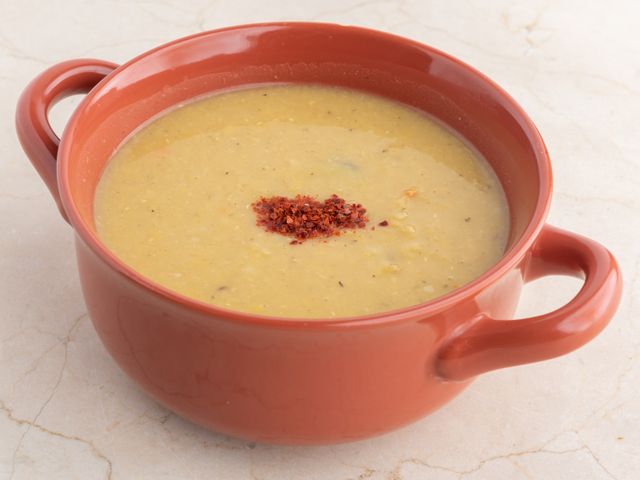
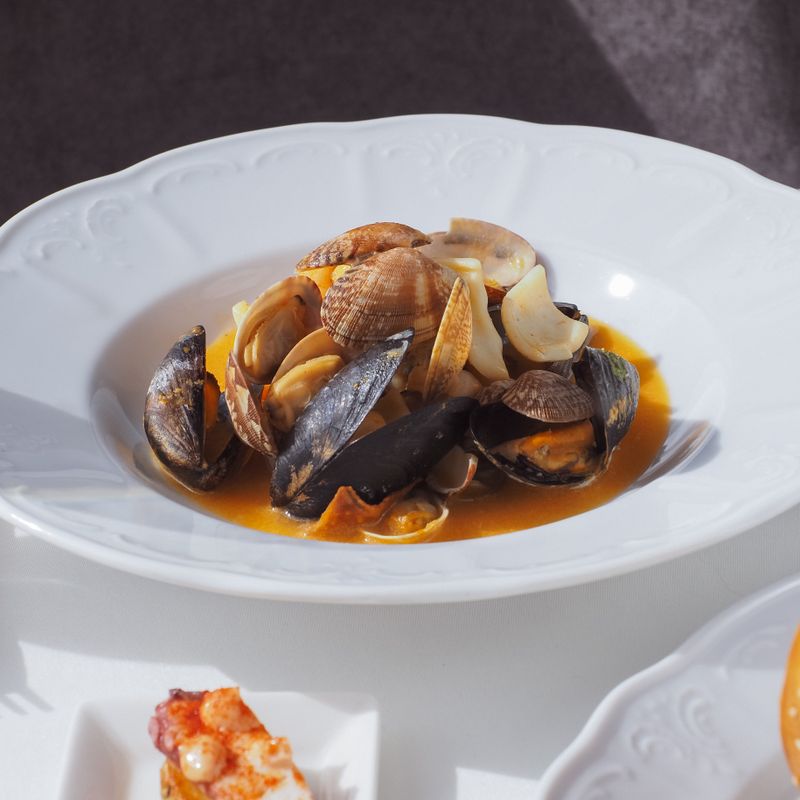
A clear, golden, aromatic fish broth built on lean white fish bones, fennel, leeks and tomato, then perfumed with saffron and orange peel in the last minutes. It's the classic base for bouillabaisse, and it's lovely on its own or with rouille and croutons.
- Prep
- 28 min
- Cook
- 1 hr 6 min
- Wait
- 10 min
- Total
- 1 hr 44 min
- Makes
- About 2 liters (8 cups) of broth, enough for a bouillabaisse for 6
Steps
Before you start
- Ask your fishmonger for bones and heads from lean white fish (snapper, sea bream, hake, cod, halibut or rockfish) with the gills removed. Avoid oily fish such as salmon, mackerel or bluefish, which make the broth strong and greasy.
- Use the bones fresh, ideally the day you buy them. Fish bones should smell clean and of the sea, not fishy.
- Don't let the broth boil hard and don't simmer it past about 35 minutes. Longer or harder cooking makes it cloudy and bitter.
- Wash the leeks well. Slice them first, then swish them in a bowl of cold water to remove hidden grit.
Rinse and soak bones
- Put the fish bones and heads in a large bowl and cover with cold water.
- Rinse under running water, removing any blood clots, gills or dark membranes you can see along the spines.
- Leave the bones covered with fresh cold water while you prep the vegetables, about 20 minutes in total, then drain well.
+ Show details− Hide details
Ready when: The soaking water turns pink and cloudy and the bones look pale and clean after the final rinse.
Tip: Soaking draws out blood, which would otherwise make the broth taste muddy and look dull.
Prep the vegetables
- While the bones soak, slice the fennel, leeks and onion as described, and smash and peel the garlic.
- Chop the tomatoes, keeping all their juices.
- Pull the thyme sprigs and bay leaves together with the parsley sprigs and set aside near the stove.
- Peel two strips of orange zest with a vegetable peeler, avoiding the bitter white pith.
+ Show details− Hide details
Ready when: Vegetables are cut into even slices so they soften at the same rate.
Tip: Rinse sliced leeks in a bowl of cold water and lift them out, leaving the grit behind.
Sweat the aromatics
- Heat the olive oil in the stockpot over medium heat.
- Add the fennel, leeks, onion, garlic and fennel seeds with ½ teaspoon of the salt.
- Cook, stirring often, for about 10 minutes.
+ Show details− Hide details
Ready when: Vegetables are soft, translucent and fragrant, with no browning.
Tip: If anything starts to brown, lower the heat. Browned vegetables will turn the broth dark and bitter.
Cook the tomatoes
- Stir in the tomato paste and cook for 1 minute until it smells sweet and darkens slightly.
- Add the chopped tomatoes with their juices and cook, stirring occasionally, for 4 minutes, until they begin to collapse and release their liquid.
+ Show details− Hide details
Ready when: Tomatoes are slumped and juicy, and the paste coats the vegetables in a brick-red film.
Reduce the wine
- Pour in the white wine and raise the heat.
- Boil for about 4 minutes, scraping up any bits stuck to the bottom of the pot, until the sharp alcohol smell fades and the wine has reduced by about half.
+ Show details− Hide details
Ready when: The liquid looks syrupy and smells fruity rather than boozy, with about half a cup (120 ml) of liquid remaining around the vegetables.
Add bones and bring to a simmer
- Spread the drained fish bones over the vegetables.
- Add the thyme, bay leaves and parsley, then pour in 10 cups (2.4 L) of cold water so the bones are just covered.
- Bring slowly to a bare simmer, about 8 minutes, skimming off the gray foam that collects on top with a slotted spoon or skimmer.
- Stop skimming once the surface is mostly clear.
+ Show details− Hide details
Ready when: Small bubbles break the surface lazily in one or two spots and the foam has been removed.
Tip: Start with cold water so the impurities rise to the top and can be skimmed rather than being cooked into the broth.
Simmer gently
- Lower the heat so the broth barely trembles, with only an occasional bubble rising.
- Leave it uncovered for 20 minutes without stirring, which keeps the broth clear.
+ Show details− Hide details
Ready when: The liquid is lightly golden-orange and smells sweet and briny, with no strong fishy odor.
Tip: A rolling boil emulsifies the oil and fish proteins and makes the broth cloudy.
Add saffron and orange
- Add the orange zest strips and the crumbled saffron.
- Simmer gently for 10 more minutes, giving the pot one gentle stir at the start to submerge the zest.
- Do not simmer longer, since orange zest turns bitter and the bones start to give off a bitter taste after about 35 minutes total.
+ Show details− Hide details
Ready when: The broth is a deep golden saffron-orange and smells of orange, anise and the sea.
Rest and strain
- Turn off the heat and let the pot sit for 5 minutes so the solids settle.
- Set a fine-mesh sieve over a large heatproof container.
- Ladle the broth through the sieve in batches, tilting the pot toward the end.
- Let it drip without pressing on the solids, then discard the solids.
- You should have about 2 liters (8 cups).
+ Show details− Hide details
Ready when: The strained broth is translucent golden-orange with no visible bone fragments.
Tip: Pressing the vegetables forces cloudy particles through the sieve. Let gravity do the work.
Season and finish
- Taste the warm broth.
- Stir in the remaining 1 teaspoon of salt, plus more if needed, until it tastes savory and balanced rather than flat.
- Stir in the pastis if using.
- If the flavor seems thin, simmer the strained broth over medium heat for 5–10 minutes to concentrate it.
- Use right away for bouillabaisse, or cool as directed in the storage notes.
+ Show details− Hide details
Ready when: The broth tastes rounded and savory, with saffron and orange as background notes.
Tip: Season at the end. Reducing the broth would otherwise concentrate the salt too much.
Good to know
Tips
- Keep the simmer lazy and the pot uncovered. Hard boiling and lids both lead to cloudy, dull-tasting broth.
- Add the orange zest and saffron near the end so their delicate aromas stay fresh instead of turning bitter or fading.
- For a richer bouillabaisse, make the broth the day before. The flavors settle overnight.
- Taste the broth before using it. If it will be simmered further with fish, season it lightly and adjust at the end.
Make ahead
The broth can be made up to 2 days ahead. Cool the strained broth quickly by setting the container in an ice bath, stirring for 10–15 minutes, then refrigerate once it is at or below room temperature. Reheat gently before adding fish and shellfish for bouillabaisse.
Storage & reheating
Refrigerate in airtight containers for up to 2 days. Freeze for up to 3 months, leaving ½ inch (1 cm) of headspace for expansion. Thaw overnight in the fridge. Reheat gently in a saucepan over medium-low heat until steaming, without letting it boil hard. Don't keep it at room temperature for more than 2 hours.
Substitutions
- lean white fish bones and heads → Frozen fish stock bones, or 1 lb (450 g) shrimp shells plus 2 lb (900 g) of bones. Thaw frozen bones fully and rinse them. Shells make a sweeter, more shellfish-forward broth.
- dry white wine → Dry vermouth. Use the same amount and reduce the same way. Avoid sweet wines.
- pastis or Pernod → A pinch of crushed fennel seed or a star anise pod added with the orange peel. Adds the anise note without alcohol. Remove the star anise when straining.
- ripe tomatoes → One 14.5 oz (400 g) can whole peeled tomatoes with their juices. A good choice when fresh tomatoes are out of season.