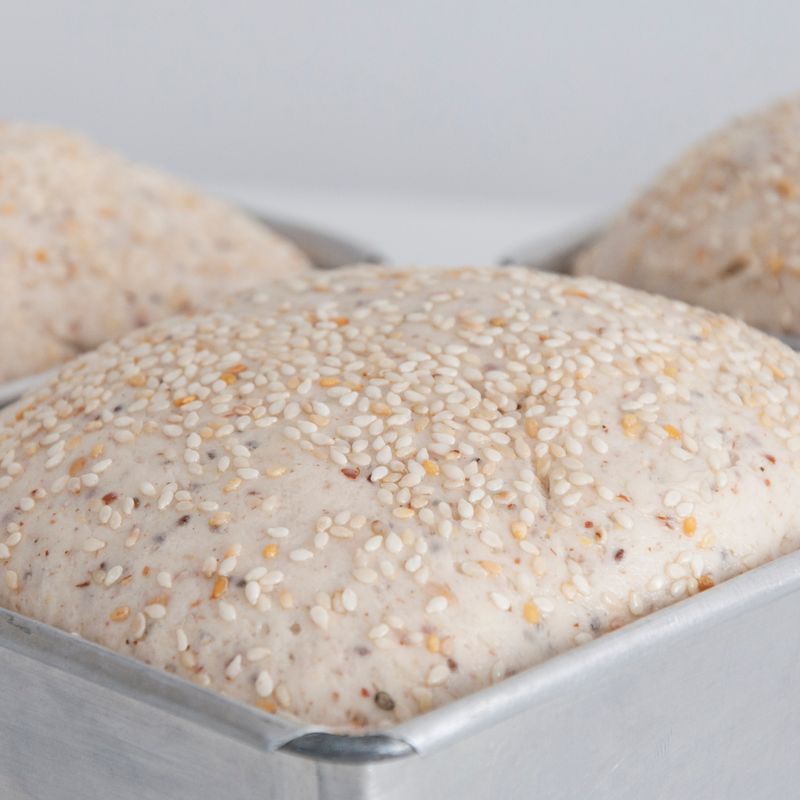
Seeded Whole Grain Flatbread Dough
A hearty, nutty flatbread dough featuring whole grain flour studded with sesame and flaxseeds. This no-yeast dough uses a simple knead-and-rest method, allowing whole grains to fully hydrate and develop complex flavor. The seeds add nutritional depth, nuttiness, and pleasant crunch when cooked. Divide and cook on a griddle, skillet, or in the oven.
- Prep
- 15 min
- Cook
- —
- Wait
- 30 min
- Total
- 45 min
- Makes
- About 1.5 lbs (680g) dough, enough for 6 flatbreads (8 inches each)
Steps
Before you start
- Measure all ingredients and have them within reach
- Use lukewarm water (75–80°F / 24–27°C)—test it on your wrist
- Clear and lightly flour a work surface for kneading
Combine dry ingredients
- In a large mixing bowl, whisk together the whole grain flour blend, sesame seeds, flaxseeds, and salt.
- Whisk for about 1 minute to ensure the seeds are evenly distributed throughout the flour.
- Creating an even distribution now prevents the seeds from settling to the bottom during mixing and resting.
+ Show details− Hide details
Ready when: Seeds are visibly distributed throughout flour with no clumps
Tip: Use a whisk rather than just stirring—it incorporates air and prevents seeds from clumping together
Mix in wet ingredients
- Pour the lukewarm water and olive oil into the center of the dry ingredients.
- Using a wooden spoon, stir vigorously from the center outward, incorporating flour gradually until a shaggy dough forms.
- Continue stirring for about 1 minute, until all dry flour is incorporated and there are no dry pockets.
- The mixture will look rough and uneven at this stage—that's correct.
+ Show details− Hide details
Ready when: No dry flour visible; dough is shaggy and holds together loosely
Tip: Don't overmix at this stage. You're simply combining the ingredients; kneading will refine the texture next.
Knead the dough
- Turn the dough onto a lightly floured work surface.
- Knead by pushing the dough away from you with the heel of your hand, folding it back over itself, rotating it a quarter turn, and repeating.
- Work steadily for 8–10 minutes.
- The dough will gradually become smooth and elastic.
- By the end, it should feel supple and slightly sticky to the touch, not stiff or dry.
- Seeds will be evenly distributed throughout.
+ Show details− Hide details
Ready when: Dough is smooth, elastic, and springs back slowly when poked; still slightly sticky but holds its shape
Tip: Whole grain doughs are naturally wetter than white flour doughs—resist the urge to add extra flour. The stickiness decreases as the grains hydrate. If dough is extremely wet, add flour 1 tablespoon at a time; if very dry, add water by the teaspoon.
Shape and rest
- Form the kneaded dough into a smooth ball and transfer it to a lightly oiled bowl (you can use the same bowl you mixed in, wiped clean and re-oiled).
- Cover the bowl with a damp kitchen towel to prevent the surface from drying out.
- Let the dough rest at room temperature (around 68–72°F / 20–22°C) for 30 minutes.
- The dough will rise slightly, become noticeably more cohesive, and the whole grain flour will fully absorb the moisture.
+ Show details− Hide details
Ready when: Dough has risen by about 20–30%; surface is smooth and even; no cracks
Tip: Don't skip or rush this rest. It's essential for whole grain flour to absorb moisture, resulting in better texture and easier handling when cooking.
Good to know
Tips
- Use lukewarm water, not hot or cold. Hot water can partially cook the flour and damage the dough's structure; cold water makes kneading difficult and the dough stiff.
- Whole grain flours absorb considerably more water than refined white flour, so this dough will feel wetter and slightly stickier than a typical all-purpose dough. This is normal and produces better texture.
- To portion and cook: After resting, divide the dough into 6 equal pieces (about 115g each). Shape gently into rounds or slightly flatten into discs. Let rest 5–10 minutes, then cook on a preheated griddle or skillet over medium-high heat for 2–3 minutes per side until golden and puffed, or bake at 450°F (230°C) for 8–10 minutes.
- For deeper, more complex flavor, refrigerate the dough overnight before using. Cold fermentation, even without yeast, allows the whole grains to develop more nuanced flavors.
Make ahead
Yes. After kneading (step 3), you can cover the shaped dough and refrigerate for up to 4 days. You may also let it rest at room temperature as directed (step 4), then cover and refrigerate. Bring the dough to room temperature for about 30 minutes before dividing and cooking. For deeper flavor, refrigerate overnight.
Storage & reheating
Room temperature: Keep covered with a damp towel; best used within 2 hours after resting. Refrigerator: Wrap tightly in plastic wrap or place in an airtight container; keeps up to 4 days. Bring to room temperature for 30 minutes before using. Freezer: Wrap the dough ball tightly in plastic wrap, then place in a freezer bag; keeps up to 1 month. Thaw in the refrigerator overnight, then bring to room temperature for 30 minutes before dividing and cooking.
Substitutions
- Whole grain flour blend (whole wheat, spelt, or rye) → 100% whole wheat flour, or substitute up to 1/3 of the flour with spelt, rye, or barley flour. Each grain has a slightly different flavor and hydration rate. You may need to adjust the water by 1–2 tablespoons depending on the flour blend.
- Sesame seeds → Black sesame seeds, or a mix of white and black sesame seeds. Black sesame seeds have an earthier flavor and create visual contrast in the finished flatbread.
- Flaxseeds → Pumpkin seeds or sunflower seeds in equal amount (50g). Both add nutrition and a pleasant crunch; flavors are slightly more neutral or buttery than flaxseed.
- Olive oil → Neutral oil (vegetable, grapeseed, or canola oil), or melted ghee. Use equal amount. Ghee will add a richer, more fragrant quality to the dough.
More flatbread doughs
See all →
Find more like this
- Meal
- Dinner
- Quick & Easy
- 5 Ingredients or LessEasyBeginner