Party Champagne Shallot Vinaigrette
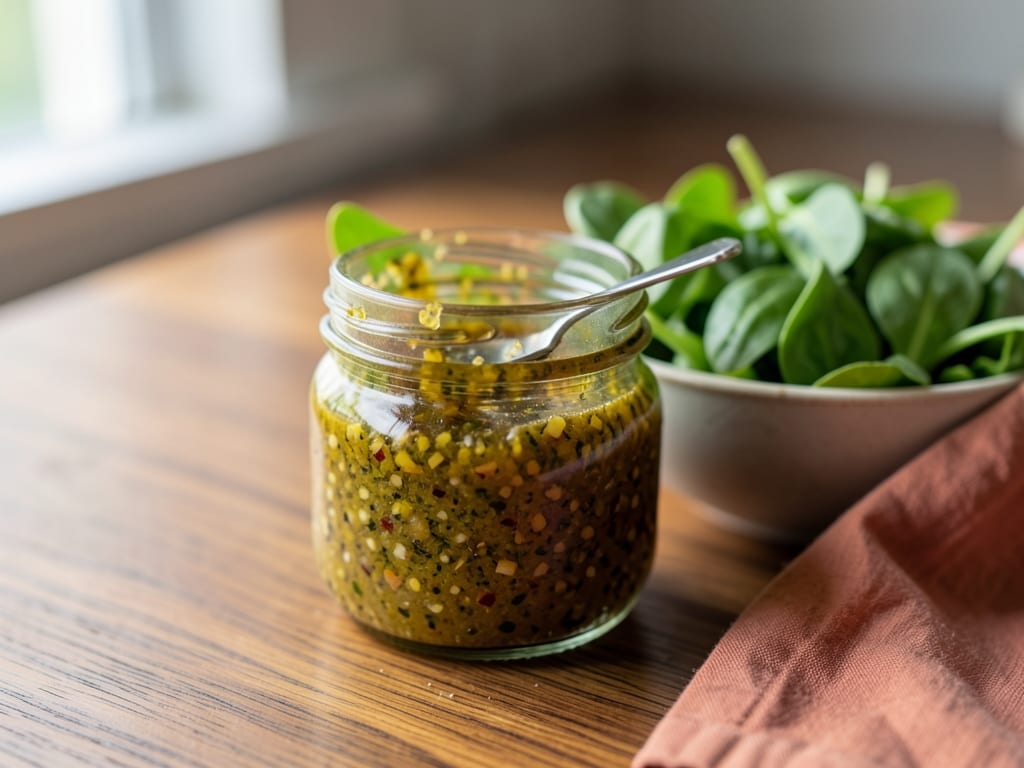
A bright, elegant French vinaigrette infused with champagne vinegar, minced shallots, and fresh tarragon. The balance of acidity, subtle sweetness, and herbaceous notes makes it ideal for tender greens, roasted vegetables, or as a finishing touch on seafood and chicken. Perfect for holiday dinners and celebration meals.
Steps
Before you start
- Measure all ingredients before beginning
- Use room-temperature ingredients for smooth emulsification
- Have a small bowl and whisk ready
Build the base
- In a small mixing bowl, combine the champagne vinegar, minced shallots, Dijon mustard, and honey.
- Whisk together until the mustard and honey are fully dissolved and the shallots are evenly distributed, about 30 seconds.
+ Show details− Hide details
Ready when: Mixture is uniform and shallots are suspended
Tip: Whisking the vinegar and mustard first helps create an emulsion base before adding oil
Rest the vinaigrette
- Let the mixture rest for 5 minutes at room temperature.
- This allows the shallot flavor to infuse into the vinegar and softens the sharp bite of the raw shallots.
+ Show details− Hide details
Tip: This brief rest is key to balancing the vinaigrette's flavor; don't skip it
Add tarragon
- Stir in the fresh chopped tarragon with a whisk until evenly incorporated.
+ Show details− Hide details
Ready when: Tarragon is evenly distributed throughout
Tip: Add tarragon just before the oil so its delicate flavor isn't lost in emulsification
Whisk in the oil
- While whisking constantly and slowly, drizzle in the extra-virgin olive oil in a thin, steady stream.
- Start with about ¼ cup (60 ml), whisking vigorously to create a temporary emulsion.
- Once it begins to thicken slightly, add the remaining ¼ cup (60 ml) in a slightly faster stream, still whisking.
- The vinaigrette should become pale and slightly thick.
+ Show details− Hide details
Ready when: Vinaigrette is pale, thickened, and oil is fully incorporated
Tip: If the emulsion breaks (becomes thin and separated), start fresh in a clean bowl with 1 tsp mustard and slowly whisk in the broken vinaigrette
Season to taste
- Taste the vinaigrette and add sea salt and freshly ground white pepper to your preference.
- A small pinch of salt enhances the champagne and tarragon notes.
- Whisk once more to combine.
+ Show details− Hide details
Ready when: Seasoning is balanced and no graininess remains
Tip: Use white pepper instead of black to keep the dressing's elegant, pale appearance
Good to know
Tips
- For the smoothest emulsion, ensure all ingredients are at room temperature before beginning. Cold oils and vinegars emulsify less reliably.
- The vinaigrette will separate slightly over time—this is normal. Whisk or shake vigorously before each use to recombine.
- This dressing is delicious drizzled over butter lettuce, bibb lettuce, or frisée, or as a finishing sauce on roasted asparagus, beets, or seared scallops.
- Champagne vinegar is milder and more floral than white wine vinegar; it's worth seeking out at a good grocery store or online for the authentic celebratory flavor.
Make ahead
Yes. Make this up to 4 hours ahead and store in a glass jar at room temperature. Stir or shake vigorously before serving. For longer storage, refrigerate for up to 5 days and bring to room temperature 15 minutes before serving; the oil may solidify slightly when cold, so gentle whisking or a brief warm water bath restores fluidity.
Storage & reheating
Room temperature (up to 4 hours in a sealed glass jar, away from direct sunlight). Refrigerator (up to 5 days; whisk or shake well before using, as separation is normal). Not freezer-suitable due to the oil-based emulsion.
Substitutions
- fresh tarragon → fresh chervil or a smaller amount of fresh dill. Tarragon gives a distinctly French, anise-like note; chervil is more delicate and dill adds a different herbal character
- champagne vinegar → white wine vinegar. Use the same amount; white wine vinegar is slightly more acidic, so you may want to reduce it to 2½ tbsp (37.5 ml) and add ½ tsp honey for balance
- honey → Dijon mustard (increase to 1.5 tbsp total). Omit the honey and use an extra 0.5 tbsp mustard for a more savory, robust vinaigrette with no sweetness
- shallots → 1 tbsp finely minced red onion. Red onion is sharper; use slightly less to avoid overpowering the delicate champagne vinegar