Dijon Vinegar Dressing
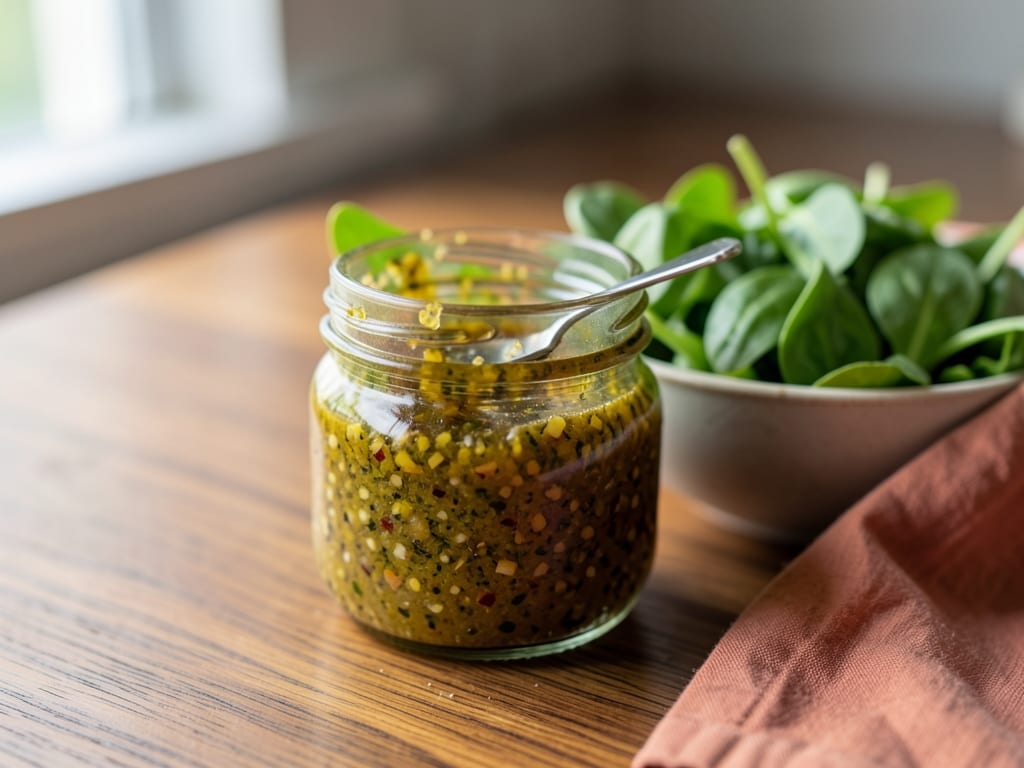
A silky, well-balanced French vinaigrette built on Dijon mustard as an emulsifier, bringing together sharp red wine vinegar, fruity olive oil, and finely minced shallots with fresh herbs. This dressing clings beautifully to lettuces and vegetables, with a tangy bite and subtle garlic undertones. Make it fresh for best flavor, though it keeps well refrigerated for several days.
- Prep
- 5 min
- Cook
- —
- Total
- 5 min
- Makes
- ¾ cup (180 ml) dressing, enough for 6–8 cups salad greens
Steps
Before you start
- Use room-temperature ingredients for the smoothest emulsion
- Have all ingredients measured and ready before you begin whisking
- Use a small, narrow bowl or measuring cup so the whisk can move freely
Combine base ingredients
- In a small bowl, whisk together the Dijon mustard, red wine vinegar, minced shallot, and minced garlic until well combined.
- The mustard will help emulsify the dressing and create a smooth texture.
- Whisk for about 30 seconds to ensure everything is evenly distributed.
+ Show details− Hide details
Ready when: Mixture is smooth and well blended
Tip: Using room-temperature ingredients helps the emulsion form smoothly and prevents the dressing from separating
Begin emulsifying with oil
- While whisking constantly, add the olive oil in a slow, thin stream—begin by drizzling just a few drops at a time.
- After incorporating the first 2 tablespoons (30 ml) of oil with steady whisking, the mixture should begin to tighten and thicken slightly as the mustard binds the oil and vinegar together.
- Continue whisking throughout this stage.
+ Show details− Hide details
Ready when: Mixture has visibly thickened and become paler in color
Tip: Resist the urge to rush; slow and steady whisking ensures a stable, creamy emulsion
Complete the emulsion
- Once the first portion of oil is incorporated and the mixture is creamy, continue adding the remaining olive oil (about 4 tablespoons / 90 ml) in a slightly faster, steady stream while whisking constantly.
- The dressing should become increasingly pale and thick.
- If at any point it looks like it might break (becomes grainy or separates), slow down the oil flow and whisk more vigorously until it comes back together.
+ Show details− Hide details
Ready when: Dressing is pale, creamy, and noticeably thickened; all oil is fully incorporated
Tip: If the dressing breaks and becomes watery or grainy, start with a fresh mustard and vinegar base in a clean bowl, then slowly whisk the broken dressing into that instead
Season and finish
- Stir in the chopped thyme and parsley with a whisk or spoon.
- Season with kosher salt and freshly ground black pepper to taste.
- Taste the dressing on a piece of lettuce or a vegetable, as the acidity and saltiness will be more apparent in this context than in the bowl alone.
- Adjust vinegar, salt, or pepper as needed until the balance of tang, richness, and seasoning is to your liking.
+ Show details− Hide details
Ready when: Herbs are evenly distributed and seasoning is balanced to your taste
Tip: Add salt and pepper gradually—it's easier to add more than to undo an over-seasoned dressing
Good to know
Tips
- For a creamier, thicker dressing, add 1 teaspoon of honey or a pinch of mayonnaise along with the mustard; this adds body and helps stabilize the emulsion
- This dressing works on warm as well as cold salads—try it on wilted spinach, roasted beets, or blanched green beans
- Make a double batch and keep it on hand: it stores well and is faster than reaching for bottled dressing
- Whisk the dressing again vigorously just before serving if it has separated, or shake it hard in a sealed jar
Make ahead
Prepare the dressing up to 3 days ahead. Store in a covered jar in the refrigerator. Give it a shake or whisk before serving, as the oil and vinegar may separate slightly during storage—this is normal and does not affect the flavor.
Storage & reheating
Room temperature: not recommended (herbs will wilt). Refrigerator: up to 3 days in a sealed jar or bottle. Freezer: not recommended. To reheat: bring to room temperature and whisk vigorously, or shake in a sealed jar until recombined.
Substitutions
- red wine vinegar → White wine vinegar or sherry vinegar. Use the same amount. White wine vinegar is slightly milder; sherry vinegar is richer and more complex. Both work beautifully in this vinaigrette.
- fresh thyme leaves → Fresh tarragon or fresh dill. Use the same amount. Tarragon adds a subtle anise note; dill brings brightness. Omit if neither is available and double the parsley instead.
- extra-virgin olive oil → Neutral oil (grapeseed, sunflower, or light avocado oil) plus 2 tablespoons extra-virgin olive oil. This stretches a premium olive oil while maintaining its flavor. Use if you prefer a more delicate taste or to reduce cost.
- shallot, medium → Red onion, finely minced. Use the same amount. Red onion is slightly sharper and more assertive; soak it in the vinegar for 5 minutes first to mellow it.