Korean Soy-Pickled Jalapeños (Gochu Jangajji)
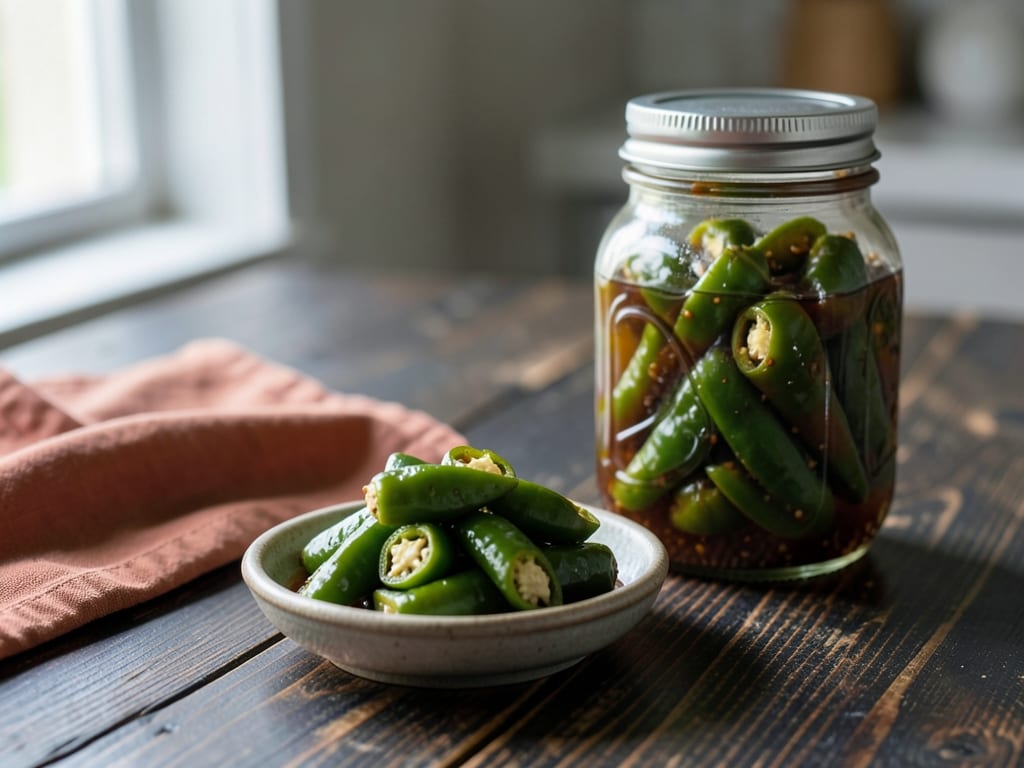
Crisp jalapeños steeped in a hot, salty-sweet-tangy soy brine until they turn savory and glossy. Serve them with rice, noodles, grilled meats or sandwiches. They're ready in 3 days and keep for months.
- Prep
- 20 min
- Cook
- 8 min
- Wait
- 3 days
- Total
- 3 days
- Makes
- About 1 quart (1 liter) pickles, 16 servings of ~¼ cup
Steps
Before you start
- Plan ahead: the pickles need 3 days in the fridge before they taste their best.
- Wash a 1-quart (1 liter) glass jar and lid in hot soapy water, rinse well and let dry.
- Wear thin gloves when slicing jalapeños, or wash your hands well with soap afterward and avoid touching your eyes.
- Use a regular (all-purpose) Korean or Japanese soy sauce, not dark or low-sodium, so the brine is balanced.
Prepare the jalapeños
- Wearing gloves, wash and thoroughly dry the jalapeños.
- Trim the stems to ¼ inch (6 mm), then slice into ½-inch (1 cm) rounds, keeping the seeds for heat.
- Peel and thinly slice the garlic.
+ Show details− Hide details
Ready when: Slices are even in thickness and surfaces are dry to the touch.
Tip: Water on the chilies dilutes the brine, so dry them well.
Pack the jar
- Layer the sliced jalapeños and garlic in the clean 1-quart jar, pressing down gently.
- Leave about 1 inch (2.5 cm) of space at the top.
+ Show details− Hide details
Ready when: Chilies are snug but not crushed, with 1 inch of headspace.
Tip: Don't overpack, or the brine can't reach every slice.
Simmer the brine
- In the saucepan, combine the soy sauce, water, vinegar, sugar and kelp, if using.
- Bring to a boil over medium-high heat, stirring once or twice to dissolve the sugar.
- Boil for 3 minutes, then remove the kelp so it doesn't turn slimy.
+ Show details− Hide details
Ready when: Brine is at a steady rolling boil and the sugar is fully dissolved, with no grains at the bottom.
Tip: Stand back when pouring in the vinegar; the fumes are sharp.
Pour hot brine
- Carefully pour the hot brine over the jalapeños until they are fully covered, using a ladle or heatproof measuring cup.
- Press a small ramekin or fermentation weight on top to keep them submerged.
+ Show details− Hide details
Ready when: All chilies sit below the liquid line and the brine reaches about ½ inch from the rim.
Tip: Use a jar rated for heat, or warm it with hot tap water first, to avoid cracking.
Cool to room temperature
- Leave the jar uncovered on the counter until the brine is completely cool.
- The chilies will darken from bright green to olive as they cool.
- Remove the weight, then seal the lid.
+ Show details− Hide details
Ready when: Jar feels neutral to the touch, not warm.
Tip: Sealing a hot jar traps steam and can soften the chilies.
Refrigerate and cure
- Refrigerate the sealed jar for 3 days before eating.
- Turn the jar upside down once a day to redistribute the brine.
+ Show details− Hide details
Ready when: Chilies are olive-colored, still crisp when bitten, and taste savory, sweet and tangy.
Tip: Eat them earlier for a crunchier, spicier bite, or wait a week for a mellower flavor.
Serve
- Lift out the chilies with clean tongs and chop or serve whole alongside rice, noodles, grilled meats, sandwiches or tacos.
- Always use a clean utensil, and keep the remaining chilies submerged in the brine.
+ Show details− Hide details
Tip: The leftover brine is great drizzled over rice or used in marinades and dipping sauces.
Good to know
Tips
- Keep the seeds in for heat; remove them from half the chilies for a milder batch.
- Boil the brine and pour it hot over raw chilies; this keeps them crisp while helping flavors penetrate.
- Reuse the brine once: reboil it for 3 minutes, cool it, and pour it over a fresh batch of chilies, adding 2 tablespoons of vinegar.
- Keep everything submerged in the brine and use clean utensils to prevent spoilage.
Make ahead
"Make up to 3 days ahead for full flavor; the pickles improve for the first week and are best within 2 months."
Storage & reheating
"Refrigerate in the sealed jar, with the chilies submerged, for up to 3 months. Texture softens over time. Not suitable for room-temperature storage. Freezing is not recommended because the chilies turn soft. Serve cold straight from the jar; no reheating needed."
Substitutions
- fresh jalapeños → Korean green chilies (cheongyang or oi-gochu) or serrano peppers. Whole Korean chilies should be pierced with a fork. Serranos are hotter; cheongyang is spicier, while oi-gochu is milder.
- distilled white vinegar → apple cider vinegar or rice vinegar. Both give a softer, rounder tang; use the same amount.
- granulated sugar → light brown sugar or Korean plum syrup (maesil-cheong), same amount. Brown sugar gives a deeper flavor; plum syrup adds fruity sweetness.
- soy sauce → tamari. Use for a gluten-free version; the flavor is slightly richer.
More pickles & chutneys
See all →
Find more like this
- Meal
- Lunch
- Cuisine
- Korean
- Method
- Stovetop
- Quick & Easy
- 5 Ingredients or LessEasyMake Ahead