Korean Sesame Ginger Rice
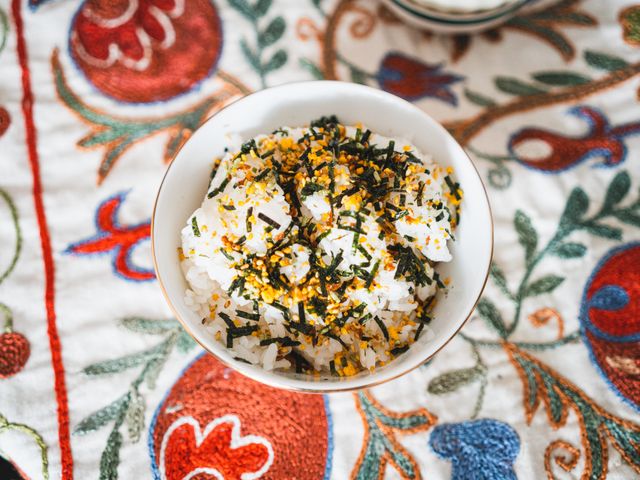
This Korean Sesame Ginger Rice is an easy, aromatic side dish made with short-grain white rice flavored with toasted sesame oil, fresh ginger, and soy sauce. Topped with toasted sesame seeds and fresh green onions, it pairs perfectly with grilled meats, stews, and other Korean dishes. It comes together quickly on the stovetop and is ready to serve in about 35 minutes.
- Prep
- 10 min
- Cook
- 20 min
- Wait
- 5 min
- Total
- 35 min
- Makes
- 4 servings (about 6 cups cooked rice)
Steps
Before you start
- Use short-grain white rice (Korean or Japanese varieties are ideal for texture)
- Toast sesame seeds yourself in a dry pan for deeper flavor, or buy pre-toasted
- Have ginger and garlic peeled and ready to mince during cooking
- Use a medium pot with a tight-fitting lid
Rinse the rice
- Measure 2 cups of uncooked rice into a fine-mesh strainer.
- Rinse under cold running water while gently stirring with your fingers until the water runs clear, about 2–3 minutes.
- This removes excess starch for fluffier, better-textured rice.
+ Show details− Hide details
Ready when: Water runs clear when you stir the rice
Tip: Don't skip rinsing—it's essential for fluffy, separated grains
Cook the rice
- Combine the rinsed rice with 2.5 cups water in a medium (3-quart) pot.
- Bring to a boil over medium-high heat uncovered, about 3–4 minutes.
- Once boiling, reduce heat to low, place the lid on the pot, and cook undisturbed for 15–18 minutes until the water is fully absorbed and each rice grain is tender.
- Do not stir or lift the lid during cooking.
+ Show details− Hide details
Ready when: Water is fully absorbed and rice grains are tender
Tip: Resist lifting the lid; it releases steam needed for even cooking
Rest the rice
- Remove the pot from heat but keep the lid on.
- Let the rice rest undisturbed for 5 minutes.
- This completes the cooking process and allows the rice to firm up slightly for better texture.
+ Show details− Hide details
Tip: Don't skip this rest time—it makes a noticeable difference in texture
Season with sesame oil and soy
- Remove the lid and gently fluff the rice with a fork, breaking up any clumps.
- While the rice is still warm, add 3 tablespoons sesame oil, 2 tablespoons soy sauce, 2 tablespoons minced fresh ginger, and 2 minced garlic cloves.
- Stir gently but thoroughly for 1–2 minutes to distribute the seasonings evenly throughout the rice.
- Taste and adjust salt if needed (soy sauce is already quite salty).
+ Show details− Hide details
Ready when: All rice grains are evenly coated with sesame oil and soy sauce mixture
Tip: Add seasonings while rice is warm so it absorbs the flavors better
Garnish and serve
- Transfer the seasoned rice to a serving bowl.
- Top with 3 tablespoons toasted white sesame seeds and 3 thinly sliced green onions.
- Serve immediately while warm as a side dish to grilled meats, soups, or stews.
Good to know
Tips
- Don't skip the rinsing step—it removes starch and is key to fluffy, well-separated grains
- Short-grain rice (Korean or Japanese) is essential; long-grain rice will be dry and less authentic
- Toast your own sesame seeds in a dry pan over medium heat for 2–3 minutes if using raw seeds—the flavor is noticeably deeper
- Sesame oil is potent, so taste before adding extra; the soy sauce also adds considerable salt
Make ahead
Rice can be made 1–2 hours ahead and kept covered at room temperature. Reheat gently in the microwave with a splash of water or in a pot over low heat with a bit of sesame oil, stirring occasionally until warmed through. Do not refrigerate and reheat if serving the same day for best texture.
Storage & reheating
Room temperature up to 2 hours, covered. Refrigerator up to 4 days in an airtight container. Not recommended for freezing due to texture loss. To reheat: microwave with a splash of water, stirring halfway through, or warm gently in a pot over low heat with a drizzle of sesame oil.
Substitutions
- Short-grain white rice, uncooked → Short-grain brown rice. Increases cooking time to 30–35 minutes and requires about ¼ cup more water
- Sesame oil → Toasted walnut oil or avocado oil. Different flavor profile but works well if sesame oil is unavailable
- Soy sauce → Coconut aminos or tamari. Use the same amount for a lower-sodium or gluten-free option
- White sesame seeds → Toasted pine nuts or sliced almonds. Different crunch and flavor; verify no nut allergies before serving