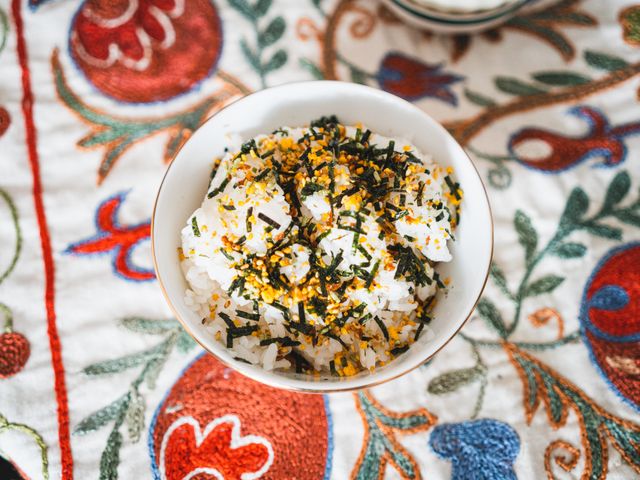
Chinese Black Garlic Rice
A simple yet flavorful stovetop rice dish where fragrant black garlic, soy sauce, and sesame oil infuse plain white rice with deep umami and subtle sweetness. Black garlic's rich, molasses-like flavor transforms ordinary rice into a restaurant-quality side that pairs beautifully with roasted proteins and stir-fried vegetables.
- Prep
- 6 min
- Cook
- 19 min
- Wait
- 5 min
- Total
- 30 min
- Makes
- About 3 cups (4 servings)
Steps
Before you start
- Gather all ingredients and measure them out to streamline the process
- Have your pot with a tight-fitting lid ready on the stove
- Use cold water for rinsing the rice to remove excess starch
Rinse rice thoroughly
- Place 1.5 cups (300 g) long-grain white rice in a fine-mesh strainer.
- Rinse under cold running water, stirring gently with your fingers, until the water runs clear—approximately 1 to 2 minutes.
- This removes excess starch that can make the rice gummy.
- Drain well and set aside.
+ Show details− Hide details
Ready when: Water runs clear
Tip: Rinsing the rice is essential for fluffy, separate grains—don't skip this step.
Prepare black garlic
- Mince 5 to 6 black garlic cloves (about 45 g total) with a knife until the pieces are about the size of small peas.
- Black garlic is much softer than fresh garlic and minces easily.
- Set the minced garlic aside.
Combine rice and liquid
- In a 3-quart (3-liter) pot, add the rinsed rice, 2.25 cups (540 ml) water, minced black garlic, and 2 tablespoons (30 ml) soy sauce.
- Stir well for about 1 minute to ensure the black garlic and soy sauce are distributed evenly throughout the rice so it will color uniformly as it cooks.
+ Show details− Hide details
Tip: Stir thoroughly so the soy sauce colors the rice evenly and the black garlic pieces don't clump together.
Bring to a boil
- Place the pot over medium-high heat.
- Bring the mixture to a rolling boil, uncovered.
- This should take 2 to 3 minutes.
- Stir occasionally and watch for the liquid to bubble vigorously across the entire surface and steam to rise.
+ Show details− Hide details
Ready when: Liquid reaches a rolling boil across the entire surface
Reduce heat and simmer covered
- Once boiling, reduce heat to medium-low.
- Cover the pot with a tight-fitting lid.
- Simmer undisturbed for exactly 15 minutes.
- During this time, the rice will absorb the liquid.
- Do not lift the lid—opening it releases steam and disrupts even cooking.
- The rice is done when the liquid is fully absorbed and the grains are tender.
+ Show details− Hide details
Ready when: Liquid is fully absorbed and rice grains are tender
Tip: Resist the urge to check on the rice; peeking lets steam escape and results in unevenly cooked grains.
Finish with sesame oil and rest
- Remove the pot from heat.
- Immediately drizzle 2 tablespoons (30 ml) sesame oil evenly over the rice.
- Cover the pot again and let it rest undisturbed for 5 minutes.
- This resting period allows the sesame oil to be absorbed and ensures the rice finishes steaming gently with residual heat.
+ Show details− Hide details
Ready when: Rice looks fluffy and glistens with a light coating of oil
Tip: The residual heat will coat each grain beautifully with fragrant sesame flavor.
Fluff and taste
- Using a fork, gently fluff the rice to separate the grains.
- Break up any clumps gently—the grains should look fluffy and lightly coated with aromatic oil.
- Taste a small spoonful and add a pinch of salt if needed.
- The soy sauce provides salinity, so taste before adding salt.
+ Show details− Hide details
Ready when: Grains are separate, fluffy, and glistening
Serve garnished
- Transfer the rice to a serving bowl or platter.
- Top with 2 thinly sliced scallions if desired—the fresh, sharp flavor of scallions provides a beautiful contrast to the deep, sweet umami of the black garlic.
- Serve warm alongside stir-fried vegetables, roasted proteins, or any Asian-inspired meal.
+ Show details− Hide details
Tip: Fresh scallions can be added at the table so they stay crisp and bright.
Good to know
Tips
- Black garlic is fermented garlic with a deep, molasses-like sweetness and complex umami—regular fresh or roasted garlic will not provide the same flavor profile, so it's worth sourcing if possible.
- The standard rice-to-water ratio (1:1.5) ensures properly cooked rice that's neither mushy nor dry. Measuring accurately makes a difference.
- Don't add any oil to the pot during boiling and simmering—adding it at the end after heat is removed ensures better flavor distribution and prevents the oil from breaking down.
- For a richer finish, add a small knob of unsalted butter (about ½ teaspoon) along with the sesame oil at the end of cooking.
Make ahead
The rice can be cooked up to 2 hours ahead and kept at room temperature. You may need to add 1–2 tablespoons of water and reheat gently in a pot over medium heat before serving to restore moisture.
Storage & reheating
Room temperature: 2 hours in an airtight container. Refrigerator: 3 days in an airtight container; reheat gently in a pot over medium heat with a splash of water, or microwave covered. Freezer: Not recommended—texture becomes starchy and gummy upon thawing.
Substitutions
- black garlic cloves → roasted garlic cloves, minced. Roasted regular garlic won't have black garlic's sweet umami depth, but provides similar intense flavor. Use the same amount. The rice will taste more savory and less complex.
- sesame oil → peanut oil or garlic-infused oil. Use the same amount. The distinctive toasted sesame flavor will be lost. To compensate, consider topping the finished rice with white or black sesame seeds, or drizzle with a splash of rice vinegar.
- soy sauce → tamari or coconut aminos. Tamari is a gluten-free soy sauce with deeper flavor; coconut aminos is lighter but has a similar salty-savory profile. Use the same amount for both.
- long-grain white rice → jasmine rice or short-grain white rice. These will work well and absorb the soy sauce beautifully. Jasmine rice may require slightly less water (about 2 cups instead of 2.25 cups). Cooking time remains the same.