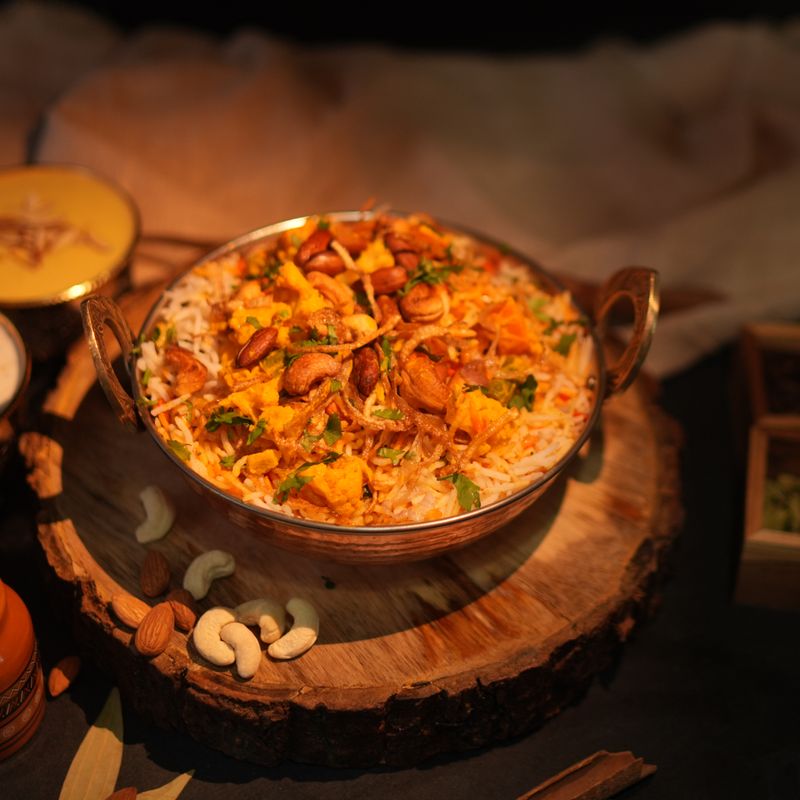
Indian Saffron Cardamom Rice
Fragrant, elegant rice with saffron's delicate color and warmth, infused with cardamom's aromatic spice and richness from ghee. This traditional Indian rice dish, called saffranwali chawal in Hindi, transforms simple basmati into something special—perfect for serving alongside curries or as the centerpiece of a rice bowl. Light enough for everyday meals, special enough for celebrations.
- Prep
- 5 min
- Cook
- 24 min
- Wait
- 8 min
- Total
- 37 min
- Makes
- 4 servings (about 3 cups cooked rice)
Steps
Before you start
- Measure and have all ingredients ready—ghee especially, since it needs to heat quickly
- Ensure your saucepan has a tight-fitting lid so steam stays trapped during simmering
- Use a fine-mesh strainer for rinsing rice to avoid losing grains
- Read the simmering step so you know not to lift the lid during cooking
Soak saffron threads
- Place 0.25 tsp (about 20–25 threads) of saffron in a small bowl or cup.
- Pour 1/4 cup (60 ml) of warm milk or water over the saffron.
- Let steep for 5 minutes.
- The liquid will turn golden yellow, and the threads will soften.
- This steeping releases the saffron's color and subtle, floral flavor so it blends evenly into the finished rice.
+ Show details− Hide details
Ready when: Liquid turns golden and threads are softened
Tip: Warm liquid helps saffron release its color faster; cold water takes much longer.
Rinse basmati rice
- Place 1 1/2 cups (288 g) of basmati rice in a fine-mesh strainer.
- Hold the strainer under cold running water and gently stir the rice with your fingers for about 2 minutes.
- Continue rinsing until the water runs mostly clear (not perfectly clear, but no longer cloudy).
- This removes excess starch, which helps keep the cooked grains separate and fluffy.
+ Show details− Hide details
Ready when: Water runs mostly clear, rice grains appear more distinct
Tip: Don't over-rinse or you'll lose some nutrients, but don't skip this step or rice can become gummy.
Toast cardamom and bay leaves
- Heat 2 tablespoons (30 g) of ghee in a 3-quart saucepan over medium heat.
- When the ghee shimmers and is fragrant (about 30 seconds), add 5–6 lightly crushed green cardamom pods and 2 bay leaves.
- Stir and toast for 1–2 minutes until the spices become fragrant and deepen slightly in color.
- If you like, you can also add 2–3 whole cloves or a 1-inch (2 cm) piece of cinnamon stick at this point.
- Do not let the spices burn—you want them aromatic, not blackened.
+ Show details− Hide details
Ready when: Spices are fragrant and slightly darker, not burned
Tip: Crushing the cardamom pods releases their essential oils and deepens the flavor. Don't skip this toasting step—it is key to the rice's aromatic quality.
Toast rice in ghee
- Add the rinsed 1 1/2 cups (288 g) of rice to the pot with the toasted spices.
- Stir continuously for 1–2 minutes, coating each grain evenly with ghee.
- You'll notice the rice becoming slightly translucent at the edges and the grains separating.
- This toasting helps the rice cook more evenly and prevents the grains from sticking together.
+ Show details− Hide details
Ready when: All rice grains are coated with ghee and appear slightly translucent at the edges
Tip: Stir constantly during this step to prevent rice from browning too much or sticking to the pot bottom.
Add water and salt, bring to boil
- Pour 3 cups (720 ml) of water into the pot.
- Sprinkle 1/2 teaspoon (3 g) of salt over the rice and water.
- Stir once or twice to distribute the salt evenly.
- Increase the heat to high.
- Watch the pot; it will come to a rolling boil in 4–5 minutes, when large bubbles break the surface steadily.
+ Show details− Hide details
Ready when: Water is at a rolling boil with large bubbles breaking the surface
Tip: Stir to dissolve salt evenly so the rice cooks with uniform seasoning. Once boiling, you're ready to reduce heat.
Simmer covered on low heat
- As soon as the water reaches a rolling boil, reduce the heat to the lowest setting on your stove.
- Immediately place a tight-fitting lid on the pot.
- Do not lift the lid for the next 15 minutes.
- The lid traps steam, which cooks the rice gently and evenly.
- You may hear a gentle sizzle or see a tiny wisp of steam escaping from the edges—this is normal and expected.
+ Show details− Hide details
Ready when: No water is visible on the surface and grains are tender
Tip: Resisting the urge to peek is crucial. Every time you lift the lid, you release steam and disrupt the cooking process. Trust the 15-minute timing.
Add saffron and let rest
- After 15 minutes of simmering, carefully remove the lid (watch for hot steam).
- The rice should look dry on the surface, and no water should be visible.
- Pour the saffron and its entire soaking liquid (including all the threads) over the rice.
- Using a fork, gently stir the rice to distribute the saffron threads and their golden liquid evenly throughout—be careful not to mash or break the cooked grains.
- Cover with the lid again and remove the pot from heat.
- Let rest undisturbed for 5 minutes.
- This resting period allows the saffron's color and flavor to infuse fully into every grain.
+ Show details− Hide details
Ready when: Saffron threads and golden liquid are distributed evenly throughout the rice
Tip: Use a fork to stir gently—a spoon can crush the delicate cooked grains. The saffron adds both visual beauty and subtle floral notes at this final stage.
Fluff and serve
- Remove the lid and fluff the rice gently with a fork, lifting and separating the grains to distribute any remaining moisture and saffron color.
- Check that all water has been absorbed and each grain is tender yet distinct, not mushy.
- Transfer the rice to a serving bowl or platter.
- If desired, garnish with a small handful of fresh chopped cilantro or toasted sliced almonds or pistachios.
- Serve warm.
+ Show details− Hide details
Ready when: Grains are fluffy, separate, and tender; no water remains in the pot
Tip: Fluffing with a fork helps redistribute any condensed moisture and breaks up any grains that may have stuck slightly together.
Good to know
Tips
- Rinsing basmati rice removes excess starch—do not skip this step or the grains will stick together and become gluey.
- The lid must fit tightly so steam doesn't escape. If your lid doesn't seal well, place a damp kitchen towel under the lid to trap steam.
- Resist peeking during the 15-minute simmer. Even a quick glance releases steam and disrupts cooking. Set a timer and trust it.
- Saffron's flavor and color are subtle; it is not like turmeric or annatto. Enjoy its delicate, slightly sweet, floral notes rather than expecting boldness.
- For special occasions, toast and grind your own cardamom pods just before cooking for the most vibrant flavor.
Make ahead
You can soak the saffron and rinse the rice up to 1 hour ahead; store them separately at room temperature. However, this rice is best made fresh for optimal flavor in the saffron and aromatics. Prepare it just before serving.
Storage & reheating
Store leftover rice covered in the refrigerator for up to 3 days. To reheat: place in a saucepan with a splash of water, cover, and warm over low heat for 3–4 minutes, stirring gently, until heated through. You can also microwave: place rice in a microwave-safe bowl, sprinkle with 1–2 tablespoons water, cover, and microwave at 50% power for 2–3 minutes. Do not freeze; freezing degrades the delicate saffron flavor and rice texture.
Substitutions
- ghee (clarified butter) → unsalted butter or neutral oil (vegetable, canola, or coconut). Ghee has a higher smoke point and deeper flavor, but butter or oil works. Ghee is traditional and worth trying if you can find it.
- green cardamom pods → Green cardamom seeds removed from the pods, or 1/8 tsp ground cardamom. Whole pods provide the most flavor; seeds are next best. Ground cardamom is convenient but slightly less aromatic—reduce to 1/8 teaspoon since it's more concentrated.
- saffron threads → 1/4 tsp ground turmeric. Turmeric will not replicate saffron's subtle floral flavor, but it adds color and warmth. The dish will taste different, but still good.
- basmati rice, uncooked → jasmine rice, long-grain white rice, or other long-grain white variety. Basmati is ideal because of its length and light, separate grains. Jasmine is aromatic and works well. Other long-grain white rice is acceptable but less fragrant.
More rice sides
See all →


Find more like this
- Meal
- Dinner
- Cuisine
- Indian
- Main ingredient
- Basmati Rice
- Method
- Stovetop
- Occasion
- Family Gatherings