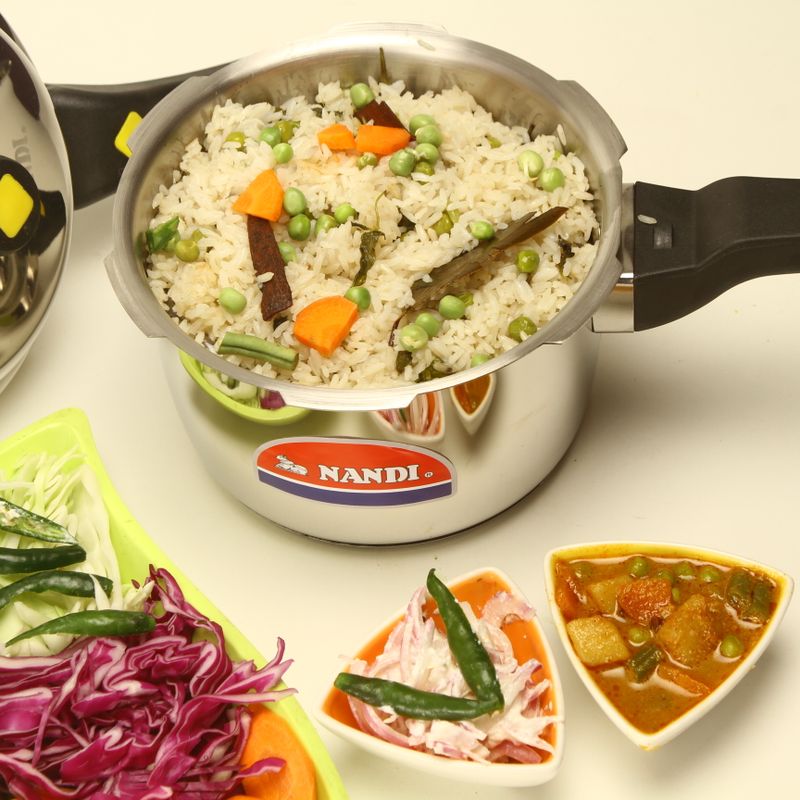
Indian Vegetable Pulao
Fragrant basmati rice simmered with ghee-toasted whole spices, golden onions, carrots, green beans and sweet peas. It's a one-pot, mildly spiced pulao that works as a weeknight main with raita or as a side to any curry.
- Prep
- 15 min
- Cook
- 31 min
- Wait
- 40 min
- Total
- 1 hr 26 min
- Makes
- About 6 cups (4 generous servings)
Steps
Before you start
- Start the rice soaking 30 minutes before you want to cook; this is what gives long, separate grains.
- Chop all vegetables before you turn on the stove. Once the spices hit the ghee, things move quickly.
- Use a pot with a tight-fitting lid. If the lid is loose, lay a clean kitchen towel under it to trap steam.
- Don't lift the lid during the simmer and rest. The steam does the cooking.
Rinse and soak rice
- Put the basmati in a medium bowl and cover with cold water.
- Swirl with your fingers, then drain through a fine-mesh sieve.
- Repeat 3 to 4 times until the water runs mostly clear.
- Return the rice to the bowl, add the 3 cups (710 ml) soaking water, and let it soak for 30 minutes.
- Drain well in the sieve for at least 5 minutes before cooking.
+ Show details− Hide details
Ready when: Grains look opaque white and are slightly softer; they snap easily when pressed
Tip: Drain thoroughly. Extra water clinging to the rice makes the pulao mushy.
Prep the vegetables
- While the rice soaks, slice the onion, grate the ginger, mince the garlic, slit the chiles, dice the carrot into ¼-inch (6 mm) pieces, and cut the green beans into ½-inch (1.25 cm) pieces.
- Keep the carrot and beans together.
- Leave the peas in the freezer until needed.
+ Show details− Hide details
Ready when: Carrot and bean pieces are about the same size so they cook at the same rate
Temper whole spices
- Set the saucepan over medium heat and add the ghee.
- When it melts and shimmers, add the bay leaf, cinnamon stick, cardamom, cloves, peppercorns and cumin seeds.
- Stir for 45 to 60 seconds.
+ Show details− Hide details
Ready when: Cumin seeds sizzle and darken slightly, and the kitchen smells strongly of spice
Tip: If the spices smoke or turn black, the heat is too high. Lift the pan off the burner for a few seconds.
Brown the onions
- Add the sliced onion and a pinch of the measured salt.
- Cook, stirring every 30 seconds or so, for 6 to 7 minutes until the onion is soft and golden brown at the edges.
+ Show details− Hide details
Ready when: Onion is soft, translucent, and golden brown at the edges
Tip: Well-browned onion gives the pulao its subtle sweetness. Don't rush this step, but don't let it turn dark brown or it will taste bitter.
Add ginger, garlic, chiles
- Stir in the ginger, garlic and slit green chiles.
- Cook for about 1 minute, stirring constantly.
+ Show details− Hide details
Ready when: Raw garlic smell is gone and the mixture smells sweet and fragrant, with no browning
Sauté carrots and beans
- Add the diced carrot and green beans.
- Stir and cook for 2 to 3 minutes to coat the vegetables in the spiced ghee.
+ Show details− Hide details
Ready when: Carrot pieces look glossy and slightly brighter in color
Toast the rice
- Add the drained rice.
- Gently fold it into the vegetables with a spatula for 1 to 2 minutes so each grain is coated in ghee.
+ Show details− Hide details
Ready when: Grains look slightly translucent at the edges and smell nutty
Tip: Fold gently. Aggressive stirring breaks the delicate soaked grains.
Add water and boil
- Pour in the 2¼ cups (530 ml) cold water and add the remaining salt and the frozen peas.
- Stir once to spread the rice evenly across the pot and scrape up anything stuck on the bottom.
- Raise the heat to high and bring to a full boil, about 3 to 4 minutes.
- Taste the liquid; it should taste pleasantly salty, like light broth.
+ Show details− Hide details
Ready when: Liquid is at a steady rolling boil and the water level is just above the rice
Tip: Adjust salt now; you can't fix it after the rice has absorbed the water.
Simmer covered
- Cover with the tight-fitting lid and reduce the heat to the lowest setting.
- Cook undisturbed for 12 minutes.
- Don't lift the lid.
+ Show details− Hide details
Ready when: Steam escapes from the lid edges and little to no water is visible when you check after resting; tiny steam holes appear on the surface
Tip: If your burner runs hot, use a heat diffuser or place the pot on the smallest burner to prevent scorching.
Rest off the heat
- Turn off the heat and leave the pot covered and undisturbed for 10 minutes.
+ Show details− Hide details
Ready when: No liquid pools at the bottom of the pot when you tilt it slightly; the rice looks dry and fluffy
Tip: Resting is essential. Fluffing too early makes the grains sticky and likely to snap.
Fluff and finish
- Uncover.
- Pick out the bay leaf and cinnamon stick if you like (the other whole spices can stay but warn guests).
- Sprinkle the garam masala, lemon juice and cilantro over the rice.
- Fluff gently with a fork, lifting from the bottom to the top, until everything is evenly distributed.
- Serve hot.
+ Show details− Hide details
Ready when: Grains are long, separate and tender with a slight bite; vegetables are tender
Tip: Use a fork, not a spoon, to fluff; a spoon mashes the grains.
Good to know
Tips
- Use aged basmati if you can find it. It cooks into longer, firmer, more separate grains than new-crop or regular long-grain rice.
- The water ratio here (1½ cups water per 1 cup soaked rice) accounts for the moisture released by the vegetables. If you skip soaking, increase the water to 2¾ cups (650 ml) and simmer for 15 minutes.
- Keep the heat truly low during the simmer. A heavy-bottomed pot prevents scorching on the bottom.
- Serve with cucumber raita, a simple dal, or papad for a complete meal.
Make ahead
"Rinse and soak the rice up to 2 hours ahead, then drain well. You can chop the onion, carrot and green beans a day ahead and refrigerate them in airtight containers. The finished pulao is best fresh, but it reheats well."
Storage & reheating
"Room temperature: no more than 1 hour after cooking. Refrigerator: cool quickly, then store in an airtight container for up to 3 days. Freezer: up to 2 months in a sealed freezer container or bag. Reheat in a covered microwave-safe dish or a covered pan with 1 to 2 tablespoons of water per serving, heating until steaming hot all the way through, about 2 to 3 minutes in the microwave, stirring halfway."
Substitutions
- ghee → neutral oil or a mix of oil and unsalted butter. Ghee gives the most authentic nutty flavor. Use the same quantity; for a vegan version, use oil only.
- frozen green peas → fresh shelled peas, corn kernels, or diced bell pepper. Fresh peas may need 2 to 3 extra minutes; add them at the same time as the water.
- medium carrot → diced potato or cauliflower florets. Cut into ½-inch (1.25 cm) pieces. Potato may need to be diced smaller (¼ inch) so it cooks in time.
- garam masala → ½ tsp ground cumin plus a pinch of ground cinnamon. Gives a similar warm finish if you don't have garam masala.
More pilaf
See all →


Find more like this
- Meal
- Dinner
- Cuisine
- Indian
- Main ingredient
- Basmati RiceCarrots
- Method
- Stovetop