Japanese Furikake Scallion Rice
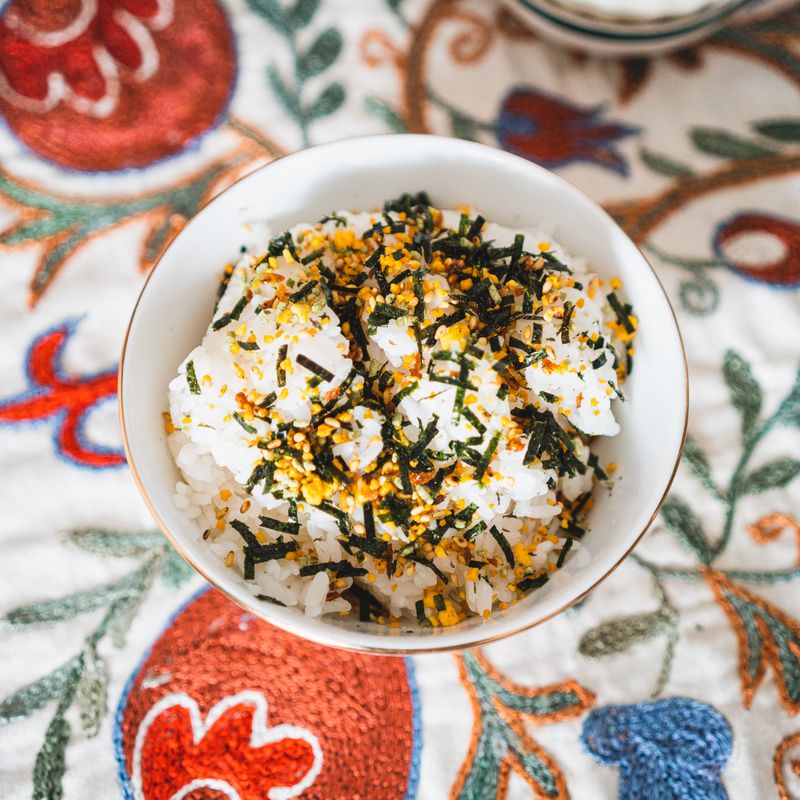
A simple Japanese-inspired rice side dish finished with savory furikake seasoning, fresh scallions, and butter. Ready in under 30 minutes, it's the perfect complement to stir-fries, grilled proteins, or curry dishes. The umami-rich furikake blend—made from sesame seeds, seaweed, fish flakes, and other seasonings—brings depth to tender, fluffy rice.
- Prep
- 5 min
- Cook
- 20 min
- Wait
- 5 min
- Total
- 30 min
- Makes
- 4 servings (about 3 cups cooked rice)
Steps
Before you start
- Measure 2 cups of cold water and have it ready
- Use a medium saucepan with a tight-fitting lid (2–3 quart capacity)
- Have a fork or rice paddle ready for fluffing
- Gather all ingredients before starting; you'll work quickly once the rice goes in the pot
Rinse the rice
- Place the white rice in a fine-mesh strainer and rinse under cold running water, stirring gently with your fingers for about 20 seconds, until the water runs relatively clear.
- This removes excess starch and helps the cooked rice stay fluffy with separated grains.
+ Show details− Hide details
Ready when: Water runs mostly clear
Bring water to a boil
- Pour the 2 cups of cold water into a medium saucepan (2–3 quart capacity) and bring to a rolling boil over high heat, about 5 minutes.
+ Show details− Hide details
Ready when: Water is at a rolling boil with vigorous bubbles
Add rice and stir
- Once the water is at a rolling boil, add the rinsed rice and stir once or twice with a fork to prevent the grains from sticking to the bottom.
- The boiling will briefly stop.
- Let it return to a boil, about 1 minute.
+ Show details− Hide details
Ready when: Water is at a boil again
Tip: Stir gently and only once or twice to avoid crushing the delicate rice grains.
Reduce heat and simmer covered
- As soon as the water returns to a boil, immediately reduce the heat to low and cover the saucepan with the tight-fitting lid.
- Simmer undisturbed for 15–17 minutes, until all the water is absorbed.
- Peek under the lid only once near the end to check if any liquid remains (avoid lifting the lid repeatedly).
+ Show details− Hide details
Ready when: No liquid visible in the pot; rice is tender and fluffy
Tip: Don't lift the lid frequently during cooking—steam escapes and extends the cooking time. Trust the timing; 15–17 minutes on low heat is correct.
Rest the rice
- Remove the pot from the heat and let it sit, covered, for 5 minutes.
- This allows residual steam to finish cooking the rice evenly and any remaining moisture to be fully absorbed.
+ Show details− Hide details
Ready when: 5 minutes have passed
Fluff the rice
- Remove the lid and gently fluff the rice with a fork or rice paddle, stirring and lifting the grains to separate them.
- Break up any small clumps gently with the fork.
- The rice should be light and fluffy.
+ Show details− Hide details
Ready when: Rice grains are separated and fluffy
Tip: Use a fork or rice paddle rather than a spoon to avoid crushing the grains.
Stir in butter
- Add the 2 tablespoons (30 g) of unsalted butter to the warm rice and stir gently until the butter is completely melted and evenly distributed throughout.
+ Show details− Hide details
Ready when: Butter is fully melted and mixed in
Fold in furikake and scallions
- Fold 3 tablespoons (18 g) of furikake seasoning and the chopped scallions gently into the rice, stirring with a light hand to distribute the seasonings and fresh onions evenly.
- Taste the rice, and if desired, add a small pinch of salt, though furikake is already quite salty.
- You can also add more furikake (up to 1 additional tablespoon/6 g) if you prefer stronger seasoning.
+ Show details− Hide details
Ready when: Furikake and scallions are evenly distributed throughout; rice looks speckled and aromatic
Tip: Fold rather than vigorously stir to keep the grains intact and the rice fluffy.
Good to know
Tips
- Furikake contains salt, so always taste the rice before adding extra salt. Different furikake brands vary in saltiness, so this is important.
- For extra richness and visual appeal, you can toast 1–2 tablespoons of white sesame seeds in a dry skillet over low heat for 2 minutes before sprinkling on top of the finished rice.
- This rice pairs beautifully with miso-glazed salmon, teriyaki chicken, or simple vegetable stir-fries.
- To make ahead for a bento box or lunch, spread the finished rice on a parchment-lined sheet to cool, then pack in an airtight container. The rice tastes great at room temperature and won't clump in a lunch box.
Storage & reheating
Refrigerate in an airtight container for up to 3 days. Reheat in the microwave (add a tablespoon of water, cover, and heat for 1–2 minutes, stirring halfway) or on the stovetop over low heat, stirring in a splash of water to revive moisture. The rice is best served fresh but can be enjoyed at room temperature as a rice salad.
Substitutions
- short- or medium-grain white rice → Long-grain white rice (such as jasmine or basmati). Use 2.5 cups water per 1 cup long-grain rice for the same ratio. The cooked texture will be slightly drier and more separate.
- unsalted butter → Vegetable oil or neutral oil (2 tablespoons). Provides a lighter, less rich flavor while keeping the rice fluffy.
- fresh green onions (scallions), white and light green parts → Fresh cilantro, chives, or a combination of both. Use about 3 tablespoons chopped fresh herbs for a different aromatic profile.
- Japanese furikake seasoning blend → Goma furikake (sesame-only furikake), aonori, or a pinch of MSG-free umami seasoning blend. Adjust amount to taste; sesame furikake is nuttier, while aonori is more seaweed-forward.