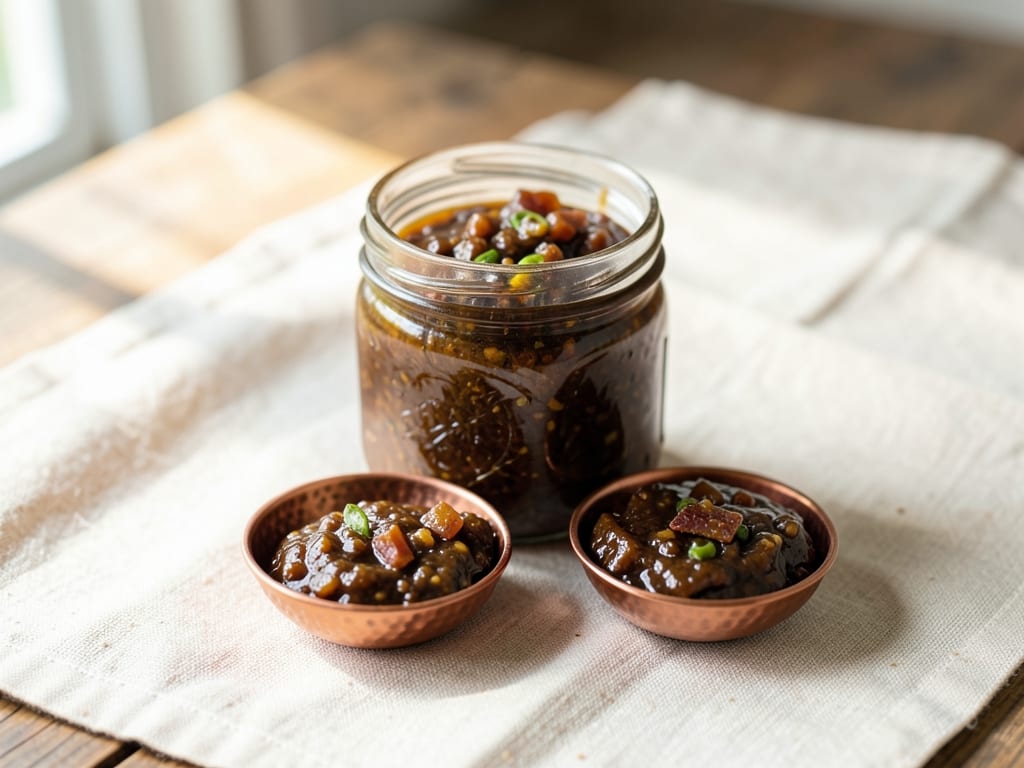
Kerala Inji Puli (Ginger Tamarind Chutney)
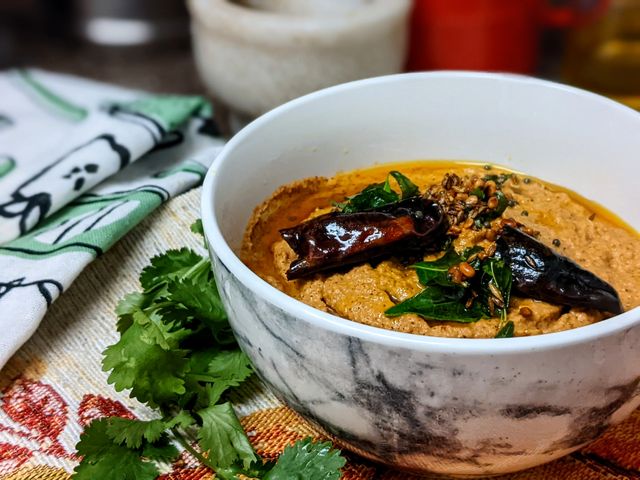
Puliyinji is the sweet, sour, spicy and gingery relish that sits on every Kerala sadya feast leaf. Fresh ginger is fried in coconut oil, then simmered with tamarind, jaggery and green chilies into a glossy, dark, jammy condiment that keeps for weeks.
- Prep
- 25 min
- Cook
- 30 min
- Wait
- 30 min
- Total
- 1 hr 25 min
- Makes
- About 1½ cups (360 ml), 12 servings of 2 tablespoons
Steps
Before you start
- Soak the tamarind in hot water 30 minutes before you start cooking so it softens fully.
- Peel the ginger by scraping with a spoon, then mince very finely by hand; a food processor makes a pulp that turns pasty.
- Taste your jaggery: if very dark and strong, start with the lower amount and adjust at the end.
- Have everything measured before heating the oil, because the tempering moves quickly.
Soak the tamarind
- Put the torn tamarind in a small bowl and pour over 1 cup (240 ml) hot water.
- Let it soak 30 minutes until very soft.
+ Show details− Hide details
Ready when: Pieces crush easily between your fingers
Extract the pulp
- Squeeze and mash the tamarind with your fingers until the pulp dissolves into the water.
- Pour through a fine-mesh sieve into a bowl, pressing out all the pulp with a spoon.
- Discard fibers and any seeds.
- You should have about 1 cup (240 ml) thick, brown tamarind liquid.
+ Show details− Hide details
Ready when: Liquid is thick like thin gravy, with no lumps
Tip: Scrape the underside of the sieve; that's the best pulp.
Prep the aromatics
- Peel the ginger by scraping with a spoon, then mince it very finely, about 1/16 inch (2 mm) pieces, to get ¾ cup (100 g).
- Finely chop the chilies and strip the curry leaves from the stem.
- Grate or chop the jaggery.
+ Show details− Hide details
Ready when: Ginger pieces are tiny and uniform
Tip: Fine, even mincing means the ginger cooks through and the chutney isn't stringy.
Temper the mustard
- Heat the coconut oil in a heavy saucepan over medium heat for about 1 minute.
- Add the mustard seeds and cover loosely.
- Cook 30–60 seconds until they pop and crackle.
+ Show details− Hide details
Ready when: Most seeds have popped and the crackling slows
Tip: Don't let the seeds scorch; they turn bitter.
Fry ginger and chilies
- Reduce heat to medium-low.
- Add the ginger, green chilies, curry leaves and asafoetida if using.
- Stir constantly for 5–6 minutes until the ginger loses its raw smell, darkens slightly to pale golden, and smells sweet and toasty.
+ Show details− Hide details
Ready when: Ginger is pale golden and fragrant, not browned
Tip: Browned ginger tastes bitter; lower the heat if it colors fast.
Add the spices
- Stir in the chili powder and turmeric and cook for 15 seconds, just until the oil turns red.
- Immediately pour in the tamarind liquid, which stops the spices burning.
- It will sputter.
+ Show details− Hide details
Ready when: Oil is tinted red and the pan is deglazed
Tip: Ground spices burn in seconds, so have the tamarind ready.
Simmer with jaggery
- Add the jaggery and salt.
- Raise heat to medium and bring to a gentle bubble, stirring until the jaggery dissolves, about 2 minutes.
- Reduce to medium-low and simmer uncovered 15–18 minutes, stirring every few minutes and scraping the bottom, until the chutney is thick and jammy.
+ Show details− Hide details
Ready when: A spoon dragged through leaves a trail that closes slowly, and oil shimmers at the edges
Tip: It thickens more as it cools, so stop when it is still slightly looser than you want.
Adjust and finish
- Taste.
- Add a pinch more salt if flat, or 1–2 tablespoons of water if it is too thick or too sour-sharp.
- Simmer 1 minute more.
- It should taste sweet, sour, salty and fiery in balance.
- Remove from heat.
+ Show details− Hide details
Ready when: Flavors are balanced and the texture is spoonable
Cool and jar
- Let the chutney cool to room temperature, about 20 minutes, then spoon into a clean, dry jar.
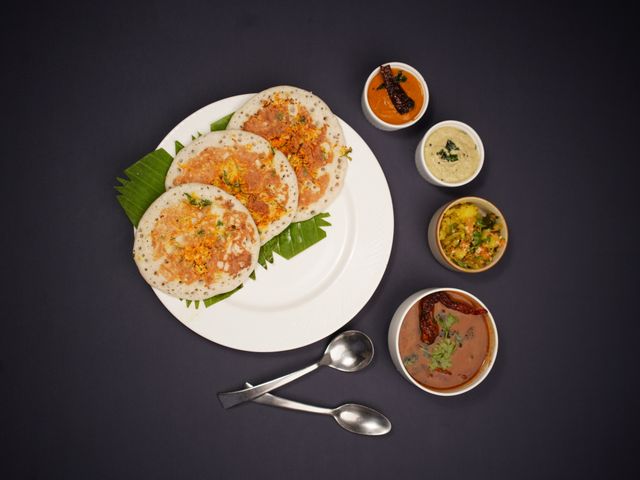
- Flavor deepens after a few hours, so serve with rice, curd rice, or alongside a sadya.
+ Show details− Hide details
Ready when: Thick, glossy and dark brown
Tip: Always use a dry spoon to serve to prevent spoilage.
Good to know
Tips
- Mince the ginger by hand for the best texture; a blender makes the chutney pasty.
- Cook slowly over medium-low heat so the tamarind reduces without scorching on the bottom.
- Young, tender ginger is less fibrous; if using mature ginger, mince even finer.
- The chutney should taste intensely sweet-sour-hot since it is eaten in small amounts.
Make ahead
Best made 1 day ahead; the flavors mellow and meld overnight. Keeps well for sadya or meal prep.
Storage & reheating
Room temperature: up to 2 days in a clean, dry covered jar. Fridge: up to 3 weeks in an airtight jar, topped with a thin film of coconut oil. Freezer: up to 3 months in small portions; thaw in the fridge overnight and stir. Serve cold or at room temperature, or warm gently in a pan.
Substitutions
- jaggery → dark brown sugar. Use the same weight; flavor is slightly less earthy.
- seedless tamarind pulp block → tamarind concentrate. Use 2 tablespoons concentrate mixed into 1 cup water; skip the soaking.
- coconut oil → neutral oil such as sunflower. Works but loses the characteristic Kerala aroma.
- green chilies (Thai or serrano) → 1 dried red chili, broken. Gives a different, smokier heat.
More pickles & chutneys
See all →
Find more like this
- Meal
- Lunch
- Cuisine
- South Indian
- Method
- Stovetop
- Quick & Easy
- EasyOne-PotMake Ahead