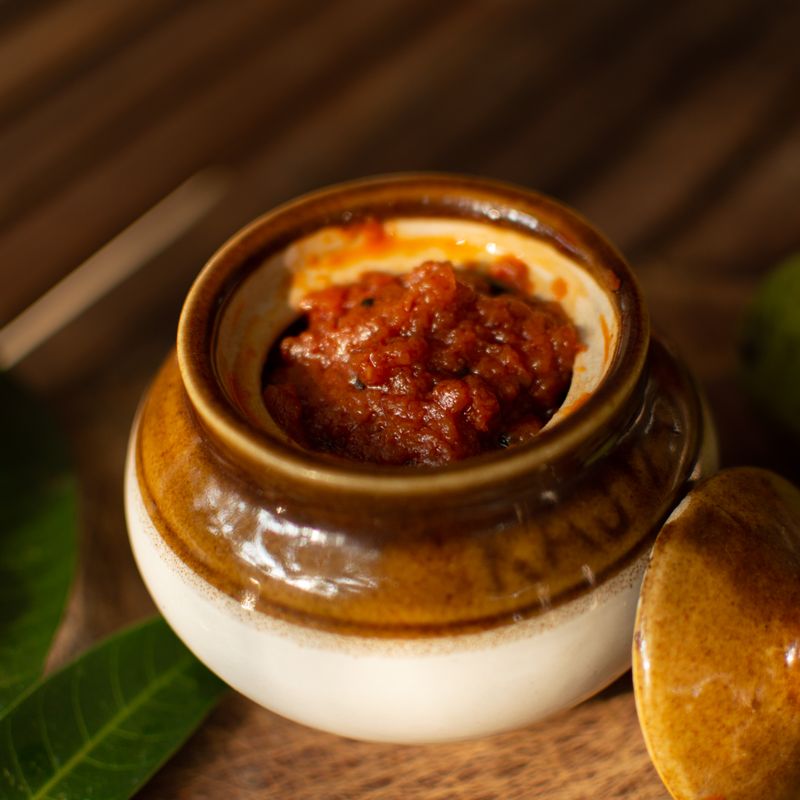
South Indian Lime Pickle (Nimbu Achar)
Tangy, spicy, salt-cured lime pickle softened by a few days of sun-aging and finished with a hot sesame oil tempering of mustard, fenugreek and asafoetida. Keeps for a year and gets mellower and deeper with time.
- Prep
- 40 min
- Cook
- 10 min
- Wait
- 15 days
- Total
- 15 days
- Makes
- About 1 quart (1 liter) pickle, enough for 24 servings of 2 tablespoons
Steps
Before you start
- Sterilize a 1-quart (1 liter) glass jar with a non-metal lid: wash in hot soapy water, rinse, then dry completely in a 250°F (120°C) oven for 10 minutes. Any moisture can cause mold.
- Wash limes well and dry them thoroughly with a clean towel. Choose thin-skinned, unwaxed limes if possible.
- Timeline: about 1 week of salt curing in the jar (shaken daily), then spicing, then 1 to 2 weeks of sun-aging or warm-spot aging. Plan on roughly 3 weeks to full flavor (21,600 minutes of waiting is about 15 days).
- Use only dry, clean spoons and hands for every step. Use non-reactive bowls (glass, ceramic, stainless).
Prep the limes
- Make sure the limes are completely dry.
- Cut each lime in half lengthwise, then each half into quarters, giving 8 small wedges per lime.
- Pick out and discard all seeds, which turn bitter.
- Collect any juice that runs onto the board and add it to the bowl.
+ Show details− Hide details
Ready when: All wedges are seedless and roughly even in size.
Tip: Use a dry knife and board; water introduced now can invite mold later.
Salt and pack
- In a large non-reactive bowl, toss the lime wedges with the salt and turmeric until every piece is coated.
- Pack firmly into the sterilized 1-quart jar, pressing down so juice starts to release.
- Leave about 1 inch (2.5 cm) of headspace and seal.
+ Show details− Hide details
Ready when: Limes are tightly packed and juice begins pooling at the bottom.
Tip: Skip iodized salt, which can darken the pickle and give a harsh taste.
Cure in the sun
- Set the jar on a sunny windowsill or in a warm spot (about 80–90°F / 27–32°C) for 7 days.
- Shake or turn the jar once a day so the brine bathes all pieces.
- Limes should be submerged in their own juice by day 3.
+ Show details− Hide details
Ready when: Peels are soft and olive-toned, wedges can be squeezed easily, and brine covers the limes.
Tip: If limes stick out of the brine after day 3, press them down with a clean spoon or add a splash of fresh lime juice.
Grind the fenugreek
- Heat a small dry skillet over medium-low heat.
- Add the 2 tsp fenugreek seeds and toast, stirring constantly, for 1 to 2 minutes until golden and fragrant.
- Tip onto a plate and cool completely, then grind to a fine powder.
+ Show details− Hide details
Ready when: Seeds are light golden and smell nutty; dark brown means bitter.
Tip: Do not over-toast, as fenugreek turns acrid very quickly.
Mix the spices
- Open the jar and tip the cured limes and brine into the large dry bowl.
- Add the ground fenugreek and chili powder and stir until the limes are evenly coated in a thick red paste.
+ Show details− Hide details
Ready when: No dry pockets of spice remain and the limes look uniformly red.
Temper the oil
- Heat the sesame oil in the small skillet over medium heat for about 2 minutes until it shimmers and a mustard seed dropped in sizzles right away.
- Add the mustard seeds and whole fenugreek.
- When the mustard seeds pop (about 30 seconds), remove from heat, stir in the asafoetida for 5 seconds, and let the oil cool.
+ Show details− Hide details
Ready when: Mustard seeds have popped and the oil smells nutty and pungent; fenugreek is just golden.
Tip: Pour the oil over the limes only when fully cool, or the limes will turn mushy and dark.
Combine and jar
- Pour the cooled tempered oil, with the seeds, over the spiced limes and stir thoroughly.
- Pack back into the sterilized jar, pressing down so the limes are submerged.
- Wipe the rim with a dry cloth.
+ Show details− Hide details
Ready when: A thin layer of oil sits over the limes.
Tip: Add a little more cooled sesame oil to cover if the limes peek above the surface.
Age the pickle
- Cover the jar mouth with a clean muslin cloth secured with a rubber band for the first 2 days to let moisture escape, then seal with the lid.
- Keep in a sunny or warm spot for 7 more days, shaking gently once a day.
- Taste after a week; the peel should be tender and the flavor balanced.
+ Show details− Hide details
Ready when: Peels are fully tender with no bitter raw edge, and the oil is deep red.
Tip: Refrigerate right away if you see any fuzzy white or green mold on the surface or notice a sour-yeasty smell; discard if mold appears.
Good to know
Tips
- Keep everything bone dry: water is the main cause of mold in oil pickles.
- Pickle may taste harsh or bitter at first; give it the full aging time.
- Use a non-metal lid, since the acidic brine corrodes bare metal.
- Serve in small amounts, about 1 teaspoon per plate, with curd rice, dal or parathas.
Make ahead
"Entire recipe is a make-ahead preserve. The pickle tastes best after 3 weeks and improves for several months."
Storage & reheating
Store in the sealed jar in a cool, dark cupboard for up to 2 months, or refrigerate for up to 12 months. Always use a dry clean spoon, and keep limes covered with oil or brine. Not recommended for freezing. Serve at room temperature.
Substitutions
- sesame oil (cold-pressed, such as gingelly oil) → Mustard oil (heated until just smoking, then cooled). Gives a sharper, North Indian-style pickle.
- limes → Lemons (about 8 medium). Quarter or cut into 8 pieces; lemons are larger and may need an extra day or two of curing.
- Indian red chili powder (Kashmiri for color, or hotter to taste) → Paprika mixed with a little cayenne. Use 3 tbsp paprika plus 1 tsp cayenne for a milder version.
- asafoetida (hing) powder → 1 small clove finely minced garlic. Add to the oil with the mustard seeds; the pickle will keep a little less long.
More pickles & chutneys
See all →

Find more like this
- Meal
- Lunch
- Cuisine
- South Indian
- Method
- Stovetop
- Quick & Easy
- Make Ahead