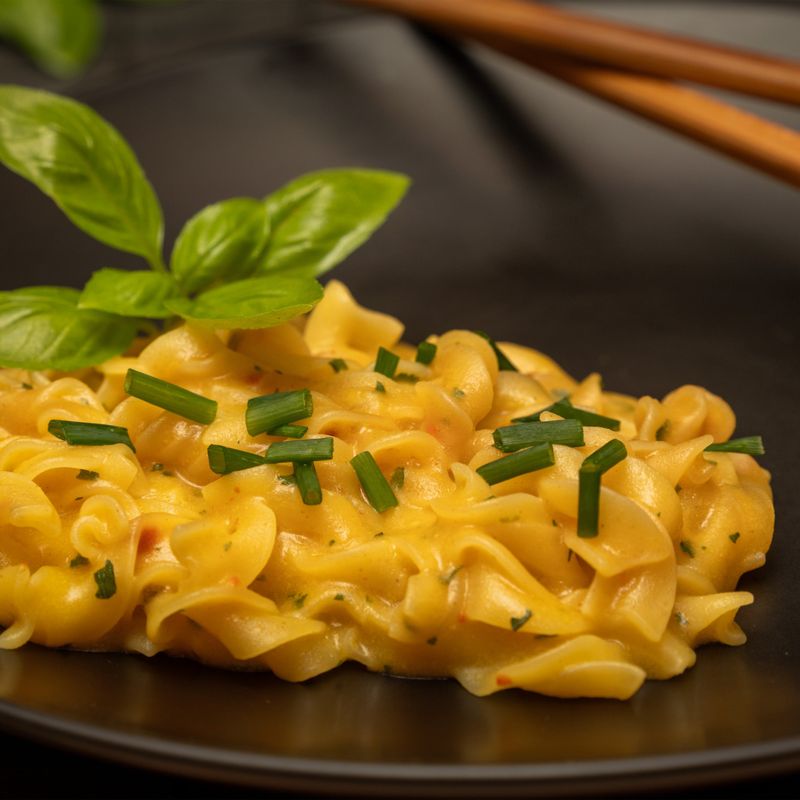
Italian Roman Pasta e Ceci
A rustic Roman soup of tender chickpeas and small ditalini pasta in a savory tomato broth enriched with garlic, rosemary, and olive oil. This humble dish is the kind of food Romans have eaten for generations—thickened, warming, and best finished with a generous drizzle of your finest olive oil.
- Prep
- 15 min
- Cook
- 36 min
- Total
- 51 min
- Makes
- Serves 4 (about 6 cups total)
Steps
Before you start
- Drain and rinse the canned chickpeas under cold water
- Mince the garlic and dice the onion before you start cooking
- Use fresh rosemary if possible—it makes a noticeable difference in flavor
- Have all ingredients measured and ready; the cooking moves quickly
Sauté aromatics
- Heat 3 tbsp (45 ml) olive oil in a large heavy-bottomed pot (5–6 quart) over medium heat.
- Add 4 minced garlic cloves and cook, stirring, for 30–45 seconds until fragrant and golden.
- Add the diced onion (if using) and sauté, stirring occasionally, for 2–3 minutes until softened and starting to turn translucent.
+ Show details− Hide details
Ready when: Garlic is fragrant and onion is translucent
Tip: Don't let the garlic brown; it will taste bitter and overpower the subtle flavors of the dish.
Add tomatoes and rosemary
- Pour in the 28 oz (800 g) can of crushed tomatoes with all its juice.
- Add 2 fresh rosemary sprigs (or 1 tsp dried rosemary).
- Stir well and bring to a simmer over medium heat.
+ Show details− Hide details
Ready when: Mixture is simmering gently with small bubbles breaking the surface
Tip: Cooking the tomatoes before adding the broth concentrates their flavor and adds richness to the final soup.
Add broth and chickpeas
- Pour in 4 cups (960 ml) vegetable or chicken broth.
- Add the drained and rinsed chickpeas (about 3.5 cups).
- If using, add 1 small Parmesan rind for additional depth of flavor.
- Increase heat to medium-high and bring everything to a simmer, stirring occasionally.
+ Show details− Hide details
Ready when: Small steady bubbles break the surface across the pot
Simmer to meld flavors
- Reduce heat to medium-low and simmer gently, stirring occasionally, for 10 minutes.
- This allows the aromatics, herbs, tomato, and chickpeas to blend and develop deeper flavor.
- Taste the broth and season with kosher salt and freshly ground black pepper to your liking.
+ Show details− Hide details
Ready when: Broth is at a gentle simmer with only occasional bubbles
Tip: Taste as you go; it's easier to add salt than to remove it.
Cook pasta in broth
- Add 1 cup (100 g) uncooked ditalini pasta directly to the simmering broth.
- Stir well and return to a gentle simmer.
- Cook, stirring every 2–3 minutes to prevent sticking, for 8–9 minutes (or according to package directions, but aim for 1 minute less than suggested).
- The broth will thicken as the pasta releases its starch and absorbs the liquid.
+ Show details− Hide details
Ready when: Pasta is tender with a slight firmness to the bite; broth has thickened and coats the pasta and chickpeas
Tip: Cook the pasta slightly underdone—it will continue to soften as the soup cools and sits, and you can always add more broth to loosen it.
Finish and serve
- Remove the pot from heat.
- Discard the rosemary sprigs and Parmesan rind (if used).
- Taste and adjust seasoning with additional salt, pepper, and red pepper flakes (about 1/4 tsp for gentle heat).
- Ladle the soup into bowls and drizzle each serving generously with additional extra-virgin olive oil.
- Serve hot, optionally topped with grated Parmesan cheese and accompanied by thick slices of crusty bread.
+ Show details− Hide details
Tip: A generous final drizzle of high-quality extra-virgin olive oil is traditional and truly transforms the dish—don't skip it.
Good to know
Tips
- Don't skip the initial sautéing of the garlic and onion; those few minutes build a flavorful foundation for the entire soup.
- For a slightly creamier version, use the back of a wooden spoon to mash a handful of the cooked chickpeas against the side of the pot just before serving—this releases their starch and thickens the broth naturally.
- A small Parmesan rind simmered in the broth adds surprising depth with almost no extra work; save rinds in the freezer for future soups.
- This is a peasant dish meant to be hearty and unpretentious—serve it in shallow bowls with crusty bread for soaking up every drop.
Make ahead
This soup actually improves as it sits. Make it up to 2 days ahead and refrigerate; the pasta will soften further and absorb more of the flavorful broth. Reheat gently on the stovetop over medium heat, stirring occasionally and adding a splash of water or broth if needed to loosen the consistency.
Storage & reheating
Room temperature: up to 2 hours. Refrigerator: up to 3 days in an airtight container. Freezer: up to 2 months (the pasta will soften further but the soup remains delicious). Reheat: Gently warm on the stovetop over medium heat, adding a splash of water or broth to restore a soup-like consistency if it has thickened too much.
Substitutions
- ditalini pasta → orzo, small shells, or broken spaghetti. Any small pasta works; use the same weight and cooking time as the ditalini.
- canned chickpeas → cooked dried chickpeas. Use about 2 cups of cooked chickpeas (soaked overnight and simmered until tender, about 1.5 hours) in place of the canned variety.
- fresh rosemary sprigs → 1 tsp dried rosemary, fresh thyme, or oregano. Dried rosemary can be harsh; add it with the tomatoes and strain it out at the end, or use fresh herbs for a more delicate flavor.
- canned crushed tomatoes → 1 lb (450 g) fresh tomatoes, peeled and chopped. Use fresh tomatoes in late summer when they're in season. Peel them by blanching in boiling water for 30 seconds, then shocking in ice water.
More noodle soups
See all →


Find more like this
- Meal
- Dinner
- Cuisine
- Italian
- Diet
- HalalSugar-Free
- Method
- Stovetop