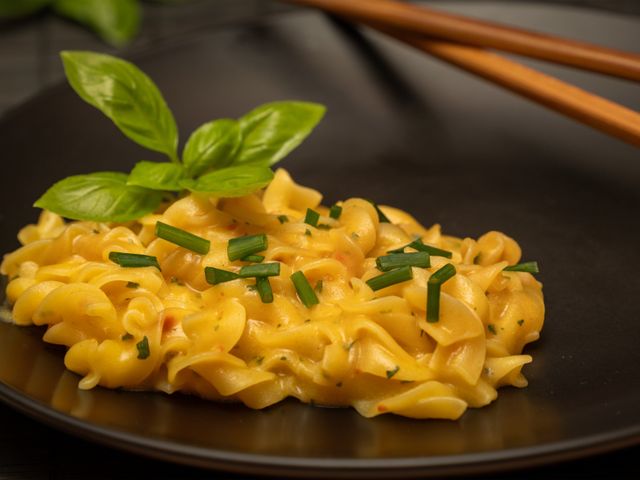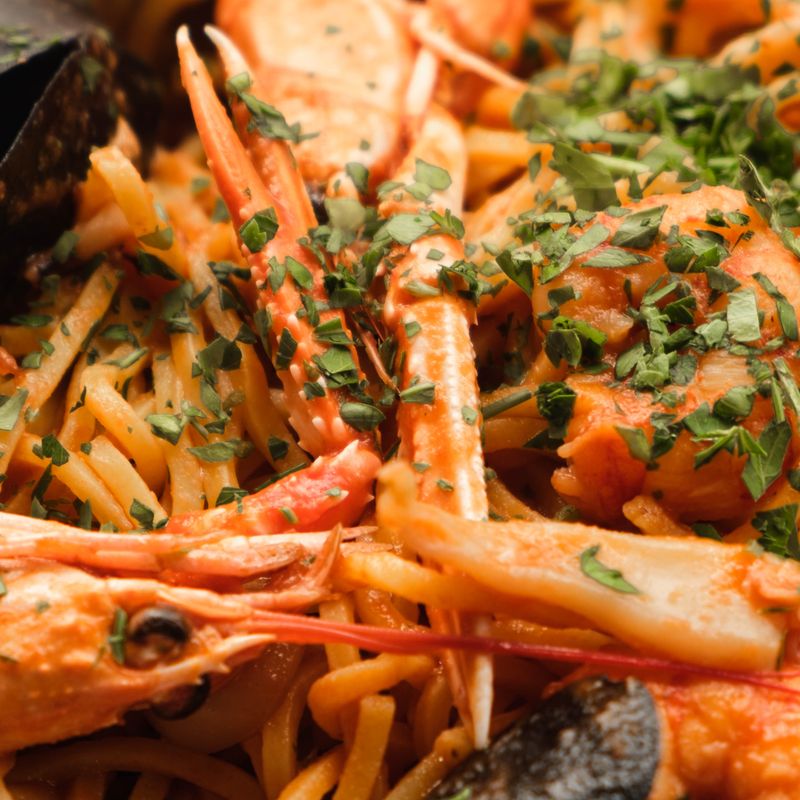
Italian Ligurian Seafood Pasta Soup
A light, elegant seafood soup inspired by the Ligurian coast, featuring fresh shrimp, squid, white fish, and mussels gently simmered in a fragrant tomato broth with garlic, white wine, and fresh basil. Tender pappardelle pasta adds substance without heaviness. This rustic yet refined dish comes together in under an hour and lets the quality of the seafood shine through without cream or heavy sauces. Perfect as an elegant first course or a showstopping main course.
- Prep
- 20 min
- Cook
- 18 min
- Wait
- 18 min
- Total
- 56 min
- Makes
- 4 main-course servings or 6 appetizer servings
Steps
Before you start
- Inspect and clean the mussels: rinse under cold running water and discard any with cracked shells or that don't close when tapped. Remove the fibrous beard by pinching and pulling toward the hinge.
- Pat the shrimp and fish dry with paper towels and let them sit at room temperature for 10 minutes before cooking for more even, consistent doneness.
- Peel and devein the shrimp if not already done.
- Prep all ingredients (thinly slice the garlic, dice the shallot, chop the basil and parsley, break the pasta into pieces, cut the fish, slice the squid) and arrange them within reach; the cooking happens quickly once you start.
- Use good-quality fish stock for the best flavor; homemade or frozen stock works far better than bouillon cubes.
Sauté aromatics
- Heat the 3 tbsp extra virgin olive oil in your 6-quart (5.7 L) Dutch oven or large pot over medium heat.
- Once shimmering (about 1–2 minutes), add the 4 thinly sliced garlic cloves and 1 medium diced shallot.
- Cook, stirring frequently with a wooden spoon, for 3–4 minutes until softened, fragrant, and just beginning to turn golden at the edges.
- Do not let the garlic brown or it will taste bitter.
+ Show details− Hide details
Ready when: Garlic and shallot are soft and fragrant; garlic edges are just turning golden but not browned
Tip: Keep the heat at medium so the garlic sweetens rather than browns and becomes bitter.
Deglaze with white wine
- Pour in the 3/4 cup dry white wine, scraping up any flavorful browned bits stuck to the bottom of the pot with your wooden spoon (this is called deglazing).
- Let the wine simmer for 2–3 minutes, stirring occasionally, until it has reduced by about half and you no longer smell raw alcohol.
+ Show details− Hide details
Ready when: Wine has reduced by roughly half; raw alcohol smell is gone
Add stock and tomatoes
- Pour in 5 cups fish stock.
- Add 1 can (14 oz / 400g) crushed San Marzano tomatoes with their juice, 1/2 tsp dried oregano, and 1 bay leaf.
- Stir well to combine.
- Increase heat to medium-high and bring the liquid to a gentle simmer—you should see steady small bubbles breaking the surface, not a rolling boil.
+ Show details− Hide details
Ready when: Liquid is at a gentle simmer with steady small bubbles breaking the surface
Add pasta and simmer
- Once simmering, add the 8 oz pappardelle pasta, broken into 2-inch pieces.
- Stir to submerge all the pasta pieces.
- Adjust the heat to medium to maintain a gentle simmer (not a hard boil).
- Cook for 6–7 minutes, stirring occasionally to prevent sticking.
- The pasta should be just underdone—still with a slight firmness when bitten—since it will continue cooking when the hot seafood is added.
- Taste the broth now: it should taste delicious on its own, balanced in salt, acidity, and flavor.
- Adjust seasoning if needed.
+ Show details− Hide details
Ready when: Pasta is just underdone, still with a slight resistance when bitten
Tip: Undercook the pasta by 1–2 minutes since it will continue to soften when hot seafood is added.
Add white fish and squid
- Add the 12 oz diced white fish (cut into 1.5-inch pieces) and the 10 oz sliced squid rings.
- Stir gently with a wooden spoon to distribute them evenly throughout the broth.
- Maintain the gentle simmer.
+ Show details− Hide details
Ready when: Fish is opaque throughout (no translucence), and squid has turned from translucent to opaque white
Tip: Stir gently to avoid breaking up the delicate fish pieces.
Add shrimp and mussels
- Add the 1 lb peeled and deveined large shrimp and the 1.25 lbs cleaned mussels (scrubbed and debearded).
- Stir gently once.
- Maintain the gentle simmer.
- The shrimp will cook through in about 3 minutes and turn opaque pink.
- The mussels will begin to open; this typically takes 5–7 minutes total.
+ Show details− Hide details
Ready when: Mussels have opened (discard any that remain closed after 7 minutes), and shrimp are opaque pink throughout with no gray remaining
Tip: All mussels should open within 5–7 minutes. Discard any that remain stubbornly closed, as they may be spoiled. Do not force them open.
Season and serve
- Remove the pot from heat.
- Discard the bay leaf.
- Tear in the 1/3 cup fresh basil leaves and stir in the 3 tbsp chopped fresh Italian parsley and 1/4 tsp red pepper flakes (or to your taste, adjust for heat preference).
- Taste the soup and adjust seasoning with sea salt and white pepper as needed.
- Ladle into wide bowls and serve immediately, drizzled with a little extra virgin olive oil and a fresh basil leaf on top if desired.
+ Show details− Hide details
Ready when: Herbs are wilted into the soup
Tip: Add the basil at the very end to preserve its bright color and fresh flavor. Cook it just long enough to wilt slightly.
Good to know
Tips
- Keep the simmer gentle and steady throughout cooking. Hard, rolling boils will toughen the seafood and create a cloudy broth. Aim for small, steady bubbles rising to the surface.
- Don't skip the wine reduction step (step 2). It develops deeper flavor and burns off harsh raw alcohol, mellowing the broth and preventing it from tasting sharp or metallic.
- If your mussels contain a lot of sand inside (gritty when you bite down), soak them in cold salted water for 20–30 minutes after scrubbing to help them purge sand. Drain and debeard just before cooking.
- Taste the broth in step 4, before adding the seafood, while you can still adjust the seasoning. Once the seafood is in, seasoning becomes harder to control and you risk over-salting.
Make ahead
You can make the broth base through step 3 (after adding tomatoes and herbs) up to 1 day ahead. Store in an airtight container in the refrigerator. Reheat gently over medium heat before proceeding with step 4. Do not make the complete soup ahead, as the seafood is best enjoyed fresh and will continue to cook and become mushy if stored.
Storage & reheating
Room temperature: Serve immediately and do not let sit at room temperature, as seafood spoils quickly. Refrigerator: Leftover soup with seafood can be stored in an airtight container for up to 4 hours and should be eaten the same day; the seafood will continue to toughen. The broth alone (strained of seafood and pasta) can be stored for up to 2 days. Freezer: The broth base (without seafood or pasta) can be frozen in airtight containers for up to 3 months. Thaw overnight in the refrigerator and reheat gently on the stovetop before adding fresh seafood and pasta. Do not freeze the complete soup with seafood.
Substitutions
- firm white fish, such as halibut, cod, or sea bass → Cod, sea bass, grouper, or haddock. Choose firm white fish that won't fall apart during simmering. Avoid delicate flat fish like sole or flounder.
- mussels → Littleneck or Manila clams, or a mix of shellfish. Clams may take 8–10 minutes to open. Discard any shellfish that don't open after the recommended time.
- dried pappardelle pasta → Spaghetti, linguine, thick egg noodles, or small shapes like ditalini. If using smaller shapes like ditalini, reduce the cooking time in step 4 by 1–2 minutes as they cook faster than pappardelle.
- dry white wine → Dry vermouth, dry sherry, or additional fish stock. Vermouth adds herbal notes; sherry adds sweetness. If using stock instead, add a squeeze of fresh lemon juice at the end to brighten the broth.