
Italian Porcini Barley Risotto
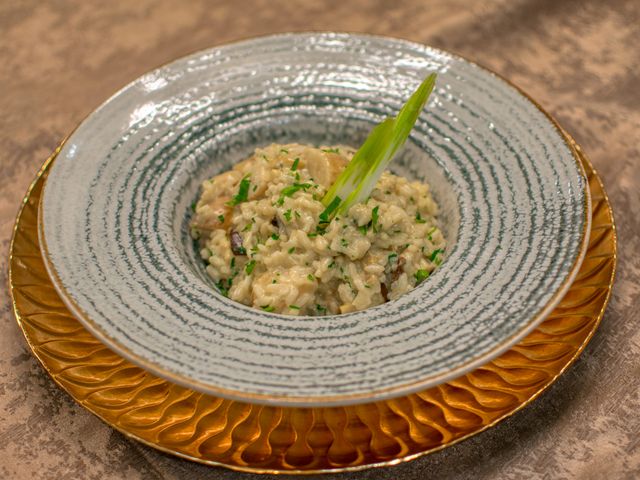
A creamy, earthy risotto made with pearl barley instead of rice, infused with the deep umami of dried porcini mushrooms. The barley develops a tender yet toothsome texture as it absorbs a rich broth, finished with melted butter, parmesan, and fresh herbs. This elegant side dish pairs beautifully with roasted meats or serves as a vegetarian main course.
- Prep
- 15 min
- Cook
- 35 min
- Wait
- 10 min
- Total
- 1 hr
- Makes
- 4 servings (about 1½ cups each)
Steps
Before you start
- Measure out the barley and have it ready
- Prepare the broth and keep it at a gentle simmer in a separate pot
- Soak the porcini mushrooms ahead if possible to soften them slightly
- Have all ingredients prepped and within arm's reach—risotto requires attention and frequent stirring
Steep the porcini
- Place the dried porcini mushrooms in a small bowl and pour 1 cup of warm water over them.
- Let them soak for 5–10 minutes until softened.
- Strain the mushrooms through a fine mesh strainer, reserving the soaking liquid.
- Roughly chop the rehydrated mushrooms into bite-sized pieces and set aside.
- Strain the soaking liquid through cheesecloth or a fine sieve to remove any grit, then add it to your warmed broth.
+ Show details− Hide details
Ready when: Mushrooms are soft and pliable; liquid is strained
Tip: The soaking liquid is liquid gold—never discard it. It carries the porcini flavor directly into the risotto.
Heat the broth
- Pour the vegetable or light chicken broth into a small saucepan and bring it to a bare simmer over medium heat.
- Keep it at this gentle temperature throughout cooking so that when you add broth to the barley, the temperature drop is minimal and cooking is steady.
- This prevents the barley from shocking and developing a chalky texture.
+ Show details− Hide details
Ready when: Broth steams gently and shows small bubbles at the edges
Tip: Keeping broth warm is crucial—cold broth added to the risotto will slow cooking and make the texture uneven.
Toast the barley
- Heat the olive oil in a large, heavy-bottomed saucepan over medium heat.
- Once shimmering, add the minced shallots and garlic.
- Stir frequently for 2–3 minutes until fragrant and the shallots turn translucent, being careful not to brown them.
- Add the pearl barley and stir constantly for 2 minutes to lightly toast it.
- You'll smell a subtle, nutty aroma when it's ready.
+ Show details− Hide details
Ready when: Shallots are translucent, barley smells nutty and grains look slightly golden
Tip: Light toasting develops a subtle nutty flavor in the barley. Don't skip this step, but don't let it brown or taste burnt.
Deglaze with wine
- Pour in the dry white wine and stir continuously for about 1 minute, scraping the bottom of the pan to pick up any flavorful browned bits.
- The wine will bubble gently.
- Continue stirring until most of the wine has been absorbed and the barley looks slightly wet but not soupy.
+ Show details− Hide details
Ready when: Wine is mostly absorbed; barley is damp but not pooled in liquid
Tip: Stirring while the wine reduces prevents sticking and helps the barley absorb the acidity evenly.
Begin adding broth
- Add the chopped porcini mushrooms and 1 cup of the warm broth (including the reserved porcini-infused soaking liquid mixed in) to the barley.
- Stir well and bring to a simmer over medium heat.
- Once simmering, reduce the heat to medium-low and adjust it so the liquid is at a gentle, steady simmer—not a hard boil.
- Stir frequently, every 1–2 minutes.
+ Show details− Hide details
Ready when: Barley simmers gently; liquid is mostly absorbed after about 5 minutes
Tip: Frequent stirring helps release starch from the barley, creating the creamy sauce. Don't walk away.
Add broth in stages
- Once the liquid is nearly absorbed (the barley should still look moist), add another ¾ cup of warm broth.
- Stir well and let it simmer at medium-low.
- Repeat this process every 5–7 minutes, adding ¾-cup portions of warm broth and stirring frequently.
- After about 20–25 minutes total cooking time (from when you added the first broth), begin tasting the barley.
- Continue adding broth in smaller amounts (½ cup at a time) and cooking until the barley is tender but still has a slight firmness in the center of each grain (al dente).
+ Show details− Hide details
Ready when: Barley grains are creamy on the outside, tender inside with a slight bite; risotto flows slightly on a plate but holds its shape
Tip: The total cooking time for pearl barley is typically 30–35 minutes from the first broth addition. Tasting after 20 minutes helps you judge when to stop adding liquid. You may not use all the broth, and that's fine.
Finish and rest
- When the barley is tender but al dente and the risotto moves slightly on the plate, remove from heat.
- Immediately stir in the cold butter cubes, one at a time, until fully melted and incorporated.
- Then add the grated Parmigiano-Reggiano in two additions, stirring gently after each to distribute evenly.
- Taste and season with fine sea salt and freshly ground black pepper to your preference.
- Let the risotto rest off the heat for 2 minutes—this allows the starches to relax and the cream to become luxuriously smooth.
+ Show details− Hide details
Ready when: Butter and cheese are fully melted and evenly distributed; risotto is creamy and flows slightly
Tip: Adding cold butter and cheese off the heat prevents them from breaking apart and keeps the risotto silky. Patience here is key.
Plate and serve
- Divide the risotto among warm bowls or plates.
- If using, scatter fresh chopped parsley and fresh thyme leaves over the top.
- Serve immediately while steaming hot.
+ Show details− Hide details
Tip: Fresh herbs brighten the earthy porcini flavor. Add them just before serving so they stay vibrant.
Good to know
Tips
- Barley releases less starch than arborio rice, so it won't become quite as creamy as traditional risotto—but that's intentional. Pearl barley's tender, hearty texture is the main event here.
- If your risotto seems too thick at the end, stir in a splash more warm broth, one tablespoon at a time, until it reaches the consistency you prefer.
- For deeper porcini flavor, soak the mushrooms in warm broth instead of water, then strain and use that liquid as part of your cooking broth.
- This risotto pairs beautifully with roasted root vegetables, a simple green salad with lemon vinaigrette, or grilled fish.
Storage & reheating
Store leftovers in an airtight container in the refrigerator for up to 3 days. To reheat, place in a saucepan over medium-low heat with 2–3 tablespoons of warm broth or water per serving. Stir gently and frequently until hot and creamy again (3–5 minutes). Freezing is not recommended; the barley texture will become mushy upon thawing.
Substitutions
- pearl barley → farro or spelt berries. These hearty grains cook similarly to barley (30–40 minutes) and have a chewy, tender texture. Expect a slightly nuttier, more robust flavor with farro.
- dried porcini mushrooms → 1 cup (75 g) fresh mushrooms, finely diced and sautéed with 1 teaspoon tomato paste. Fresh mushrooms lack the deep umami of dried porcini, so tomato paste bridges that gap. You'll lose the soaking liquid, so replace it with additional broth.
- dry white wine → dry vermouth or an additional ¾ cup of vegetable broth. Vermouth brings similar acidity and flavor. If using broth, add it to your total broth amount and reduce the initial broth addition by ¾ cup.
- Parmigiano-Reggiano → Grana Padano or Pecorino Romano. Grana Padano is slightly milder and creamier; Pecorino Romano is saltier and more peppery. Adjust final seasoning accordingly.
More risotto
See all →
Find more like this
- Meal
- Dinner
- Cuisine
- Italian
- Diet
- Sugar-Free
- Method
- Stovetop