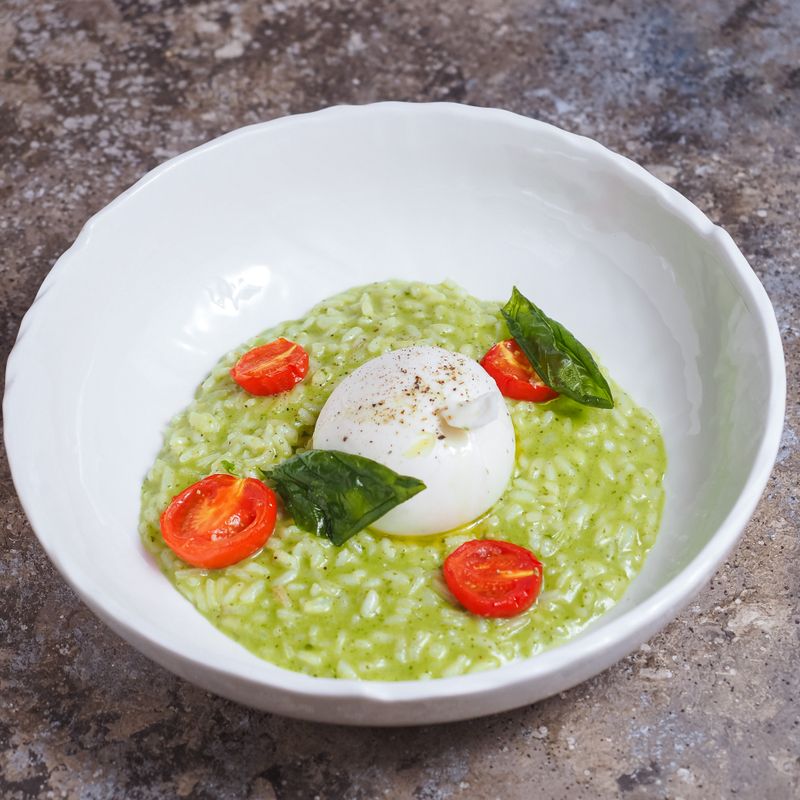
Italian Green Herb Garlic Confit Rice
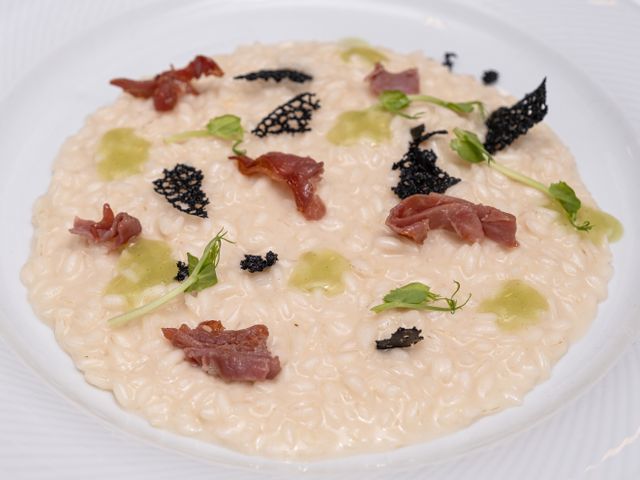
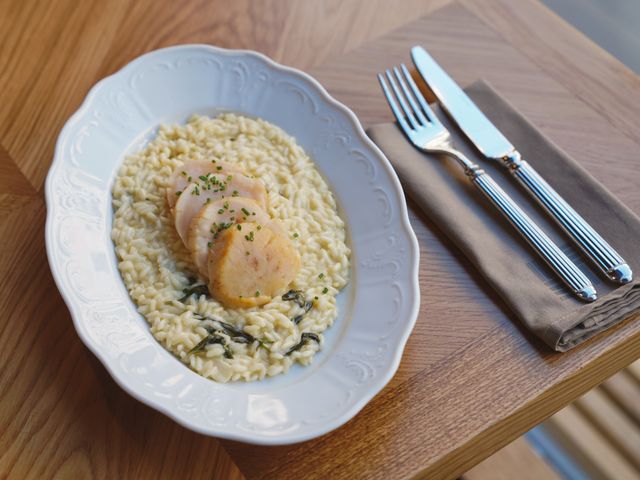
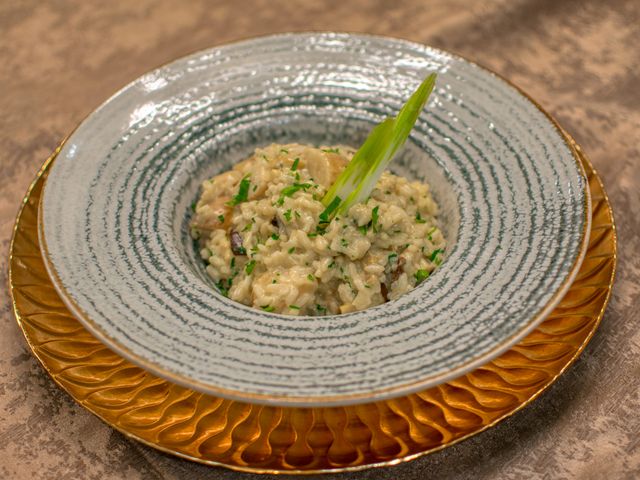
A verdant, luxurious risotto where arborio rice becomes creamy and tender in white wine and stock, then finished with bright parsley and basil and silky garlic confit. The slow-cooked garlic cloves add sweet, mellow depth while their infused oil enriches every grain. A sophisticated side dish that's equally at home alongside roasted fish or chicken as it is as a light main course.
- Prep
- 10 min
- Cook
- 25 min
- Total
- 35 min
- Makes
- 4 servings (about 1½ cups per person)
Steps
Before you start
- Have your stock at a gentle simmer in a separate pot—cold stock will shock the rice and interrupt cooking
- Prepare the garlic confit ahead (it keeps 3 weeks refrigerated), or use store-bought
- Chop your parsley and basil just before cooking so they stay vibrant
Toast the rice
- Heat 2 tablespoons (30 ml) of the garlic confit oil in a large heavy-bottomed saucepan over medium heat.
- Add the minced shallot and cook for 1–2 minutes, stirring occasionally, until softened and fragrant but not colored.
- Add the arborio rice and stir constantly for 2 minutes, coating each grain with oil.
- You'll hear a gentle crackling sound; this toasts the rice and helps it maintain its shape during cooking.
+ Show details− Hide details
Ready when: Rice grains look translucent at the edges and smell nutty
Tip: Don't skip the toasting step—it sets up the risotto's texture. Toasted rice grains absorb liquid more evenly and won't turn mushy.
Deglaze with wine
- Pour the white wine into the pan and stir frequently for about 2 minutes.
- The wine will hiss and bubble; keep stirring until it's almost completely absorbed (just a thin layer of liquid remains coating the bottom of the pan).
- This step adds acidity and flavor to balance the richness of the final dish.
+ Show details− Hide details
Ready when: Wine is nearly absorbed; rice is still separate and slightly firm
Tip: Keep the heat at medium—too high and the wine evaporates too fast without seasoning the rice properly.
Add stock and maintain a simmer
- Add warm stock 1 cup (240 ml) at a time, stirring frequently (every 30 seconds or so).
- Wait until each addition is mostly absorbed before adding the next.
- The risotto should always look creamy and flow like lava on the spoon, never soupy or dry.
- Continue for about 18–20 minutes, adding stock gradually.
- Taste a few grains of rice around minute 15—they should be tender but still have a slight firmness (al dente) at the center.
+ Show details− Hide details
Ready when: Rice grains are creamy outside with just a tiny firm core; liquid is mostly absorbed
Tip: Constant gentle stirring encourages the rice to release its starches, which create the signature creamy risotto texture. Don't walk away or the bottom will scorch.
Finish the risotto
- Remove the pan from heat.
- Stir in the cold butter cubes and grated Parmigiano-Reggiano cheese, along with the remaining 2 tablespoons (30 ml) of garlic confit oil.
- Fold in the fresh parsley and basil, and the tender garlic confit cloves (mash them slightly as you fold to distribute them throughout).
- Season with salt and black pepper to taste.
- If using, add the lemon zest.
+ Show details− Hide details
Ready when: Mixture is creamy, silky, and holds its shape briefly before flowing on the plate
Tip: Cold butter and off-heat cooking create the signature glossy 'mantecatura' finish. Warm butter will split; always use cold cubes and work off heat.
Serve immediately
- Divide the risotto among warm bowls or plates right away.
- A good risotto waits for no one—it sets up and becomes stodgy if left sitting.
- Drizzle with a few drops of your best olive oil if desired, and finish with a few torn basil leaves or additional grated cheese.
+ Show details− Hide details
Tip: Warm your serving bowls or plates with hot water just before serving—risotto cools quickly on cold ceramics.
Good to know
Tips
- Stock temperature matters: cold stock will stop the cooking process and create uneven rice. Keep it simmering on another burner throughout.
- Don't rinse the arborio rice—the exterior starch is essential for achieving that signature creamy texture.
- Garlic confit can be made ahead in large batches: slow-roast 2 cups (480 ml) of peeled garlic cloves in 2 cups (480 ml) of olive oil at 275°F (135°C) for 2–3 hours, then store in the fridge.
- The final risotto should flow on the plate like lava. If it's too thick, you haven't added enough stock; if it's soupy, you've added too much. Practice makes perfect—the texture improves with repetition.
Make ahead
Garlic confit can be made up to 3 weeks ahead. Rice can be toasted and shallot cooked 1–2 hours before service, then left in the pan (don't add stock yet). Reheat gently over medium heat and continue from the stock addition step, but risotto is best made entirely fresh and served within minutes of completion.
Storage & reheating
Risotto is best eaten fresh. Leftovers can be refrigerated in an airtight container for up to 2 days. To reheat, add a splash of warm stock to a skillet over medium-low heat and stir gently until creamy again (do not microwave, which destroys the texture). Risotto does not freeze well.
Substitutions
- arborio rice → Carnaroli rice. Carnaroli has a slightly higher starch content and maintains an even firmer texture; use 1:1. Vialone Nano also works beautifully.
- garlic confit (cloves and oil) → roasted garlic cloves plus 2 tablespoons (30 ml) extra-virgin olive oil. Use 8–10 roasted garlic cloves. Roasted garlic is slightly sweeter and less rich than confit but gives a similar mellow flavor. Add the oil at the end instead of during toasting.
- dry white wine → dry vermouth or dry Sauvignon Blanc. Both provide acidity and flavor. Avoid Chardonnay or oaked wines, which can overpower the delicate herbs.
- fresh basil → fresh mint or tarragon. Mint adds a refreshing note; tarragon brings an anise-like elegance. Either should replace basil 1:1 by weight.