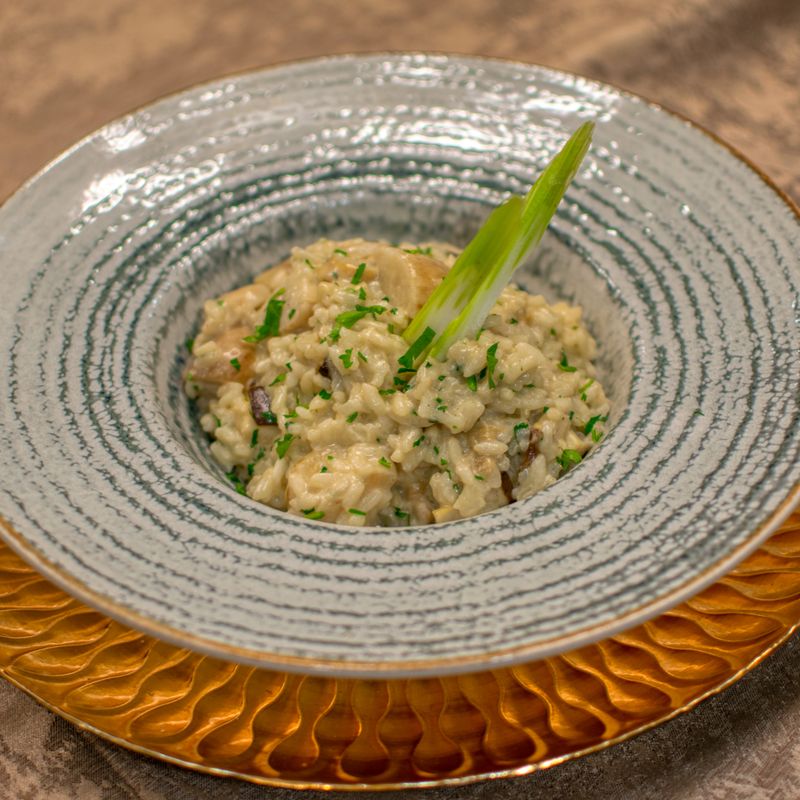
Italian Arborio Pancetta Peas
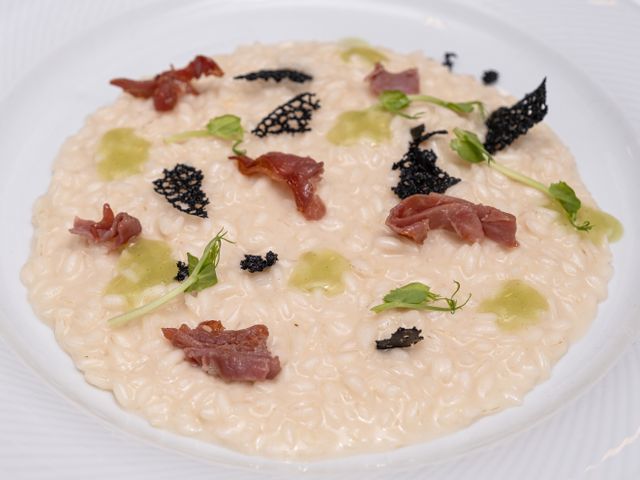
A classic Northern Italian risotto-style side dish that combines creamy Arborio rice with crispy pancetta, sweet peas, and sharp Pecorino Romano cheese. The rice cooks slowly in white wine and warm broth, releasing its starches to create a luxurious, velvety texture. This elegant but simple dish is perfect alongside roasted chicken, grilled fish, or braised meats.
- Prep
- 10 min
- Cook
- 22 min
- Total
- 32 min
- Makes
- 4 servings (about 1 cup each)
Steps
Before you start
- Bring the broth to a gentle simmer in a separate pot and keep it warm on a back burner throughout cooking—cold broth will interrupt the risotto's cooking process.
- Have all ingredients measured and within reach before you begin, as risotto requires constant attention once you start adding liquid.
- Use freshly grated Pecorino Romano for best flavor and melting texture.
Render pancetta and sauté aromatics
- In a large heavy-bottomed saucepan (3–4 quart), add the diced pancetta over medium heat.
- Cook for 4–5 minutes, stirring occasionally, until the pancetta is crispy and has rendered its fat.
- Add the diced onion and cook for another 2–3 minutes, stirring often, until softened and translucent.
- Add the minced garlic and cook for 30 seconds until fragrant.
+ Show details− Hide details
Ready when: Pancetta is crispy, onion is translucent, garlic is fragrant
Tip: Cook the pancetta fully so it becomes crispy; soft pancetta won't add the right textural contrast.
Toast the rice
- Add the Arborio rice to the pan with the pancetta and aromatics.
- Stir constantly for 1–2 minutes.
- The rice grains will become translucent around the edges and smell slightly nutty.
- This toasting step is essential—it seals the outside of each grain and prevents mushiness.
+ Show details− Hide details
Ready when: Rice grains are translucent at the edges and smell nutty
Tip: Don't skip toasting—it's what keeps risotto creamy but not mushy.
Deglaze with white wine
- Pour in the dry white wine, stirring constantly.
- Cook for 1–2 minutes, stirring frequently, until the wine is almost completely absorbed.
- You'll know it's ready when you scrape the spoon across the bottom of the pan and the rice briefly shows.
+ Show details− Hide details
Ready when: Wine is almost completely absorbed; rice shows briefly when spoon scrapes the pan bottom
Tip: Stir frequently so the wine reduces evenly and the rice doesn't stick to the pan.
Begin adding warm broth
- Add the warm broth one ladle at a time (about ¾ to 1 cup per ladle).
- After each addition, stir frequently—every 30 seconds or so—and wait until the liquid is almost completely absorbed before adding the next ladle.
- The rice should always look slightly creamy and wet but not soupy.
- Repeat this process for about 15–17 minutes.
- The rice is done when it is tender but still has a slight firmness (al dente) in the center of each grain when bitten.
+ Show details− Hide details
Ready when: Rice is tender with slight al dente center; grains are creamy but not mushy
Tip: Constant stirring releases the starches from the rice, which creates the creamy texture. If you stop stirring, the risotto will become thick and gluey.
Add peas and finish
- When the rice is nearly tender, stir in the peas.
- Cook for 1–2 more minutes, still stirring frequently, until the peas are heated through.
- Remove the pan from heat.
- Add the cold butter cubes and the grated Pecorino Romano cheese.
- Stir vigorously for about 1 minute until the butter and cheese are fully incorporated and the risotto is creamy and glossy.
- Season to taste with kosher salt and freshly ground black pepper.
- Taste and adjust seasoning as needed.
+ Show details− Hide details
Ready when: Peas are heated through, butter and cheese are fully incorporated, risotto is creamy and glossy
Tip: Add cold butter and cheese off the heat—this technique, called "mantecatura," creates the silkiest, most luxurious texture. Never cook cheese directly on heat or it will separate.
Serve immediately
- Spoon the risotto into shallow bowls or onto plates.
- Serve right away while hot and creamy.
- A small drizzle of good olive oil and a pinch of fleur de sel is optional but elegant.
+ Show details− Hide details
Tip: Risotto waits for no one—serve immediately or it will firm up as it cools.
Good to know
Tips
- Arborio or Carnaroli rice are essential—avoid long-grain varieties, which won't release enough starch and will result in a dry, separate dish instead of a creamy one.
- Keep your broth at a gentle simmer throughout cooking. Adding cold broth interrupts the cooking process and uneven results.
- Stir constantly during the broth-adding phase. This isn't just for flavor—constant agitation releases the starches that make risotto creamy. If you stop stirring, you're making rice soup, not risotto.
- This dish is best served immediately in warm bowls. Risotto sets and thickens as it cools, losing the silky texture that makes it special.
Storage & reheating
Best served fresh. Leftover risotto may be refrigerated in an airtight container for up to 2 days, but texture and creaminess will diminish. To reheat, place in a saucepan over medium heat with an additional splash of warm broth or white wine, stirring frequently, until warmed through and creamy again (about 5–7 minutes). Do not freeze, as the texture and structure of risotto break down upon thawing.
Substitutions
- frozen peas → fresh spring peas (in season), asparagus tips, or green beans (cut into ½-inch pieces). Fresh vegetables will need the same cooking time; adjust texture by adding them when the rice is nearly tender.
- Pecorino Romano cheese, freshly grated → Parmigiano-Reggiano or Grana Padano. These will create a slightly milder, less salty flavor. Use the same quantity but taste before adding more.
- dry white wine (such as Pinot Grigio) → dry vermouth or additional warm broth. Vermouth adds herbal notes; broth creates a milder flavor and slightly softer texture.
- pancetta, finely diced → diced guanciale (if you can find it) or smoked bacon. Guanciale is more traditional in Roman cuisine; bacon will add smokiness. Both should be crisped before adding rice.