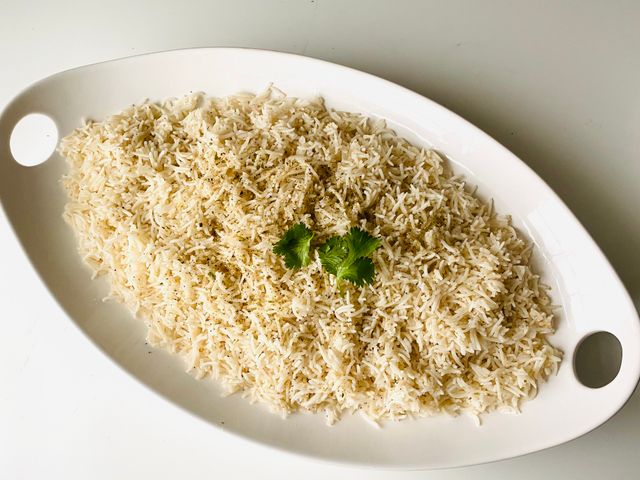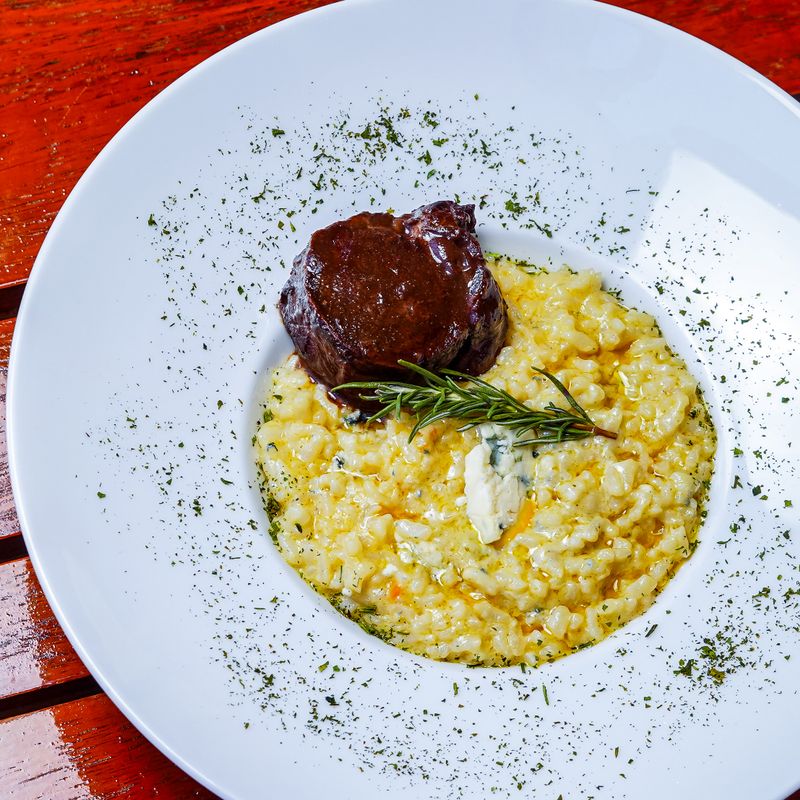
Dinner Party Lobster Saffron Risotto
A luxurious, velvety risotto infused with saffron's earthy warmth and finished with tender lobster meat. This elegant dish balances the creamy, starch-thickened rice with bright white wine and the briny depth of lobster stock, making it the perfect showstopper for a special dinner. The saffron threads bloom throughout, adding color and subtle floral notes. Ready in under an hour from start to table.
- Prep
- 15 min
- Cook
- 30 min
- Wait
- 5 min
- Total
- 50 min
- Makes
- 4 servings (1¼ cups each)
Steps
Before you start
- Have your lobster stock simmering in a separate pot before you start the risotto (about 185°F / 85°C); cold stock will cool the rice and interrupt the cooking.
- Measure out all ingredients and arrange them within arm's reach of your cooking station—risotto requires constant attention and you won't have time to hunt for items.
- If using whole saffron threads, measure them out and set aside; do not bloom them yet.
- Read through the entire method once so you understand the rhythm of stirring and stock addition.
Bloom the saffron
- Pour ¼ cup (60 ml) of the warm lobster stock into a small bowl.
- Add the saffron threads and let them steep for 5 minutes.
- The liquid will turn deep golden and the threads will soften and release their flavor and color.
+ Show details− Hide details
Ready when: Liquid is deep golden yellow and saffron threads have softened
Tip: Blooming saffron in warm liquid extracts maximum flavor and color; never use boiling water or the delicate threads will burn.
Sauté shallots
- Heat the olive oil in your large heavy-bottomed pot over medium heat until it shimmers (about 1 minute).
- Add the minced shallots and stir constantly for 2–3 minutes until they soften and become translucent but do not brown.
- You should smell their sweet fragrance when ready.
+ Show details− Hide details
Ready when: Shallots are soft, translucent, and fragrant; no color on them
Tip: Keep the heat at medium—too hot and the shallots will brown and taste bitter; too low and they'll stew instead of sauté.
Toast the rice
- Add the Arborio rice to the pot and stir constantly for 1–2 minutes.
- The rice grains will look slightly translucent at the edges and sound crisp when stirred.
- This step coats each grain with oil and helps them hold their shape during cooking.
+ Show details− Hide details
Ready when: Rice grains are shiny, edges appear translucent, and you hear a dry, crisp sound when stirring
Tip: Do not skip this step—toasting the rice prevents it from becoming mushy and ensures each grain stays distinct.
Deglaze with wine
- Pour the white wine into the pot and stir frequently for about 2 minutes, scraping the bottom to loosen any browned bits.
- The wine will reduce and be almost completely absorbed by the rice.
- You'll know it's done when you run your spoon across the bottom and the rice slowly flows back to fill the gap.
+ Show details− Hide details
Ready when: Wine is nearly absorbed, rice moves slowly when you drag a spoon through it, and liquid is mostly gone
Tip: Stirring frequently prevents sticking and ensures even absorption; if you see the rice drying out too fast, reduce heat slightly.
Start adding stock (first half)
- Add 2½ cups (600 ml) of the warm lobster stock (or about half, reserving the saffron blooming liquid).
- Stir frequently but not constantly—every 20–30 seconds is fine.
- Each time you stir, the rice releases starch that thickens the risotto.
- After about 10–12 minutes, most of the stock will be absorbed and the rice will look creamy but still have visible liquid.
+ Show details− Hide details
Ready when: Rice looks creamy and moves slowly in the pot; visible liquid remains but is not soupy
Tip: Maintain medium heat so the risotto simmers gently, not boils; a rolling boil cooks the rice too fast on the outside and leaves the center starchy.
Add saffron stock and continue
- Pour in the saffron blooming liquid (with all the threads) and about 1 cup (240 ml) more of the warm lobster stock.
- Stir frequently for another 8–10 minutes.
- The golden saffron will distribute throughout the rice, turning it pale yellow.
- The risotto should look looser than before but still cohesive.
+ Show details− Hide details
Ready when: Rice is mostly tender, saffron color is evenly distributed, and the risotto still has some visible liquid
Tip: If you notice the rice is drying out too quickly and still tastes chalky, add a splash more stock and continue cooking; it's better to be patient than to rush with mushy rice.
Final stock addition and taste
- Add the remaining warm stock (about 1 cup / 240 ml) and stir frequently for 4–6 minutes more.
- The rice should now be tender but still have a slight firmness (al dente) when you bite a grain.
- The risotto should flow like lava when you tilt the pot—it should not be thick or stiff.
- Taste a few grains; they should be creamy inside and just barely firm at the center.
- If still too firm, add a few tablespoons more stock and cook another minute.
+ Show details− Hide details
Ready when: Rice is tender but al dente, risotto flows like lava when tilted, and grains are creamy with a slight bite at the center
Tip: This is the moment to check for doneness. Risotto continues to cook slightly off heat, so it's better to slightly undercook it here than to overcook.
Finish with butter and cheese
- Remove the pot from heat.
- Add the cold butter cubes and the grated Parmigiano-Reggiano all at once.
- Stir vigorously for about 1 minute until the butter and cheese are fully incorporated and the risotto becomes even creamier and more luxurious.
- This technique, called mantecatura, emulsifies the starches and fat to create a silky texture.
+ Show details− Hide details
Ready when: Butter and cheese are fully incorporated, risotto is glossy and creamy, and it flows slowly in the pot
Tip: Do not skip this step or rush it; the cold butter and the vigorous stirring are what create the signature creamy, luxurious texture of true risotto.
Fold in lobster and final seasonings
- Gently fold the warm lobster meat into the risotto, being careful not to break the pieces.
- Season to taste with kosher salt and freshly ground black pepper.
- If using, add the lemon zest and fresh chives.
- Stir gently to distribute the lobster throughout.
+ Show details− Hide details
Ready when: Lobster is evenly distributed, risotto is well-seasoned, and color is uniform pale yellow with pink lobster pieces
Tip: Add the lobster at the very end so it stays tender and doesn't break apart from extended cooking; if it was chilled, give it 1 minute off heat to warm through.
Serve immediately
- Divide the risotto among warm bowls or shallow serving dishes.
- Serve right away; risotto waits for no one and will thicken if left sitting.
- The risotto should flow gently when spooned into the bowl, not sit in a stiff mound.
+ Show details− Hide details
Ready when: Risotto is poured into warm bowls and flows gently
Tip: Have your serving dishes warming in a 200°F (93°C) oven for 5 minutes before service; warm dishes keep the risotto at the ideal temperature and texture longer.
Good to know
Tips
- Warm stock is non-negotiable: cold stock will shock the rice and disrupt the cooking. Keep your stock simmering in a separate pot on a back burner throughout.
- Stir frequently but not constantly during the first half of cooking; constant stirring releases too much starch too quickly and creates a gluey texture. After you add the saffron stock, you can stir a bit more.
- The risotto should flow like lava when you tilt the pot. If it's thick and stiff, add another splash of warm stock and stir it in; if it's soupy, you may have added too much liquid or not cooked it long enough.
- For an extra-luxurious finish, add a tablespoon of mascarpone or crème fraîche along with the butter and cheese in the mantecatura step.
Make ahead
Prepare the lobster stock (or have it on hand), grate the cheese, mince the shallots, and cut the butter into cubes up to 4 hours ahead. The lobster meat can be purchased cooked and chilled until 1 hour before serving. Do not make the risotto ahead; it must be cooked and served immediately for the best creamy texture.
Storage & reheating
Risotto is best served immediately and does not store well; the rice will continue to absorb moisture and become thick and gluey. If you must store leftovers, refrigerate in an airtight container for up to 2 days. To reheat: spread the cold risotto into a skillet, add a splash of warm stock or water, and stir over medium heat until it loosens and warms through (about 5 minutes). The texture will not be as silky as freshly made, but it will be edible.
Substitutions
- lobster or seafood stock → high-quality seafood or fish stock (made from shrimp shells, scallop trimmings, or white fish), or chicken stock in a pinch. Lobster stock provides the briny depth that defines this dish, but seafood stock is a fine substitute. Avoid vegetable stock, which lacks the savory character needed here.
- Arborio rice → Carnaroli rice. Carnaroli has a slightly higher starch content and larger grains than Arborio, and produces an equally creamy result. Avoid short-grain varieties like Sushi rice.
- dry white wine (such as Pinot Grigio or Sauvignon Blanc) → dry Vermouth or a splash of lemon juice mixed with dry white wine. Vermouth adds herbal complexity; lemon juice adds brightness. Either works well, but avoid sweet wines or wine substitutes.
- cooked lobster meat, cut into bite-sized pieces → large sea scallops (cut in half), large shrimp, or crab meat. Any sweet, tender shellfish will work. Add scallops or shrimp in the last 2–3 minutes of cooking if raw; crab is best added at the very end like lobster.