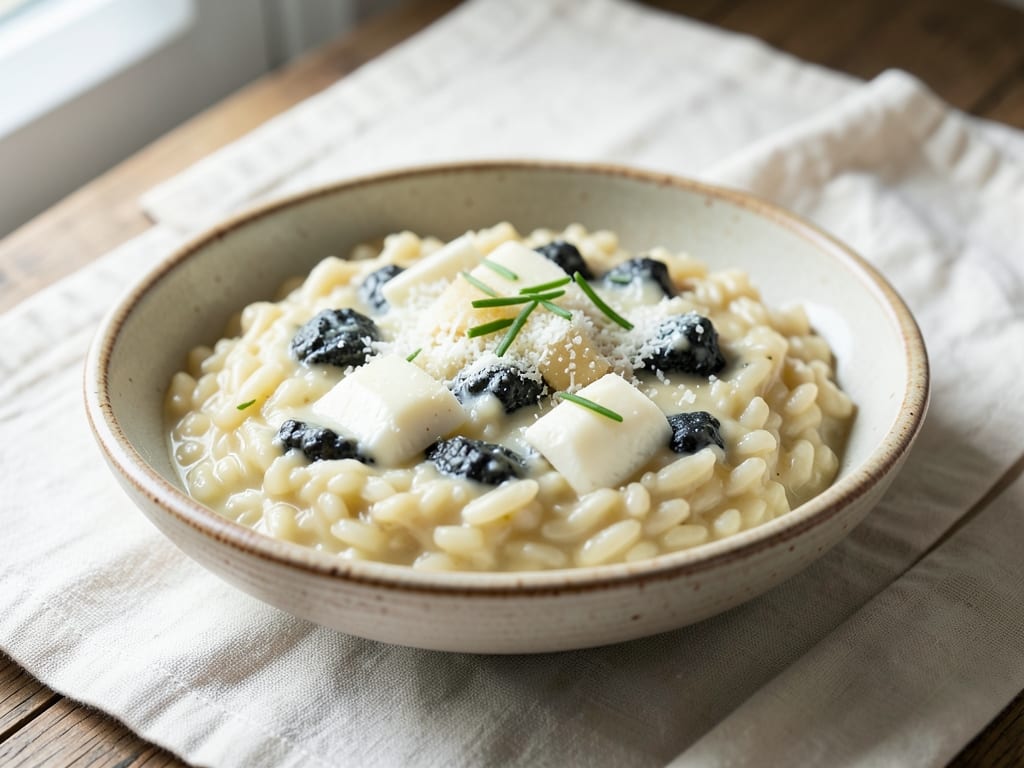
Butternut Squash Sage Rice
A rustic Italian-inspired pilaf where nutty brown butter coats tender arborio rice studded with roasted butternut squash and brightened by crispy sage leaves. The squash becomes silky as it simmers with the rice, creating a creamy, naturally sweet side dish that pairs beautifully with roasted chicken, pork, or autumn vegetables.
- Prep
- 15 min
- Cook
- 25 min
- Wait
- 10 min
- Total
- 50 min
- Makes
- 4 servings (about 1 cup per serving)
Steps
Before you start
- Peel and cube the butternut squash—aim for ½-inch cubes so they cook evenly with the rice
- Measure out the rice and broth ahead of time
- Have fresh sage leaves on hand (about 12–15 leaves); if using dried, use about 1 teaspoon total
Brown the butter and sage
- In a large sauté pan or shallow 3-quart pot, melt the butter over medium heat.
- Add the fresh sage leaves and let them sizzle gently, stirring occasionally, for 2–3 minutes until the butter turns golden brown and the sage becomes fragrant and slightly crispy.
- Watch carefully so the butter doesn't burn.
+ Show details− Hide details
Ready when: Butter is golden brown and sage leaves are fragrant and crispy
Tip: Keep the heat at medium—high heat will burn the butter before the sage flavor develops
Sauté aromatics and squash
- Add the diced red onion to the browned butter and sage.
- Stir frequently for 2 minutes until softened.
- Add the minced garlic and cook for 30 seconds.
- Pour in the cubed butternut squash and stir to coat well with the butter.
- Cook for 3–4 minutes, stirring gently, until the squash begins to soften at the edges.
+ Show details− Hide details
Ready when: Edges of squash pieces soften slightly and become translucent
Tip: Don't over-stir; gentle movement prevents the squash from breaking apart
Toast the rice
- Add the arborio rice to the pan and stir constantly for 1–2 minutes.
- The rice grains will become slightly translucent at the edges and toast lightly, releasing a nutty aroma.
- This step prevents the rice from becoming mushy.
+ Show details− Hide details
Ready when: Rice grains are lightly toasted and smell nutty; edges look slightly opaque
Tip: Keep stirring so the rice toasts evenly without sticking to the bottom
Deglaze with wine
- Pour in the white wine and stir for about 1 minute, scraping the bottom of the pan to lift up any browned bits.
- The wine will reduce and almost completely evaporate, flavoring the rice.
+ Show details− Hide details
Ready when: Wine is nearly evaporated and aromas smell sweet and slightly concentrated
Tip: Scrape the pan well to incorporate any caramelized bits from the bottom
Add broth and simmer
- Pour in the warm broth all at once.
- Bring the mixture to a gentle simmer, then reduce the heat to medium-low.
- Do not stir once the liquid is added.
- Let the rice and squash simmer uncovered for 18–20 minutes until the rice is tender and has absorbed most of the liquid.
- The mixture should look creamy and loose, not dry.
+ Show details− Hide details
Ready when: Rice is tender when bitten, liquid is mostly absorbed but the mixture is still loose and creamy, squash is very soft
Tip: Resist the urge to stir; moving the rice releases starch and makes it gluey. A light, undisturbed pilaf stays fluffy
Rest and season
- Remove the pan from heat, cover it loosely with foil or a lid, and let it rest for 10 minutes.
- This allows the rice to finish absorbing any remaining liquid and firms up slightly.
- Taste the rice and season generously with kosher salt and freshly ground black pepper.
- Fluff gently with a fork.
- If using Parmigiano-Reggiano, stir it in now.
+ Show details− Hide details
Ready when: Rice is fluffy and fully cooked; no liquid pooling at the bottom of the pan
Tip: Fluff gently with a fork—stirring vigorously will mash the squash and make the rice starchy
Good to know
Tips
- Brown the butter before adding sage—the darker, nuttier butter amplifies the sage's earthy flavor and prevents the dish from tasting pale or flat
- Resist stirring once the broth is added; undisturbed rice stays fluffy with separate grains instead of becoming creamy or gluey
- If the rice looks too dry before the 20-minute mark, add ¼ cup more warm broth and continue simmering
- The Parmigiano-Reggiano is optional but transforms the dish—its salty, umami richness ties together the sweet squash and herbal sage
Make ahead
You can prepare the squash and onion up to 2 days ahead; store them separately in the refrigerator. The finished pilaf is best eaten fresh, but leftover portions can be refrigerated and gently reheated with a splash of broth.
Storage & reheating
Room temperature: up to 2 hours. Refrigerator: up to 3 days in an airtight container. To reheat, warm gently on the stovetop over medium heat with an extra splash of broth or a knob of butter to restore creaminess. Do not freeze, as the rice texture will suffer on thawing.
Substitutions
- arborio rice → carnaroli rice or vialone nano rice. Both release starch similarly and create a creamy pilaf with distinct grains
- dry white wine → dry vermouth or vegetable broth. Omit the wine step if using broth; add it to the total liquid instead
- fresh sage leaves → 2–3 fresh thyme sprigs or 1 teaspoon dried sage. Thyme is slightly earthier; use less dried sage as it concentrates during cooking
- butternut squash → delicata squash, kabocha squash, or pumpkin. Delicata has thinner skin; adjust cube size for even cooking. All will add sweetness and creaminess