Italian Mantua Pumpkin and Amaretti Risotto
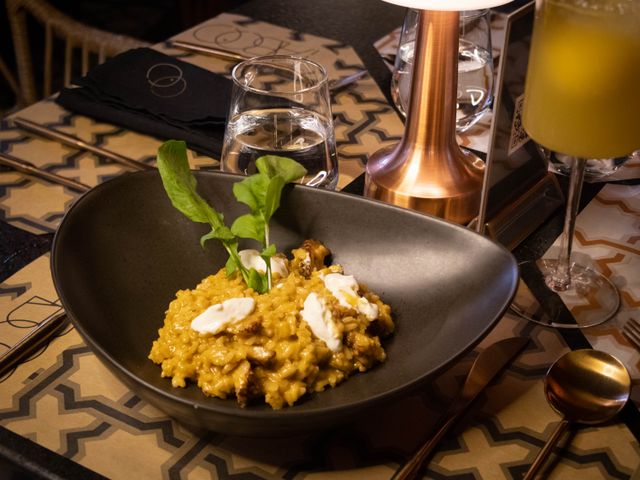
A creamy, elegant risotto from Mantua that combines sweet roasted pumpkin, the subtle almond notes of amaretti cookies, and fresh sage. This classic Northern Italian side celebrates the region's love of pumpkin and rice, with butter and Parmesan stirred in at the end for richness. The amaretti adds a delicate bittersweet depth that balances the natural sweetness of the squash.
- Prep
- 15 min
- Cook
- 25 min
- Total
- 40 min
- Makes
- 4 servings (about 1½ cups each)
Steps
Before you start
- Heat the vegetable broth in a separate pot and keep it simmering throughout cooking
- Have all ingredients prepped and within arm's reach—risotto waits for no one
- Use a heavy-bottomed pot or wide pan so the rice cooks evenly and doesn't scorch on the bottom
Sauté aromatics
- Heat 1 tablespoon (14 g) of the butter in your heavy-bottomed pot over medium heat.
- Add the diced onion and a pinch of salt.
- Sauté for 3–4 minutes, stirring often, until the onion is soft and translucent but not colored.
- Add the minced garlic and cook for 30 seconds more until fragrant.
+ Show details− Hide details
Ready when: Onion is translucent and garlic is fragrant
Tip: Don't let the garlic brown or it will taste bitter. Keep the heat at medium to prevent the butter from browning.
Toast the rice
- Add the Arborio rice to the pot and stir constantly for 2 minutes.
- The grains should look slightly translucent at the edges and smell toasty.
- This toasting helps the rice keep its shape during cooking and improves the texture.
+ Show details− Hide details
Ready when: Rice grains are translucent at the edges and smell nutty
Tip: Toasting is essential for proper risotto texture—don't skip it. Stir constantly so no grain sticks to the bottom.
Deglaze with wine
- Pour the dry white wine into the pot and stir for about 2 minutes, scraping the bottom gently with your wooden spoon.
- The wine will smell sharp at first, then mellow as the alcohol cooks off.
- Stop when the liquid is almost completely absorbed.
+ Show details− Hide details
Ready when: Liquid is almost completely absorbed into the rice
Tip: The wine adds acidity that balances the sweetness of the pumpkin. If you don't have white wine, use a splash of vegetable broth instead.
Begin adding broth
- Add the simmering vegetable broth one ladle at a time (about ¾ cup / 180 ml per ladle), stirring frequently.
- Wait until most of the liquid is absorbed before adding the next ladle—usually 1–2 minutes between additions.
- Continue this process for about 18–20 minutes.
- The rice should always look creamy but not soupy.
+ Show details− Hide details
Ready when: Rice is creamy and each grain is tender but still holds its shape
Tip: Keep the broth simmering in a separate pot so it stays hot. Cold broth will cool the risotto and slow cooking. Stir frequently—this releases starch from the rice, creating creaminess.
Add pumpkin and sage
- When the rice is nearly tender (about 18 minutes in), stir in the pumpkin puree, the 12 whole sage leaves, and the nutmeg.
- Stir well to distribute the pumpkin evenly—it should turn the risotto a soft golden-orange color.
- Continue adding broth as before until the rice is creamy and tender, another 2–3 minutes.
- The pumpkin adds both flavor and helps thicken the risotto naturally.
+ Show details− Hide details
Ready when: Rice is fully tender, risotto flows slowly on the plate, and pumpkin is evenly mixed
Tip: Add the pumpkin near the end so it doesn't cool the rice or add too much water too early. The whole sage leaves will flavor the risotto as it simmers.
Finish with mantecatura
- Remove the pot from heat.
- Add the remaining 3 tablespoons (43 g) of cold butter cubes, the finely grated Parmesan, and the 2 chopped sage leaves.
- Stir vigorously for about 1 minute until the butter and cheese are fully incorporated and the risotto looks glossy and creamy.
- This is the crucial finishing step (called mantecatura in Italian) that creates the signature creamy texture.
- Season to taste with salt and black pepper.
+ Show details− Hide details
Ready when: Risotto is glossy, creamy, and flows slightly on the plate; butter and cheese are fully melted
Tip: This vigorous stirring is what makes risotto creamy—don't rush it. Use cold butter so it emulsifies properly. If the risotto looks too thick, add a splash of warm broth.
Toast and fold in amaretti
- In a small dry skillet over medium heat, toast the crushed amaretti crumbs for 1–2 minutes, stirring often, until they smell warm and fragrant.
- Immediately add them to the finished risotto and fold gently to distribute.
- Reserve a small handful of crumbs to sprinkle on top when serving.
- The toasting intensifies the almond flavor and keeps the crumbs from getting soggy.
+ Show details− Hide details
Ready when: Amaretti crumbs are warm and fragrant, and evenly distributed throughout
Tip: Toast the amaretti just before serving so they stay crispy. If you add them too early, they'll absorb moisture from the risotto and become mushy.
Serve immediately
- Divide the risotto among warm shallow bowls.
- Drizzle each portion with a little extra good olive oil if desired, and sprinkle the reserved toasted amaretti crumbs and a small sage leaf on top.
- Serve at once while the risotto is hot and creamy.
+ Show details− Hide details
Tip: Risotto waits for no one—serve immediately to your guests while it has the perfect creamy consistency.
Good to know
Tips
- The secret to creamy risotto is constant stirring and gradual broth additions—this releases the rice's natural starch. Don't rush by adding all the broth at once.
- Fresh roasted pumpkin puree will give a more vibrant flavor than canned, but good-quality canned puree (unsweetened) works beautifully and is convenient.
- Mantua's cuisine celebrates the balance of sweet and savory; the amaretti shouldn't overpower the dish. A handful of crumbs is plenty.
- Keep tasting the rice from about the 15-minute mark onward. It should be tender enough to eat comfortably but still have a slight firmness at the center of each grain (al dente).
Make ahead
You can prepare the broth, peel and roast the pumpkin (if making fresh puree), and chop all aromatics up to 1 day ahead. Keep broth hot and ready in a separate pot just before you begin cooking. Do not make the risotto ahead; it must be served immediately after finishing.
Storage & reheating
Leftover risotto keeps in an airtight container in the refrigerator for up to 2 days. Reheat gently in a pot over low heat with a splash of warm broth or water, stirring constantly, until creamy again. Freezing is not recommended as risotto's texture breaks down upon thawing.
Substitutions
- pumpkin puree (fresh roasted or canned) → Butternut squash puree or roasted delicata squash puree. Use an equal weight replacement. Butternut squash is slightly sweeter and more buttery; delicata has a nuttier, more delicate flavor.
- amaretti biscuits (Italian almond cookies) → Crushed biscotti (almond biscotti preferred) or finely ground blanched almonds mixed with a pinch of sugar. Toast briefly to enhance the almond flavor. Use the same weight.
- dry white wine → Dry vermouth or additional vegetable broth. Vermouth adds herbal notes; broth is neutral. Use the same volume.
- Arborio rice → Carnaroli rice or Vialone Nano rice. Both are short-grain varieties that release starch for creaminess. Cooking time may vary slightly.