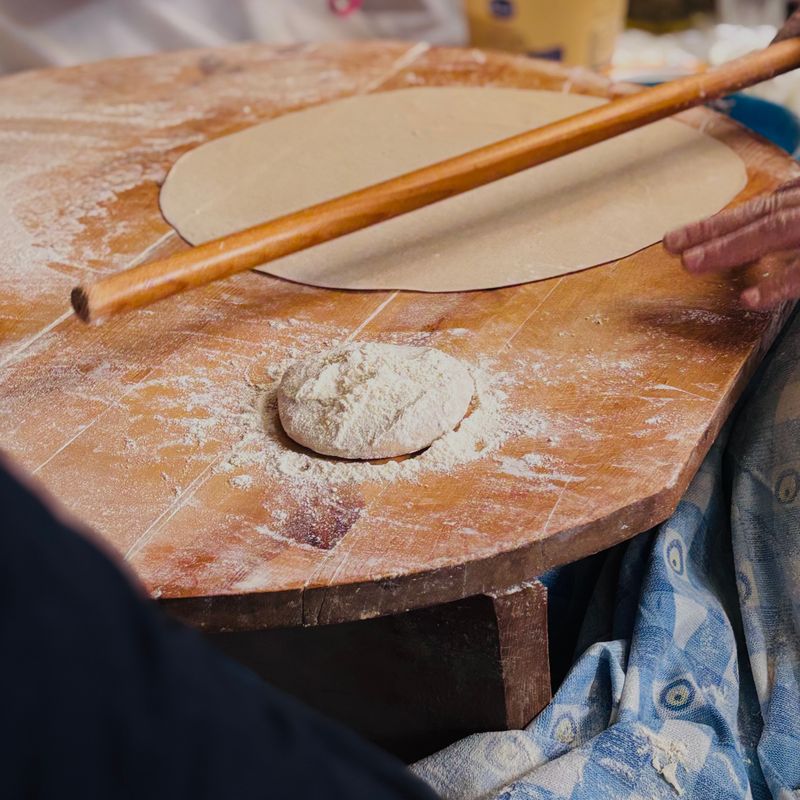
Chickpea Flour Flatbread Dough
A tender, nutty flatbread dough made from a blend of chickpea flour and all-purpose flour. The chickpea flour adds protein, a subtle earthy flavor, and creates a slightly tender crumb with a gentle chew. This dough rests rather than ferments, making it quick to prepare and ready to shape into flatbreads within 30 minutes. Perfect for pan-frying, grilling, or baking.
- Prep
- 10 min
- Cook
- —
- Wait
- 30 min
- Total
- 40 min
- Makes
- 4 flatbreads (about 8 inches / 20 cm each)
Steps
Before you start
- Have all ingredients at room temperature
- Use a kitchen scale for accuracy with the flours
- Read through the resting time—dough develops structure while it rests
Combine dry ingredients
- In a medium bowl, whisk together the chickpea flour (120 g), all-purpose flour (90 g), and salt (3 g).
- Make sure the flours are well combined and there are no lumps of chickpea flour—this ensures even hydration.
+ Show details− Hide details
Ready when: Dry ingredients are evenly mixed with no visible streaks of either flour
Tip: Sifting the chickpea flour helps break up any clumps that can resist hydration.
Add water and oil
- Make a well in the center of the dry ingredients.
- Pour in the room-temperature water (180 ml) and olive oil (15 ml).
- Using a fork or spoon, gradually stir the dry ingredients into the wet ingredients, working from the center outward, until shaggy dough forms and no dry flour remains.
+ Show details− Hide details
Ready when: All dry flour is incorporated; dough is shaggy and slightly sticky
Tip: Don't overmix at this stage; stop as soon as no dry flour is visible.
Knead until smooth
- Turn the dough out onto a lightly floured work surface.
- Knead for 5–7 minutes, using the heel of your hand to push the dough away from you, then fold it back over itself.
- The dough will go from shaggy and sticky to smooth and supple.
- Add just a pinch of flour if the dough sticks badly, but it should be slightly tacky throughout kneading.
+ Show details− Hide details
Ready when: Dough is smooth, elastic, and springs back slightly when poked; no visible dry bits remain
Tip: Chickpea flour dough will be slightly stickier than wheat dough alone—resist the urge to add too much extra flour, or the flatbread will be tough.
Rest the dough
- Form the dough into a smooth ball.
- Place it in the bowl (no need to oil it) and cover with a damp kitchen towel or plastic wrap.
- Let it rest at room temperature for 30 minutes.
- During this time, the starches hydrate fully and the gluten relaxes, making the dough easier to shape.
+ Show details− Hide details
Ready when: Dough looks slightly puffier and feels softer when gently pressed
Tip: If your kitchen is cold (below 65°F / 18°C), resting may take longer—up to 45 minutes. Dough is ready when it no longer springs back sharply when poked.
Good to know
Tips
- The dough should be slightly tacky rather than dry—chickpea flour absorbs water differently than wheat, so the hydration feels wetter than a typical bread dough.
- This dough is designed to rest, not ferment; kneading develops gluten structure, and the 30-minute rest allows the starch to fully absorb water, making the finished flatbread tender rather than chewy.
- For the best texture, divide the rested dough into 4 equal portions (about 100 g each) and shape each into a flatbread just before cooking—don't let shaped flatbreads sit for more than a few minutes or they'll stick to the surface.
- The chickpea flour gives the flatbread a subtle nutty flavor that pairs beautifully with savory fillings, herbs, or a drizzle of oil; consider brushing cooked flatbreads with herb-infused oil or za'atar.
Storage & reheating
Store wrapped dough in the refrigerator for up to 3 days. Let it come to room temperature (about 20 minutes) before shaping and cooking. Freeze for up to 3 months; thaw in the refrigerator overnight before use.
Substitutions
- chickpea flour → Lentil flour or mung bean flour. Provides similar protein content and nutty flavor; use the same weight (120 g). Mung bean flour yields a slightly more delicate texture.
- all-purpose flour → Whole wheat flour or spelt flour. Whole wheat adds earthiness and nuttiness; may require an extra tablespoon of water (15 ml) due to higher bran content. Spelt is milder and slightly sweeter.
- room-temperature water → Vegetable or chicken broth. Adds depth; use the same amount (180 ml). The dough will be slightly softer and have more flavor.
- olive oil → Neutral oil such as grapeseed or vegetable oil. Same amount (15 ml). You'll lose the fruity flavor but the texture remains unchanged.
More flatbread doughs
See all →


Find more like this
- Meal
- Lunch
- Cuisine
- Middle Eastern
- Main ingredient
- Chickpeas
- Method
- Stovetop
- Quick & Easy
- 5 Ingredients or LessEasyBeginner