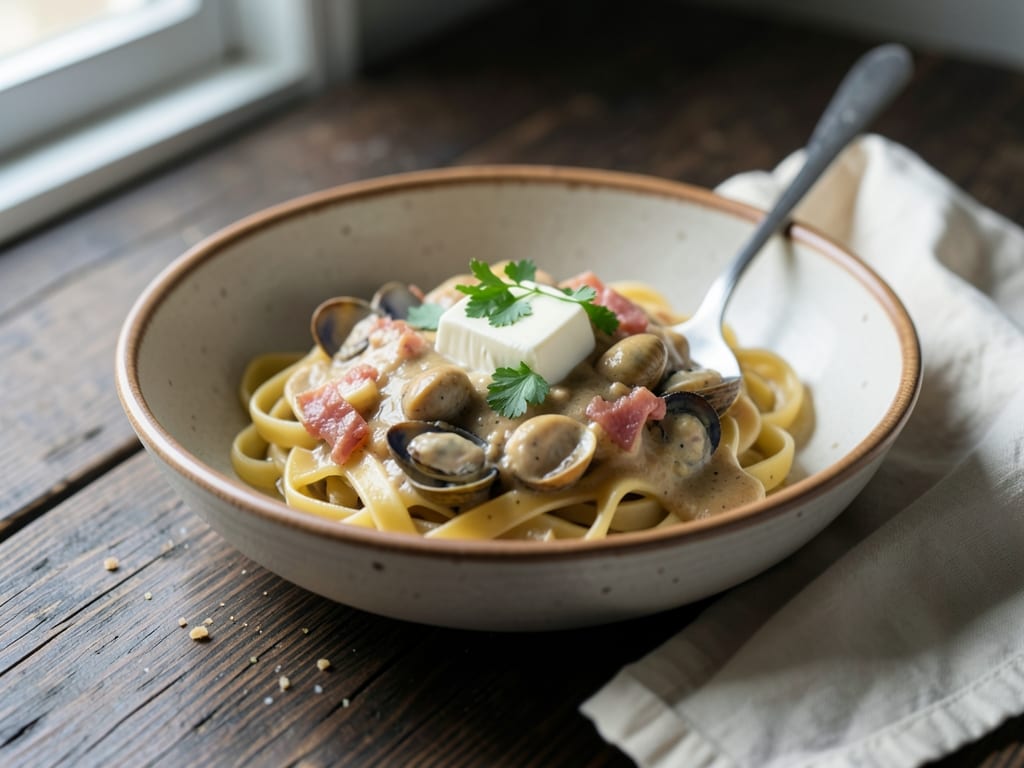
White Wine Pancetta and Clam Sauce
A silky Italian seafood sauce of briny littleneck clams, crispy pancetta, and white wine finished with cold butter and fresh parsley. The clams release their sweet brine while the pancetta crisps, creating a luxurious sauce perfect for coating fresh pasta at an elegant dinner party.
- Prep
- 15 min
- Cook
- 25 min
- Total
- 40 min
- Makes
- Makes about 2 cups sauce; serves 4 over pasta
Steps
Before you start
- Clean and debeard the littleneck clams thoroughly under cold running water, scrubbing the shells and removing any protruding beards; discard any with broken shells or that don't close when tapped
- Prepare all ingredients in advance (mince garlic, dice pancetta, chop parsley, measure wine)
- Read through the clam-cooking phase before starting, as timing is critical to keep them tender
Render pancetta until crispy
- Heat a large 5-quart Dutch oven or heavy-bottomed pot over medium heat.
- Add the diced pancetta and cook, stirring occasionally with a wooden spoon, until the fat is rendered and the pancetta is golden and starting to crisp, about 5–7 minutes.
- You should see rendered fat pooling in the bottom of the pot.
+ Show details− Hide details
Ready when: Pancetta is golden and crispy; fat pools in the pot
Tip: Stir occasionally to ensure even cooking; watch the color closely to avoid burning
Cook garlic and red pepper
- Add the minced garlic and red pepper flakes to the pot.
- Stir constantly for about 1 minute until the garlic is fragrant and very lightly golden.
- The pot's residual heat is enough; do not let the garlic brown or it will turn bitter and overpower the dish.
+ Show details− Hide details
Ready when: Garlic is fragrant and lightly colored, red pepper flakes are toasted
Tip: Watch carefully and stir constantly to prevent the garlic from browning
Deglaze with wine and reduce
- Pour the white wine into the pot, stirring with a wooden spoon and scraping up any flavorful browned bits from the bottom (fond).
- Continue cooking over medium heat until the wine is reduced by about half in volume, about 3–4 minutes.
- You'll notice the aroma becomes less harsh as the alcohol cooks off.
+ Show details− Hide details
Ready when: Wine is noticeably reduced by roughly half; raw alcohol smell has diminished
Tip: Don't skip this reduction—it concentrates the flavor and removes the raw wine taste
Add clams and braise covered
- Add the cleaned littleneck clams to the pot along with the 2 tablespoons of olive oil and a small pinch of sea salt.
- Cover the pot with a lid and increase the heat to medium-high.
- The clams will begin releasing their liquid and creating steam.
- Check after about 5 minutes—some will be starting to open.
- Continue cooking until most of the clams have opened, 10–12 minutes total.
- As each clam opens, use tongs or a slotted spoon to transfer it to a serving bowl.
- Discard any clams that haven't opened after 2 minutes of cooking past when the first ones opened.
+ Show details− Hide details
Ready when: Most clams have opened, revealing tender meat inside; liquid in pot is fragrant and briny
Tip: Remove each clam as it opens to prevent overcooking; overcooked clams become rubbery and tough
Finish with butter and herbs
- Remove the pot from heat.
- The liquid remaining in the pot is a flavorful clam broth enriched with rendered pancetta fat and reduced wine.
- Cut the cold butter into small pieces and add it a few pieces at a time to the hot pot, gently swirling the pan to incorporate it into a silky, emulsified sauce.
- Add the fresh chopped parsley and fold gently.
- Taste the sauce and adjust seasoning with sea salt, black pepper, and a squeeze of fresh lemon juice if using.
- Gently return the cooked clams to the pot and fold them in.
+ Show details− Hide details
Ready when: Butter is fully incorporated and sauce is silky and glossy; clams are warm and coated with sauce
Tip: Add butter off the heat to create an emulsion rather than having the fat break and separate from the liquid
Good to know
Tips
- Don't skip cleaning the clams—rinse them several times under running water to remove grit and sand that can ruin the sauce's texture
- Remove each clam as it opens to prevent overcooking; they become rubbery within seconds of overdoing it
- The cold butter finish is essential—it creates a silky emulsion and ties all the flavors together
- Reserve 1–2 clams in their shells before shelling for garnish; the visual appeal makes a difference when serving
Make ahead
Pancetta and aromatics can be prepped and refrigerated up to 4 hours ahead. The sauce is best made and served immediately after clams finish opening for optimal texture and flavor.
Storage & reheating
This sauce is not ideal for storing since clams become tough when reheated. Leftover sauce (if any clams remain) can be covered and refrigerated for up to 1 day. Reheat gently over low heat without the clams. Do not freeze.
Substitutions
- littleneck clams, live in shell → Manila clams. Smaller clams that cook faster (5–8 minutes instead of 10–12 minutes); check them sooner
- dry white wine → Dry vermouth. Similar acidity and herbal complexity, works beautifully in this sauce
- pancetta → Guanciale. More traditional in Roman preparations; has a deeper, richer flavor
- fresh Italian parsley → Fresh basil. Use sparingly as basil has a stronger, more assertive flavor than parsley