Chestnut and Wild Mushroom Ragù
A rich, slow-cooked Italian vegetable ragù starring earthy wild mushrooms and roasted chestnuts in a deeply flavorful tomato base. The braising method melds the vegetables into a complex, umami-forward sauce with the depth of a traditional meat ragù, while the chestnuts stay plump and tender. Perfect for coating pasta, polenta, or roasted vegetables.
- Prep
- 15 min
- Cook
- 25 min
- Wait
- 30 min
- Total
- 1 hr 10 min
- Makes
- 4 servings (about 4 cups sauce)
Steps
Before you start
- Use freshly roasted chestnuts if possible, or high-quality jarred roasted ones (frozen or canned in water also work well)
- Gather and prepare all ingredients (mise en place) before you start cooking—this makes the process smooth
- Choose a variety of wild mushrooms (cremini, porcini, shiitake, oyster) for complexity and depth
- Have a large heavy-bottomed pot ready; a Dutch oven is perfect for this braise
Prepare ingredients
- Dice the medium onion into ¼-inch pieces.
- Mince the garlic.
- Clean the mushrooms with a damp cloth and halve or quarter them depending on size to create roughly uniform pieces so they cook evenly—this is important for even cooking and browning.
- Measure out the tomato paste, stock, and other ingredients so everything is ready (mise en place).
- Having everything prepped before you start cooking makes the process smooth and prevents burning or overcooking any component while gathering the next ingredient.
+ Show details− Hide details
Ready when: Ingredients are prepped and measured out; mushrooms are uniform in size
Tip: Setting up mise en place—preparing and measuring everything before you start—prevents scrambling and ensures nothing burns while you're gathering the next ingredient.
Sear the mushrooms
- Heat 2 tablespoons of the olive oil in a large heavy-bottomed pot (5–6 quart capacity) over medium-high heat until the oil shimmers, about 1 minute.
- Add the prepared mushrooms in a single layer.
- Let them sit undisturbed for 3–4 minutes—resist the urge to stir immediately.
- After 3–4 minutes, stir and continue cooking for another 4–5 minutes until the mushrooms are golden brown and caramelized.
- Most of their liquid should have evaporated, and they should smell deeply savory and rich.
- Transfer the mushrooms to a clean plate.
+ Show details− Hide details
Ready when: Mushrooms are golden brown and caramelized; most liquid has evaporated; smell deeply savory
Tip: Don't stir immediately—let the mushrooms develop a golden crust first, which builds umami depth. If crowded, sear in batches rather than piling them on top of each other, which steams them instead of browning them.
Build the flavor base
- Add the remaining 1 tablespoon of olive oil to the pot, then add the diced onion.
- Cook over medium heat, stirring occasionally, for about 3 minutes until the onion begins to soften and turn translucent.
- Add the minced garlic and cook for 1 minute until fragrant and the raw smell dissipates.
- Stir in the tomato paste and cook for another minute, stirring constantly to prevent sticking.
- The tomato paste should darken slightly and smell concentrated and sweet.
+ Show details− Hide details
Ready when: Onion is translucent; tomato paste is darkened and fragrant
Tip: Cooking the tomato paste briefly before adding liquids helps concentrate and deepen its flavor, adding richness to the final sauce without any tinned taste.
Deglaze with wine (optional)
- If using red wine, pour the ½ cup into the pot and scrape the bottom with a wooden spoon to dislodge any browned bits stuck to the pot—this is where intense flavor hides.
- Let the wine simmer for 1–2 minutes to cook off some of the alcohol and reduce slightly.
- If you're not using wine, skip this step and proceed to step 5.
+ Show details− Hide details
Ready when: Wine has reduced slightly and the raw alcohol smell has mostly dissipated
Tip: This step isn't essential but the wine adds subtle complexity and acidity that balance the sauce beautifully. Skip only if you strongly prefer to avoid alcohol.
Add remaining ingredients
- Return the seared mushrooms to the pot.
- Add the canned crushed tomatoes (with their juices), vegetable stock, bay leaves, dried thyme, and roasted chestnuts.
- Stir everything together until well combined, then turn the heat up to medium-high to bring the sauce to a gentle simmer.
+ Show details− Hide details
Ready when: Sauce is simmering gently with small bubbles regularly breaking the surface
Simmer and braise the ragù
- Once the sauce reaches a simmer, reduce the heat to medium-low and let it simmer uncovered for 30–35 minutes.
- Stir occasionally—every 5–7 minutes—to prevent sticking on the bottom.
- The sauce should gradually reduce and thicken.
- The tomatoes will completely break down into the sauce, the vegetables will become tender, and the flavors will meld together into something much greater than the sum of its parts.
- The chestnuts should be tender when pierced with a fork.
- The sauce is ready when it is thick enough to coat the back of a spoon; if too thin, continue simmering a few more minutes; if too thick, stir in a splash of warm vegetable stock or water.
+ Show details− Hide details
Ready when: Sauce coats the back of a spoon; tomatoes have completely broken down; vegetables are tender; chestnuts are tender when pierced with a fork
Tip: Stir occasionally to prevent sticking on the bottom, but don't over-stir—you want the flavors to concentrate. The sauce will continue to thicken slightly as it cools, so don't over-reduce it on the stovetop.
Season to taste
- Remove the bay leaves with a slotted spoon or fork and discard them.
- Taste the ragù carefully.
- Season generously with kosher salt and freshly ground black pepper.
- Start with ½ teaspoon of salt and adjust from there, as you can always add more but can't remove it.
- The sauce should taste rich and well-balanced, with the earthiness of mushrooms and chestnuts, the acidity from tomatoes, and the herbal notes from thyme melding together into a savory whole.
+ Show details− Hide details
Ready when: Flavors are well-balanced and taste delicious; salt and pepper bring all flavors into focus
Tip: Taste critically. The sauce should have deep umami from the mushrooms, sweetness and acidity from tomatoes, and earthy notes from chestnuts and herbs. Salt amplifies these flavors.
Serve with pasta or polenta
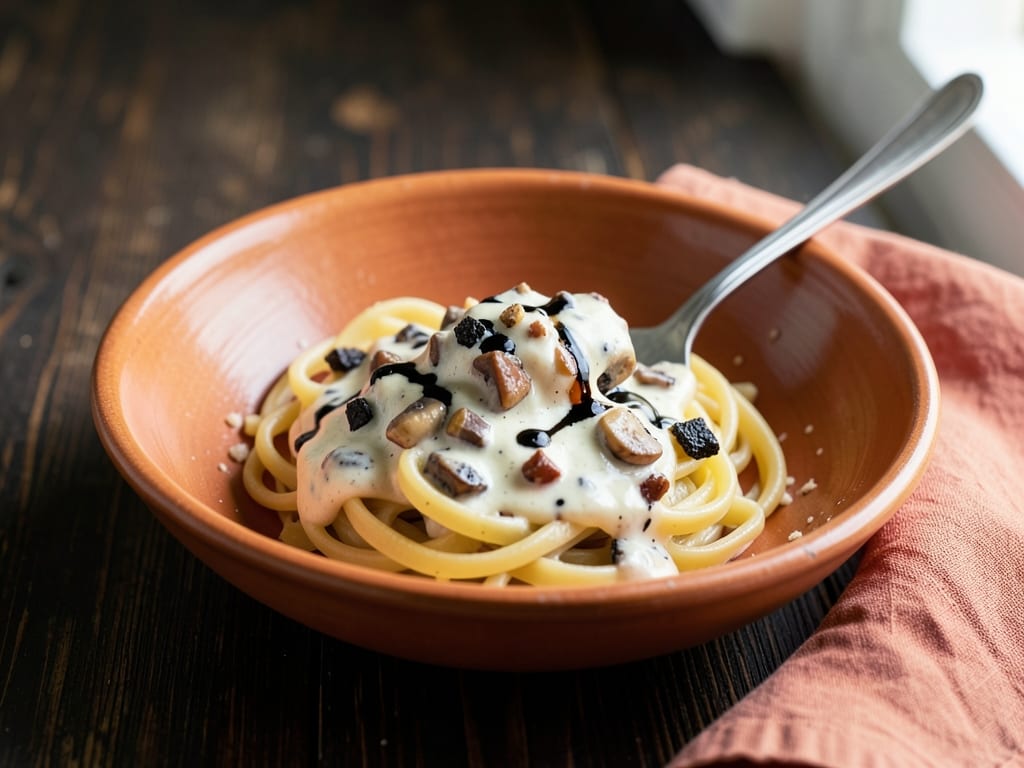
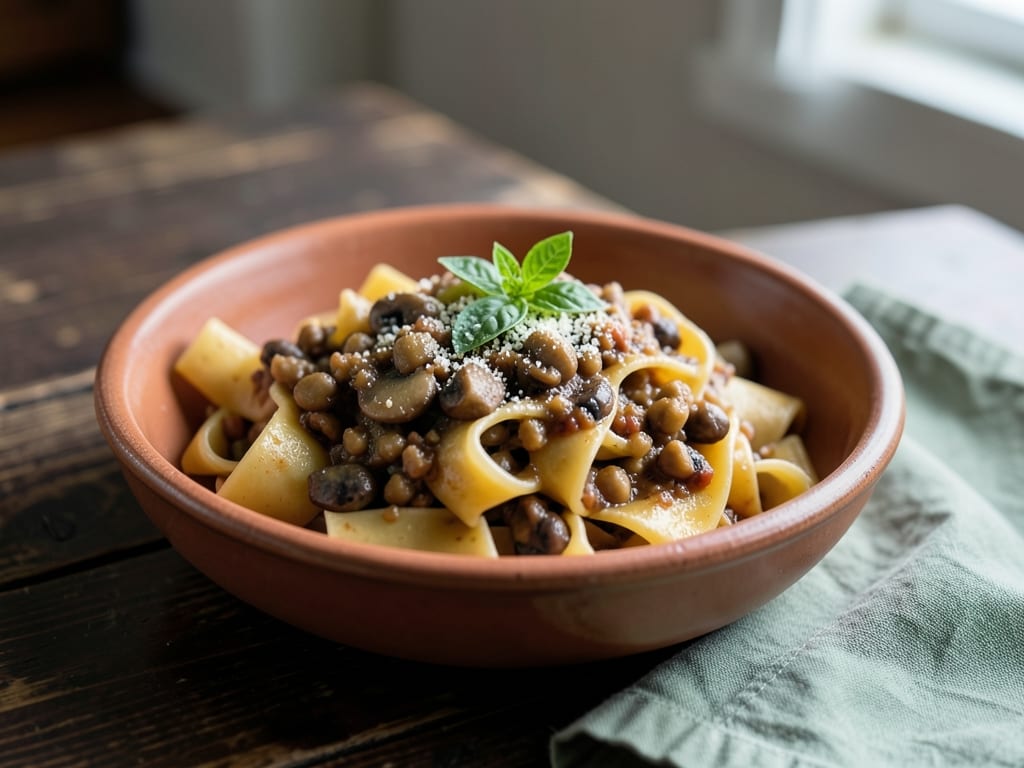
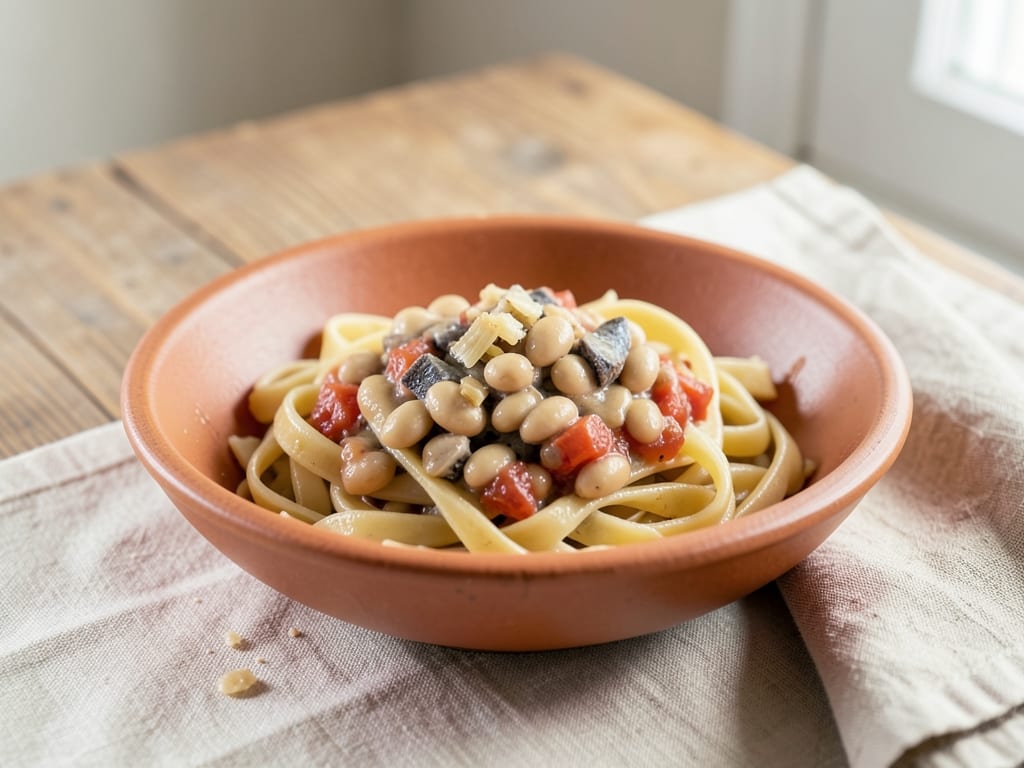
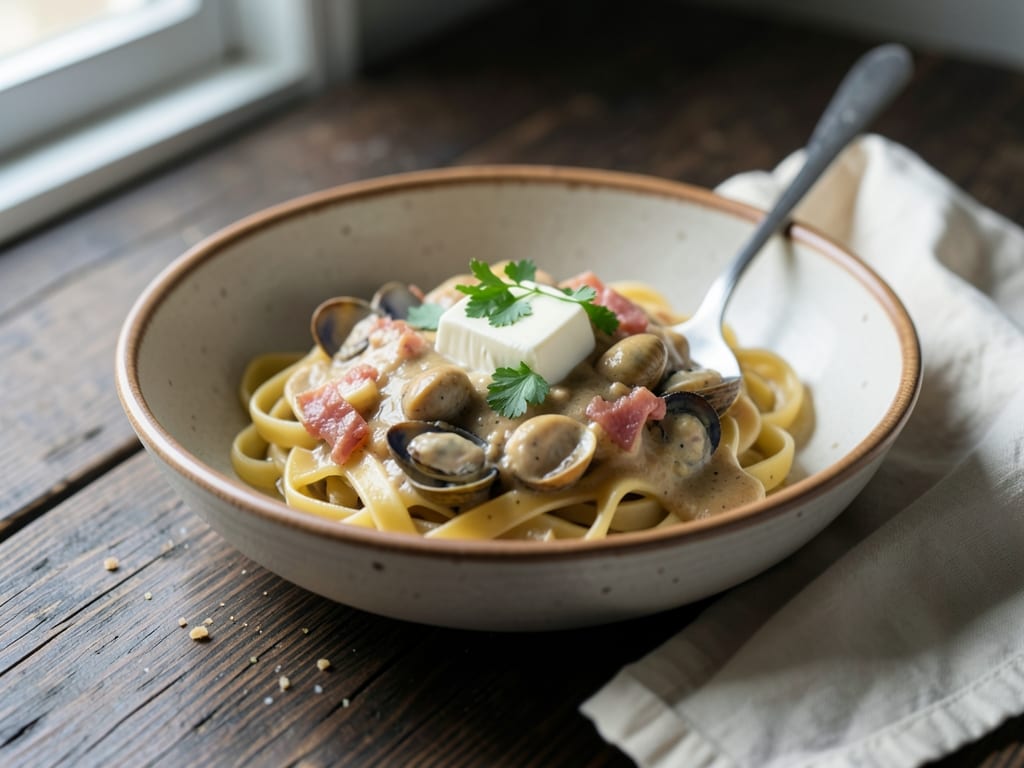
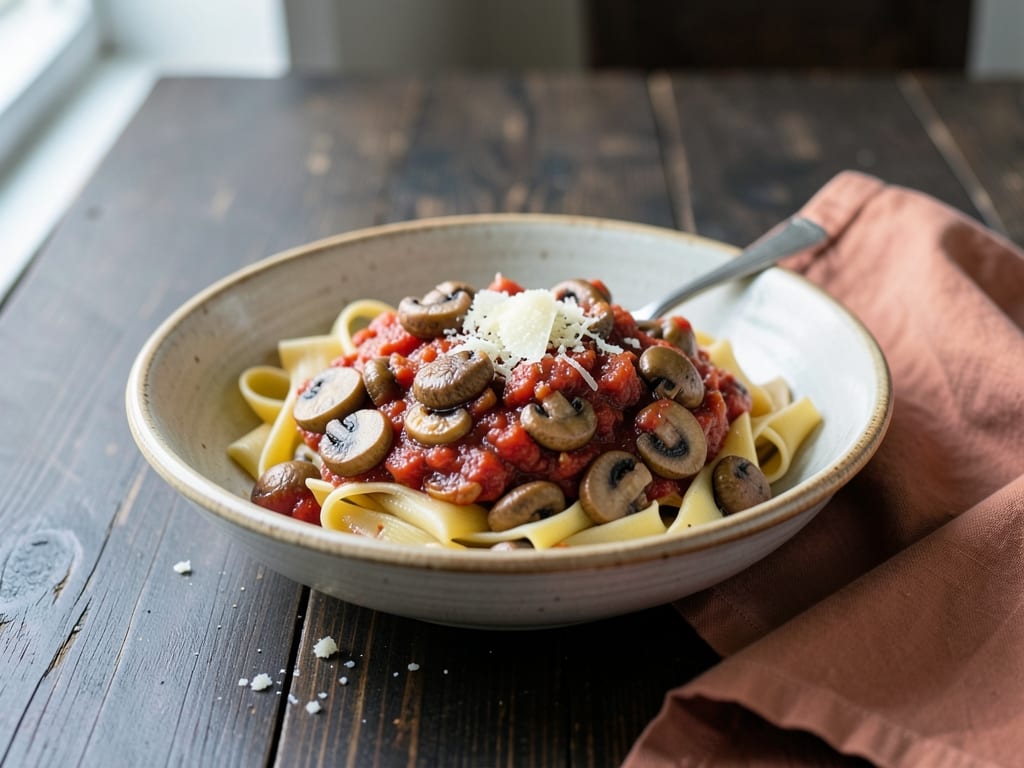
- Ladle the hot ragù over cooked pasta—pappardelle (wide ribbons) or thick spaghetti work beautifully to catch the sauce.
- Alternatively, serve over creamy polenta or as a sauce for roasted vegetables.
- Top each serving with freshly grated Parmigiano-Reggiano and a small handful of chopped fresh parsley if desired.
- Finish with a drizzle of excellent extra virgin olive oil.
- Serve immediately while hot.
Good to know
Tips
- Don't skip the mushroom-searing step—browning them creates a deeply savory, umami-rich foundation that makes the entire sauce more delicious. This is the most important step for building flavor.
- Tear or cut your mushrooms into roughly uniform sizes so they cook evenly. Mix varieties for complexity—cremini, porcini, shiitake, and oyster mushrooms all work beautifully together.
- The sauce will continue to thicken as it cools, so if you're making it ahead, don't over-reduce it on the stovetop. It should look slightly looser than you want it when hot.
- Finish with high-quality extra virgin olive oil and fresh herbs right before serving to add brightness and prevent the dish from feeling heavy.
Make ahead
The ragù can be made 1–2 days ahead, which actually improves the flavor as it sits. Refrigerate in an airtight container. Reheat gently on the stovetop over medium-low heat, stirring occasionally and adding a splash of vegetable stock or water if needed to restore the sauce consistency.
Storage & reheating
Refrigerate in an airtight container for up to 3 days. Freeze in airtight containers or freezer bags for up to 2 months. To reheat from frozen, thaw in the refrigerator overnight, then warm on the stovetop over medium-low heat, stirring occasionally, or reheat in the microwave in 2-minute intervals, stirring between each. Add a little water or stock if the sauce has thickened too much.
Substitutions
- canned crushed tomatoes → Fresh tomatoes (3 lbs ripe tomatoes, roughly chopped). Use in late summer or early fall when tomatoes are at their peak. The flavor will be brighter and less concentrated, so reduce the simmer time to 20–25 minutes to prevent overcooking fresh tomatoes.
- dry red wine → Additional ½ cup vegetable stock or 2 tablespoons balsamic vinegar. Use stock for a cleaner taste or balsamic for added sweetness and acidity. The wine brings subtle tannin bitterness that's complementary but not essential.
- mixed wild mushrooms (cremini, porcini, shiitake, oyster) → Cremini or button mushrooms. These are much more economical and widely available, though they will provide less depth of flavor and earthiness. Use the same weight (12 oz).
- roasted chestnuts → Cooked brown or green lentils (8 oz, drained), diced potato (8 oz), or additional mushrooms (8 oz). Lentils provide earthiness and protein without the sweetness of chestnuts. Potato adds body and creaminess. Extra mushrooms increase umami. All work well in a vegetarian ragù.